
- |<
- <
- 1
- >
- >|
-
Shigeki Sasaki2019Volume 67Issue 6 Pages 505-518
Published: June 01, 2019
Released on J-STAGE: June 01, 2019
 JOURNAL FREE ACCESS FULL-TEXT HTML
Nucleic acid therapeutics such as antisense and small interfering RNA (siRNA) have attracted increasing attention as innovative medicines that interfere with and/or modify gene expression systems. We have developed new functional oligonucleotides that can target DNA and RNA with high efficiency and selectivity. This review summarizes our achievements, including (1) the formation of non-natural triplex DNA for sequence-specific inhibition of transcription; (2) artificial receptor molecules for 8-oxidized-guanosine nucleosides; and (3) reactive oligonucleotides with a cross-linking agent or a functionality-transfer nucleoside for RNA pinpoint modification.
Graphical Abstract Fullsize ImageView full abstractDownload PDF (4050K) Full view HTML -
Shunsuke Kotani2019Volume 67Issue 6 Pages 519-526
Published: June 01, 2019
Released on J-STAGE: June 01, 2019
 JOURNAL FREE ACCESS FULL-TEXT HTML
Chiral phosphine oxides successfully catalyze asymmetric cross-aldol reactions of various carbonyl compounds in a highly enantioselective manner. The phosphine oxide catalysts coordinate to chlorosilanes to form chiral hypervalent silicon complexes in situ, which activate both aldol donors and acceptors, thus realizing cross-aldol reactions between a ketone and an aldehyde, between two aldehydes, between two ketones, and of 2,6-diketones. The use of phosphine oxide catalysis can be further extended to achieve the first catalytic enantioselective double aldol reactions, realizing one-pot stereoselective construction of up to four stereogenic centers.
Graphical Abstract Fullsize ImageView full abstractDownload PDF (1118K) Full view HTML
-
Mami Sogame, Yoko Naraki, Takahiro Sasaki, Masaharu Seki, Kazuyoshi Yo ...2019Volume 67Issue 6 Pages 527-533
Published: June 01, 2019
Released on J-STAGE: June 01, 2019
 JOURNAL FREE ACCESS FULL-TEXT HTML
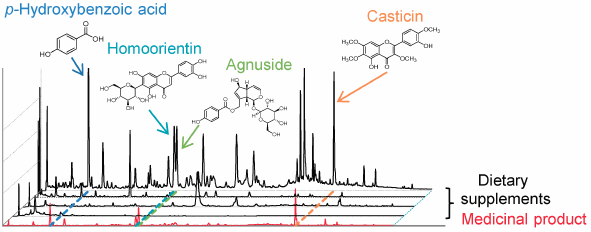
In this study, we aimed to evaluate the quality of 11 products sold in Japan (one medicinal product and 10 dietary supplements) containing/claiming to contain chasteberry extract (fruit of Vitex agnus-castus L.) using HPLC fingerprint (15 characteristic peaks), quantitative determination of chemical marker compounds, and a disintegration test. The HPLC profile of the medicinal product was similar to that of the reference standard of V. agnus-castus fruit dry extract obtained from European Directive for the Quality of Medicines (EDQM), whereas the profiles of some dietary supplements showed great variability, such as different proportions of peaks or lack of peaks. Results of the principal component analysis of the fingerprint data were consistent with those of the HPLC profile analysis. The contents of two markers, agnuside and casticin, in dietary supplements showed wide variability; this result was similar to that achieved with the HPLC fingerprint. In particular, agnuside and/or casticin was not detected in two dietary supplements. Furthermore, one dietary supplement was suspected to be contaminated with V. negundo, as evidenced from the results of agnuside to casticin ratio and assay of negundoside, a characteristic marker of V. negundo. Results of the disintegration test showed poor formulation quality of two dietary supplements. These results call attention to the quality problems of many dietary supplements, such as incorrect or poor-quality origin, different contents of the active ingredient, and/or unauthorized manufacturing procedures.
Graphical Abstract Fullsize ImageView full abstractDownload PDF (713K) Full view HTML -
Hiroaki Hayashi, Keiko Yokoshima, Ren Chiba, Isao Fujii, Inoyat Fattok ...2019Volume 67Issue 6 Pages 534-539
Published: June 01, 2019
Released on J-STAGE: June 01, 2019
 JOURNAL FREE ACCESS FULL-TEXT HTML
One triterpene and five triterpene glycosides, including four new compounds, have been identified in the underground parts of Glycyrrhiza bucharica, which was shown to be closely related to Glycyrrhizin-producing Glycyrrhiza species, G. uralensis, G. glabra and G. inflata, based on their chloroplast rbcL sequences. Two known compounds were identified squasapogenol and macedonoside C. The structures of four new compounds, bucharosides A, B, C, and D, were determined to be 3-O-α-L-rhamnopyranosyl-(1→2)-β-D-glucuronopyranosyl-(1→2)-β-D-glucuronopyranosyl-22-O-α-L-rhamnopyranosyl squasapogenol, 3-O-α-L-rhamnopyranosyl-(1→2)-β-D-glucuronopyranosyl-(1→2)-β-D-glucuronopyranosyl-macedonic acid, 3-O-α-L-rhamnopyranosyl-(1→2)-β-D-glucuronopyranosyl-(1→2)-β-D-glucuronopyranosyl-squasapogenol, and 22-O-α-L-rhamnopyranosyl squasapogenol, respectively. Contents of these triterpene glycosides were less than 0.5% of dry weight, and no main saponin, like glycyrrhizin or macedonoside C found in other Glycyrrhiza species, was found in the underground parts of G. bucharica.
Graphical Abstract Fullsize ImageView full abstractDownload PDF (556K) Full view HTML -
Mai Sotoyama, Shinya Uchida, Chiaki Kamiya, Shimako Tanaka, Yasuharu K ...2019Volume 67Issue 6 Pages 540-545
Published: June 01, 2019
Released on J-STAGE: June 01, 2019
 JOURNAL FREE ACCESS FULL-TEXT HTML
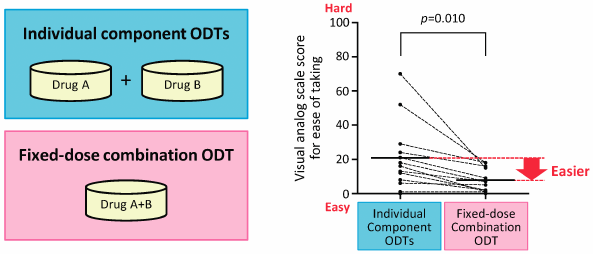
Fixed-dose combination (FDC) medicines containing two or more active pharmaceutical ingredients (APIs) in a single dosage form have been reported to improve patient adherence to a greater extent than single dosages of individual components (ICs). Orally disintegrating tablets (ODTs) are easier to swallow than conventional tablets. The aim of this study was to elucidate the clinical pharmaceutical characteristics of taking a FDC-ODT and two IC-ODTs. We prepared three ODTs containing mitiglinide, voglibose, and mitiglinide/voglibose and three corresponding placebo ODTs and performed 2 independent clinical trials with 13 healthy subjects (mean age, 23.4 ± 1.6 years). One trial evaluated the ease of taking tablets and the amount of water required for taking the tablets; placebo ODTs were used in order to avoid administering APIs. The other trial evaluated the bitterness, sweetness and overall palatability of ODTs containing APIs during disintegration and after spitting out. Ease and taste were evaluated using both a visual analog scale (VAS) and a verbal rating scale (VRS). The results of the VAS and VRS evaluation indicated that FDC-ODT could ease tablet intake unlike IC-ODTs. In addition, FDC-ODT reduced the amount of water required for tablet intake in contrast to IC-ODTs. Taste evaluation results did not reveal any difference between FDC-ODT and IC-ODTs, except for the sweetness score after spitting out. In conclusion, FDC-ODT is easy to take and can help improve patient adherence.
Graphical Abstract Fullsize ImageView full abstractDownload PDF (520K) Full view HTML -
Tomoki Yoshida, Shuichi Hirono2019Volume 67Issue 6 Pages 546-555
Published: June 01, 2019
Released on J-STAGE: June 01, 2019
 JOURNAL FREE ACCESS FULL-TEXT HTML
We report a three-dimensional quantitative structure–activity relationship (3D-QSAR) analysis of CDK2 inhibitors using fragment molecular orbital (FMO) calculations and partial least squares (PLS) regression. In our analysis, fragment binding energies of individual amino acids and fragment binding energy of a single ligand in a protein–ligand complex are evaluated by FMO calculations and used as descriptors in PLS regression to estimate biological activities of the ligands. The analysis was applied to the system of CDK2 protein and its inhibitors and the effectiveness of the method was tested. Application of the 3D-QSAR model demonstrated that it offered good predictive ability and was able to predict not only biological activity of ligands but also identify important amino acid residues which could be targeted in order to improve ligand activity.
Graphical Abstract Fullsize ImageView full abstractDownload PDF (4801K) Full view HTML -
Ryota Saito, Kana Ishibashi, Maiko Noumi, Sota Uno, Shoko Higashi, Mas ...2019Volume 67Issue 6 Pages 556-565
Published: June 01, 2019
Released on J-STAGE: June 01, 2019
 JOURNAL FREE ACCESS FULL-TEXT HTML
Supplementary materialAldose reductase (AR) is associated with the onset of diabetic complications. Botryllazine A and its analogues were synthesized and evaluated for human AR inhibitory activity. Analogues possessing aromatic bicyclic systems at the C5 position of the central pyrazine ring exhibited superior AR inhibiting activity relative to the parent botryllazine A. In addition, the benzoyl groups at positions C2 and C3 of the pyrazine ring were dispensable for this improved inhibitory activity. Conversely, a benzoyl group—containing phenolic hydroxyl groups—at either position C2 or C3 of the pyrazine ring was essential for attainment of high inhibitory activity approaching that of sorbinil (a highly effective AR inhibitor).
Graphical Abstract Fullsize ImageView full abstractDownload PDF (3433K) Full view HTML -
 Kazuma Kaitoh, Aki Nakatsu, Shuichi Mori, Hiroyuki Kagechika, Yuichi H ...2019Volume 67Issue 6 Pages 566-575
Published: June 01, 2019
Released on J-STAGE: June 01, 2019
 JOURNAL FREE ACCESS FULL-TEXT HTML
We report here the development of phenylamino-1,3,5-triazine derivatives as novel nonsteroidal progesterone receptor (PR) antagonists. PR plays key roles in various physiological systems, including the female reproductive system, and PR antagonists are promising candidates for clinical treatment of multiple diseases. By using the phenylamino-1,3,5-triazine scaffold as a template structure, we designed and synthesized a series of 4-cyanophenylamino-1,3,5-triazine derivatives. The synthesized compounds exhibited PR antagonistic activity, and among them, compound 12n was the most potent (IC50 = 0.30 µM); it also showed significant binding affinity to the PR ligand-binding domain. Docking simulation supported the design rationale of the compounds. Our results suggest that the phenylamino-1,3,5-triazine scaffold is a versatile template for development of nonsteroidal PR antagonists and that the developed compounds are promising lead compounds for further structural development of nonsteroidal PR antagonists.
Graphical Abstract Fullsize ImageView full abstractEditor's pickThe novel progesterone receptor antagonists based on the multi-template approach were developed. Multi-template strategy enables facile structure-activity relationship (SAR) investigation, and phenylamino-1,3,5-triazine scaffold is a useful core structure for development of transcription modulators targeting nuclear receptors.
Download PDF (1575K) Full view HTML -
Naoya Ieda, Yuji Hotta, Mitsuyasu Kawaguchi, Kazunori Kimura, Hidehiko ...2019Volume 67Issue 6 Pages 576-579
Published: June 01, 2019
Released on J-STAGE: June 01, 2019
 JOURNAL FREE ACCESS FULL-TEXT HTML
Spatiotemporally controllable nitric oxide (NO) releasers are very attractive chemical tools for investigating the biological activities of NO, which is involved in the regulation of vasodilation, neurotransmission, and immune responses. We previously developed an easily synthesized, yellowish-green-light-controllable NO releaser, NO-Rosa5, and characterized its photoredox reaction mechanism. Here, we aimed to establish the biological applicability of NO-Rosa5 for in cellullo and ex vivo experiments. We successfully demonstrated yellowish-green-light-controlled NO release in HEK293T cells in vitro, as well as photomanipulation of the rat aorta response to NO in an ex vivo system. Furthermore, NO-Rosa5 showed lower toxicity than NOBL-1, a previously reported blue-light-controllable NO releaser, as determined by tetrazolium salt cell viability assay. Overall, our results indicate that NO-Rosa5 is a biocompatible, photocontrollable NO releaser with low toxicity and potentially broad applicability.
Graphical Abstract Fullsize ImageView full abstractEditor's pickLight controllable compounds are very useful tools to manipulate biological signaling. In this paper, authors showed the biological applicability of a yellowish-green light controllable NO releaser, NO-Rosa5, which is more readily synthesizable and efficient NO releaser than its prototype, NO-Rosa1. NO-Rosa5 showed less toxicity in MTT assay than a blue light controllable NO releaser, NOBL-1, and was applicable to photoinduced NO release control in cellular condition. Furthermore, NO-Rosa5 could control vasodilation of rat aortic strip by light stimulation in Magnus test condition. NO-Rosa5 is expected to be useful chemical tool for NO research and utilized for innovative therapeutic method.
Download PDF (942K) Full view HTML -
Kotaro Okada, Daijiro Hirai, Yoshihiro Hayashi, Shungo Kumada, Atsushi ...2019Volume 67Issue 6 Pages 580-586
Published: June 01, 2019
Released on J-STAGE: June 01, 2019
 JOURNAL FREE ACCESS FULL-TEXT HTML
Supplementary materialThe aim of this study was to demonstrate the usefulness of T2 measurements conducted with a time-domain NMR (TD-NMR) for the characterization of active pharmaceutical ingredients (APIs) containing solid dosage forms. A solid dispersion (SD) and a physical mixture (PM) consisting of indomethacin (IMC) and polyvinylpyrrolidone (PVP) were prepared at different weight ratios as test samples, and then their T2 relaxation curves were measured by TD-NMR. The T2 relaxation curve of IMC was quite different from that of PVP by nature. T2 values of the SD and PM samples became gradually shortened with increasing IMC content. No difference in T2 relaxation curves was observed between SD and PM. By analyzing the T2 relaxation curves in detail, we succeeded in precisely quantifying the IMC contents incorporated in the samples. Next, this study evaluated the T2 relaxation curves of amorphous and crystalline states of powdered IMC. T2 relaxation rate of crystalline IMC was slightly but significantly higher than that of amorphous IMC, proving that the T2 measurement was sensitive enough to detect these differences. Finally, a thermal stress was imposed on SD and PM samples at 60°C for 7 d, and then an amorphous-to-crystalline transformation occurred in IMC in the PM sample and was successfully monitored by T2 measurement. We believe that T2 measurement by TD-NMR is a promising analysis for the characterization of APIs in solid dosage forms, including SD-based pharmaceuticals.
Graphical Abstract Fullsize ImageView full abstractEditor's pickThe aim of this study was to demonstrate the usefulness of T2 measurements conducted with a time-domain NMR (TD-NMR) for the characterization of active pharmaceutical ingredients (APIs) containing solid dosage forms. In the course of the experiments, the authors found that T2 measurements could detect the difference between the amorphous and crystalline API; furthermore, it was effective in monitoring the transformation from amorphous to crystalline during a thermal stress test. From these findings, the authors concluded that T2 measurement by TD-NMR is a promising analysis for the characterization of APIs in solid dosage forms, including SD-based pharmaceuticals.
Download PDF (884K) Full view HTML -
Takuya Warashina, Daisuke Matsuura, Yoshikazu Kimura2019Volume 67Issue 6 Pages 587-593
Published: June 01, 2019
Released on J-STAGE: June 01, 2019
Advance online publication: April 03, 2019 JOURNAL FREE ACCESS FULL-TEXT HTML
Supplementary materialFormylations of fluorine-containing aromatic compounds with dichloromethyl alkyl ethers have been investigated. Dichloromethyl propyl ether and dichloromethyl butyl ether have been applied for the formylation of fluorine-containing anisoles to give the corresponding aldehydes in good yields. Application of these ethers is preferable to that of methyl ether, which is prepared from volatile methyl formate. Reaction of fluorine-containing phenols with these dichloromethyl alkyl ethers did not give salicylaldehyde derivatives, leading instead to corresponding aryl formates in high yields. A plausible mechanism is discussed.
Graphical Abstract Fullsize ImageView full abstractEditor's pickAlthough fluorine-containing aryl formates have currently flourished as pharmaceutical and agrochemical intermediates, there is limited number of bearable methods in a large scale synthesis. In this article, the authors developed new operationally secure preparation method for dichloromethyl alkyl ethers having long carbon chains, and direct formylation of fluorine-containing aromatics with those reagents, which are applicable in a large scale synthesis. The authors also showed a number of examples for O-formylation of fluorine-containing and non-fluorine-containing aromatics with those reagents and the mechanistic aspect was discussed. The present method is simple and straightforward for laboratory and industrial use.
Download PDF (573K) Full view HTML -
Noriki Kutsumura, Mai Inagaki, Akito Kiriseko, Takao Saito2019Volume 67Issue 6 Pages 594-598
Published: June 01, 2019
Released on J-STAGE: June 01, 2019
 JOURNAL FREE ACCESS FULL-TEXT HTML
Supplementary materialIn this study, the total synthesis of 3-epi-juruenolide C is achieved in 10 steps (longest linear sequence) starting from ethyl (2E,4S,5S)-4,5-dihydroxy-2-hexenoate. The synthetic highlights of our approach include one-pot regioselective bromination, intramolecular carbonylation using bis(triphenylphosphine)dicarbonylnickel, and face-selective hydrogenation using a homogeneous Wilkinson’s catalyst.
Graphical Abstract Fullsize ImageView full abstractEditor's pickThis paper describes that the first total synthesis of 3-epi-Juruenolide C. The γ-lactone natural product, which was isolated from roots of Virola surinamensis, exhibits moderate antifungal activity against Cladosporium cladosporioides. The synthesis features a highly selective cross metathesis and the subsequent one-pot regioselective bromination, an intramolecular carbonylation using bis(triphenylphosphine)dicarbonylnickel, and a face-selective hydrogenation using a homogeneous Wilkinson’s catalyst. The sequential synthetic procedures could be useful to complete the synthetic and biological studies of other related γ-lactone natural products.
Download PDF (500K) Full view HTML
-
Seon Woong Kim, Taeho Lee, Yoon Sin Oh, Sang Mi Shin, Joo-Youn Lee, Sa ...2019Volume 67Issue 6 Pages 599-603
Published: June 01, 2019
Released on J-STAGE: June 01, 2019
 JOURNAL FREE ACCESS FULL-TEXT HTML
The PF-543 is known as a potent and selective inhibitor of sphingosine kinase (SK) 1 amongst all the SK inhibitors known to date. In a recently reported study by Pfizer on the synthesis of PF-543 derivatives and the SK inhibitory effects, the introduction of propyl moiety into sulfonyl group of PF-543 in the case of 26b revealed an excellent result of 1.7 nM of IC50 of SK1, suggesting the potential substitution of chain structure for benzenesulfonyl structure. In the present work, we aimed for identification of antitumor activity and inhibitory effects of PF-543 derivative containing aliphatic long chain (similar to known SK inhibitors) on SK1. The synthesized compound 2 exhibited an inhibitory effect on SK1 in a manner similar to that of PF-543; the PF-543 derivative manifested similar antitumor activity on HT29, HCT116 (colorectal cancer cell line), and AGS (gastric cancer cell line) cells. Also, from the docking study conducted with PF-543 and compound 2, it was apparent that the aliphatic chain in compound 2 could probably replace benzenesulfonyl structure of PF-543.
Graphical Abstract Fullsize ImageView full abstractDownload PDF (1280K) Full view HTML -
Akihito Yokosuka, Hiroki Takayama, Yoshihiro Mimaki2019Volume 67Issue 6 Pages 604-608
Published: June 01, 2019
Released on J-STAGE: June 01, 2019
 JOURNAL FREE ACCESS FULL-TEXT HTML
Two new triterpene glycosides (1 and 2), together with nine known triterpene glycosides (3–11), were isolated from the seeds of Dolichos lablab (Leguminosae). The structures of the new compounds were determined by spectroscopic analysis, including two-dimensional NMR spectroscopy, and chromatographic analysis of the hydrolyzed products. The isolated compounds did not show cytotoxicity against HL-60 human leukemia cells and HepG2 human hepatoma cells at sample concentrations of 20 µM.
Graphical Abstract Fullsize ImageView full abstractDownload PDF (408K) Full view HTML
- |<
- <
- 1
- >
- >|