All issues

Predecessor
Volume 75, Issue 1
Displaying 1-14 of 14 articles from this issue
- |<
- <
- 1
- >
- >|
Special Topic on Biomedical Polymers
Comprehensive Papers
-
Kosuke OKEYOSHI, Maiko K. OKAJIMA, Tatsuo KANEKO2018Volume 75Issue 1 Pages 1-8
Published: January 25, 2018
Released on J-STAGE: January 25, 2018
Advance online publication: November 13, 2017 JOURNAL FREE ACCESSThe geometric structures of soft materials can be controlled on the macro-scale by using interfacial or mechanical instability, e.g. fingering patterns of viscous liquids and buckling patterns of gels during swelling/deswelling. These patterns can be used as smart materials for capturing/releasing and mass-transportation applications. Here we introduce the emergence of uniaxially oriented membranes by drying an aqueous liquid-crystalline solution, composed of megamolecular supra-polysaccharides, sacran, in a limited space. In addition, by controlling the geometry of the evaporation front, multiple nuclei emerge that grow into vertical membranes with uniaxial orientation. Notably, the membrane, composed of rod-like microdomains, is rationally formed along the dynamic three-phase contact line. As a result of the self-organization, the membrane macroscopically partitions the three-dimensional cuboid cell. We envision that such uniaxially oriented membranes, obtained through partitioning phenomena, can be used as soft biomaterials, like anisotropic dialysis membranes with directional controllability in the medical and pharmaceutical field.View full abstractDownload PDF (1272K)
-
 Kai KAN, Hiroharu AJIRO, Mitsuru AKASHI2018Volume 75Issue 1 Pages 9-22
Published: January 25, 2018
Released on J-STAGE: January 25, 2018
Advance online publication: December 12, 2017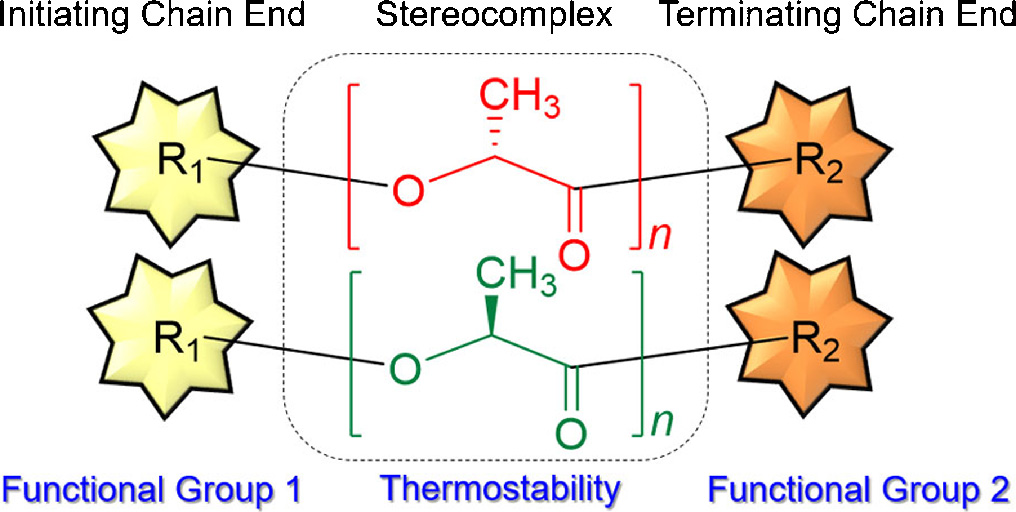 JOURNAL FREE ACCESSPolylactides, which were synthesized by renewable sources, can be used as environmental and biomedical materials because they are biodegradable and -absorbable. However, they have low thermal and mechanical strength, and lack specific functionalities. It is known that the stereocomplex formation of polylactides improve their thermal stability and mechanical strength. In this review, we use chain end modification for additional functionalization. We achieved high thermal stability, antibacterial properties, and dynamic interaction functionality. Additionally, we also investigated the selective adhesion by stereocomplex formation due to polymer-polymer interaction with interfacial main chains of polylactide.View full abstractDownload PDF (1405K)
-
Masaya YAMAMOTO, Hiroyuki TODA, Yasuhiko TABATA2018Volume 75Issue 1 Pages 23-31
Published: January 25, 2018
Released on J-STAGE: January 25, 2018
Advance online publication: December 13, 2017 JOURNAL FREE ACCESSThe objective of this study is to obtain the fundamental knowledge of mesenchymal stem cells (MSC) cultured in a sandwiched condition with biofunctional hydrogels as a 3-D culture model. The biofunctional hydrogels were prepared through the immobilization of a cell signaling protein on poly(acrylamide) hydrogels with different crosslinking densities. As the cell signaling protein, ephrinB2 of an Eph signal ligand was employed to stimulate the osteoblastic differentiation of MSC. In this study, by making use of the specific interaction between IgG Fc domain and proteinA, the immobilization of ephrinB2-Fc in an orientation-regulated manner was designed to achieve the Eph signaling.View full abstractDownload PDF (1143K)
Original Papers
-
Tadashi YAMAGUCHI, Iori YAMADA, Motohiro TAGAYA2018Volume 75Issue 1 Pages 32-41
Published: January 25, 2018
Released on J-STAGE: January 25, 2018
Advance online publication: December 13, 2017 JOURNAL FREE ACCESSThe development of calcium phosphate (CP) coating techniques on tissue culture poly(styrene) (TCPS) plates is very important in biomedical fields. In this study, CP/L-α-phosphatidylcholine phospholipid vesicle (PV) hybrids were formed on TCPSs, suggesting the unique physicochemical properties of CP/PV hybrid films. The film formation was conducted by the following two different processes; (i) the CP deposited on PV was prepared in a simulated body fluid containing abundant trometamol (TSBF) and subsequently casted on TCPSs to form the films (“CP/PV-Bef”), and (ii) the CP was precipitated in TSBF on the pre-prepared PV films on TCPSs (“CP/PV-Aft”). In both processes, the CP/PV hybrid films were successfully coated on TCPSs through the mediation by PV. The morphologies and physicochemical properties of the films depended on the film formation process as well as the mineralizing time. It is presumed that the two functional groups of the phosphatidylcholine molecule, cationic choline and negative phosphate, can act as the CP nucleation sites in TSBF and the subsequent CP crystal growth would occur along the PV surfaces. It was confirmed that the mixed phases of octacalcium phosphate and hydroxyapatite (HAp) were mainly formed and were eventually converted to hydroxyapatite. The conversion was accelerated by the sterilization processes. The CP/PV-Bef films had plate-like morphologies with the particle sizes of several micrometers and poorly covered the TCPSs, whereas the CP/PV-Aft films were transparent and had the submicron-sized particulate morphologies to completely covered TCPSs. Furhtermore, the CP/PV-Aft films are stable enough to survive the sterilization processes and subsequent immersion process in a phosphate buffer saline, suggesting their application for cell culture plates.View full abstractDownload PDF (1287K)
-
Satoshi YAMAMOTO, Kazuki FURUKAWA, Masafumi ONO, Eiji YUBA, Atsushi HA ...2018Volume 75Issue 1 Pages 42-47
Published: January 25, 2018
Released on J-STAGE: January 25, 2018
Advance online publication: December 13, 2017 JOURNAL FREE ACCESSSonodynamic therapy (SDT) using ultrasound irradiation instead of photoactivation as in photodynamic therapy, has emerged as a promising treatment for various types of cancer. We have focused on titanium dioxide nanoparticles (TiO2 NPs) as a sonosensitizer which can generate reactive oxygen species by sonication. TiO2 NPs-incorporated polyion complex micelles were developed for the delivery into the cells. Here, carmofur being a hydrophobic prodrug was solubilized into the micelles. From in vitro experiments, it was confirmed that carmofur-solubilized micelles effectively suppress the cell viability due to the additive effect of the anticancer effect of 5-fluorouracil produced by hydrolysis of carmofur and the SDT effect.View full abstractDownload PDF (720K)
-
Hiroshi YAMASHITA, Toru HOSHI, Takao AOYAGI2018Volume 75Issue 1 Pages 48-53
Published: January 25, 2018
Released on J-STAGE: January 25, 2018
Advance online publication: November 17, 2017 JOURNAL FREE ACCESSPolycaprolactone (PCL) is one of the typical aliphatic polyesters, which attract much attention as biodegradable material for environmental or medical applications. The general functionalization of PCL, through copolymerization with functional CL monomer, is sometimes complicated. Recently, we have reported successful direct methylenation of PCL using catalytic dimethyltitanocene. In this study, thiol-ene reactions using thioglycolic acid, aminoethanethiol hydrochloride or mercaptoethanol were carried out for further functionalization of methylenated PCLs. Interestingly, although thermal properties of methylenated PCL changed, functionalized PCL with carboxyl or amino groups showed higher melting points and larger enthalpy changes. These results suggested that interaction between those functional groups would promote crystallization of the polymers. Such functionalized materials would be applicable as bioconjugates or scaffolds in regenerative medicine.View full abstractDownload PDF (758K)
-
Hirokazu TAJIRI, Honami KUBO, Tomoaki MURAKAMI, Taiyo YOSHIOKA, Tamako ...2018Volume 75Issue 1 Pages 54-60
Published: January 25, 2018
Released on J-STAGE: January 25, 2018
Advance online publication: December 05, 2017 JOURNAL FREE ACCESSNon-woven fabrics made of two kinds of silk fibroin, one extracted directly from silk glands of living silkworms (silk grand fibroin; SGF) and the other regenerated from degummed silk fibroin (regenerated silk fibroin; RSF), were prepared. The secondary structure, mechanical properties and histological characters of these two kinds of fabrics were investigated and compared for biomaterial use. Although the β-sheet crystal contents of these two kinds of fabrics were the same, the breaking strength and the Young’s modulus values of SGF fabric were significantly higher than those of RSF fabric. The difference of the physical properties is considered to be derived from the difference of the molecular weights of the silk fibroins because RSF degrades during the degumming process. In the histological test, SGF fabrics didn’t show calcification, but phagocytosis by multinucleated giant cells was partly observed 4weeks after the implantation into subcutaneous mouse tissue. Expression level of cytokines from in vitro tests revealed that inflammation by macrophages is the same in SGF and RSF films.View full abstractDownload PDF (917K)
-
Tomonori WAKU, Kaori KANAMARU, Yoshinori HIROYAMA, Ruriho SASAKI, Naoy ...2018Volume 75Issue 1 Pages 61-68
Published: January 25, 2018
Released on J-STAGE: January 25, 2018
Advance online publication: December 12, 2017 JOURNAL FREE ACCESSIn this study, we addressed the control of cell adhesion to polymer substrates, using nanoparticles composed of ovalbumin (OVA) and ovotransferrin (OTF) as a surface modifier. In addition to OVA and OTF, the nanoparticles consisting of pOVA and OTF were prepared and their physical properties and functions were also investigated, where pOVA is a large OVA fragment lacking in N-terminal 22 residues. The mixed aqueous solutions containing OVA and OTF, or pOVA and OTF, were heated to form nanoparticles with a diameter of 40–80 nm. The feed ratio of the two kinds of proteins affected the ζ-potentials of obtained nanoparticles. ANS fluorescence assay revealed that both OVA-OTF and pOVA-OTF nanoparticles possessed hydrophobic surfaces. Coating poly(styrene) substrates with the nanoparticles increased the hydrophilicity of their surfaces. In addition, HepG2 cells were cultured on the nanoparticles-coated poly(styrene) substrates. When coated with OVA-OTF nanoparticles, the cell adhesion to the substrate was promoted regardless of the OTF/OVA ratio of nanoparticles. On the other hand, when pOVA-OTF nanoparticles were coated, the cell adhesion was promoted or suppressed depending on the OTF/pOVA composition. Thus, coating polymeric substrates with the nanoparticles composed of egg white proteins may be a useful method for the control of cell adhesion.View full abstractDownload PDF (881K)
Notes
-
Masato UEDA, Masahiko IKEDA, Kenji DOI, Shigeo MORI, Hisashi KITAGAKI, ...2018Volume 75Issue 1 Pages 69-74
Published: January 25, 2018
Released on J-STAGE: January 25, 2018
Advance online publication: November 29, 2017 JOURNAL FREE ACCESSPorous materials show low Young’s moduli and excellent bonding to living bone. However, the strength of such materials is often insufficient in the initial stage of implantation. Thus, the objective of this study was to increase strength and Young’s modulus of porous titanium by filling the pores with a biodegradable mixture of polyglycolide (PGA) and calcium carbonate (CaCO3). The mixture was introduced into porous Ti (porosity: 60%) using a heat injection technique. When the pores were filled with PGA-CaCO3, compressive strength and Young’s moduli were drastically increased and influenced by the content of CaCO3. In an animal test, unfavourable autopsy findings could not be confirmed in rats and no bone was observed in the pores of the Ti-PGA composite. Decomposition of PGA lowered the surrounding pH, it was found to inhibit bone formation in the pores. Addition of CaCO3 to PGA could suppress the decrease in pH.View full abstractDownload PDF (976K)
-
Sho HIRAI, Makoto TAKEDA, Norihisa NITTA, Ryoko NAKANO, Hiroshi SEKIGU ...2018Volume 75Issue 1 Pages 75-79
Published: January 25, 2018
Released on J-STAGE: January 25, 2018
Advance online publication: December 11, 2017 JOURNAL FREE ACCESSWe polymerized a hydrophilic side chain crystalline block copolymer (SCCBC) by nitroxide-mediated living radical polymerization. The polymerized SCCBC changed the surface of polyethylene (PE) to hydrophilic and enabled dispersing PE particles in a polar solution. In addition, the PE particle suspension behaved as thermal rheological fluid (TR fluid). By using the SCCBC, PE particle and contrast medium (as a solution), we prepared a new functional TR fluid as an artery embolization agent. This new functional TR fluid showed a transition temperature near the body temperature and changed to solid. Furthermore, this TR fluid could be injected into the renal artery of a rabbit under X-ray fluoroscopy and sustained embolization for 28 days. This result indicates that the TR fluid could be used as embolic or hemostatic agent.View full abstractDownload PDF (603K)
-
Fabrication and Characterization of Elastin-Crosslinked Silk Fibroin Material for Tissue EngineeringEmiri TANAKA, Derya AYTEMIZ, Shuhei TARA, Yasumoto NAKAZAWA2018Volume 75Issue 1 Pages 80-83
Published: January 25, 2018
Released on J-STAGE: January 25, 2018
Advance online publication: November 17, 2017 JOURNAL FREE ACCESSSilk fibroin (SF) is a fibrous protein containing crystalline β-sheets with biocompatible and biodegradable properties. However, cell response and elasticity of SF is not sufficient for cardiovascular applications. In order to improve this property, we used elastin (EL) with SF by cross-linking with genipin. EL shows smooth muscle cells (SMCs) contractile phenotype and prevents intimal hyperplasia. Genipin is a cross linker agent which reacts on amino groups of proteins. Because SF exposes basic amino acid only at the terminal region, we expected to promote cell response by elastin content and maintain the structure of the SF. Contact angle observation showed that the hydrophobic surface character increased with increasing EL ratio. Also underwater tension testing showed that EL adds flexibility to films. In addition, higher attachment and lower proliferation of SMCs was observed by increasing the EL ratio. This phenomenon suggests that elastin in the film promotes contractile phenotype of SMCs which results in suppressing cell proliferation.View full abstractDownload PDF (489K)
Regular Topics
Original Papers
-
Erika TAGUCHI, Michinori KARIKOMI, Takao KIMURA, Shigeaki MARUO2018Volume 75Issue 1 Pages 84-93
Published: January 25, 2018
Released on J-STAGE: January 25, 2018
Advance online publication: November 13, 2017 JOURNAL FREE ACCESSAntibacterial polyvinyl alcohol (PVA) hydrogels containing calcium hydroxide obtained from scallop shells were prepared by repeating freezing-thawing process. PVA hydrogels with various calcium hydroxide contents were evaluated on water retentivity, tensile strength, reswelling ability, pH of medium, and plant cultivation ability. From our results, we concluded that a PVA hydrogel containing 20 parts by weight of calcium hydroxide in 100 parts by weight of PVA would be a safe and highly practical antibacterial material. This gel was evaluated for heat resistance, antibacterial/deodorant performance and their sustainability. We confirmed that it can withstand heating up to 80°C. This gel has a sufficient antibacterial effect, because by using E. coli, we found that the bacteriostatic activity value was >6.0 and the sterilization activity value was >3.1, and thus it has sufficient antibacterial effect. In the deodorization test using acetic acid gas, it was confirmed that the gas decreasing rate after 2 hours was >95%, and thus, deodorization is also possible. Furthermore, even when immersed in deionized water for 3 months, about 60% of the calcium hydroxide remained in the PVA hydrogel.View full abstractDownload PDF (1311K)
Notes
-
Yasuyuki SUGIYAMA, Masatoshi OHTA2018Volume 75Issue 1 Pages 94-98
Published: January 25, 2018
Released on J-STAGE: January 25, 2018
Advance online publication: November 15, 2017 JOURNAL FREE ACCESSBecause of shampooing, drying, brushing etc., hair twists, breaks or acquires split ends; furthermore the cuticle may come off. We tried developing a shampoo agent and conductive treatment agent which repairs hair damaged by washing, drying, brushing, coloring, or perming. The effect of both agents on repair of damaged hair was examined by transmission electron microscopy and electrical conductivity. We compared previous data of optical microscopy with transmission electron microscopy images. As a result, it is clear that a scale-forming material, like a cuticle, is deposited in the keratinization region, and the frizzled hair became straight, because of using shampoo agent and conductive treatment agent containing hematin. These facts suggest that components of shampoo, treatment and/or hair cortex are preferentially adsorbed to the asperities of fragments which are cut off from the cuticle and then these components produce the scale-forming material, like a cuticle, due to epitaxial growth.View full abstractDownload PDF (946K)
-
Atsushi KOBAYASHI, Yuto HOSHINO, Nanami KAMIZAWA, Hiroshi ITOH2018Volume 75Issue 1 Pages 99-102
Published: January 25, 2018
Released on J-STAGE: January 25, 2018
Advance online publication: November 13, 2017 JOURNAL FREE ACCESSAs result of evaluation of the effect of borax on starch gelation, the critical concentration of starch gelation decreased with increasing borax concentration when native starches were used, while the critical concentration of starch gelation increased when soluble starch was used. When soluble starch was employed, no significant difference was observed. In contrast, addition of borax reduced the rate of drying of native starch gels, suggesting that addition of borax is effective for increasing the water-retention of native starches. These results suggest that the possible site of attachment for borate ester is dependent on the local structure of the starch, such as helix or branching configuration.View full abstractDownload PDF (599K)
- |<
- <
- 1
- >
- >|