Influence of rice hull biochar and cedar bark media on strawberry productivity and carbon sequestration potential in hydroponic systems

2026 Volume 19 Issue 2 Pages 87-95
Details
2026 Volume 19 Issue 2 Pages 87-95
This study evaluated the influence of rice hull biochar (RHB) and cedar bark media (CBM) as sustainable substrates for hydroponic strawberry cultivation. The total yield from virgin CBM was 413 g/plant and that from virgin RHB was 354 g/plant. Used CBM increased the yield by 4 % (429 g/plant) while used RHB increased yield by 18 % (419 g/plant) compared to the virgin, with no significant substrate differences. Fruit yields and physical properties were strongly correlated, particularly with particle density (R2 = 0.573). After 7 years of cultivation, plant residues had accumulated in both substrates. Uncarbonized carbohydrates in RHB indicated 25.71 % and 0.40 kg/kg of carbonized carbon retained, which was 98.4 % compared to the virgin RHB. CBM decomposed overtime, limiting its long-term stability.
Soilless culture in a controlled environment agriculture, particularly hydroponic systems, enhances food productivity for the growing global population. It provides efficient use for land, water, and fertilizer, better crop quality, and protection against pests and diseases, aligning with sustainable development goals (Thapa et al., 2024). In hydroponic systems, selection of a suitable substrate for plant growth is crucial for optimizing resource utilization and crop productivity. A good substrate should provide enhanced water-holding capacity (WHC), air-filled porosity (AFP), stable pH and electrical conductivity (EC), sufficient ion exchange capacity (IEC), and mechanical support to facilitate root growth and nutrient uptake (Bar-Tal et al., 2019; Raviv et al., 2019).
These substrates are broadly classified into two categories: inorganic (such as perlite, rockwool, and pumice) and organic (including peat, coir, bark, and char) (Bar-Tal et al., 2019; Carlile et al., 2019). The production of inorganic substrates such as perlite and rockwool is characterized by high energy consumption, which contributes to carbon emissions, whereas pumice is transported from volcanic regions, further exacerbating carbon emissions (Bar-Tal et al., 2019). These substrates also present limited recycling opportunities and pose significant challenges with their disposal (Fussy et al., 2022).
Organic substrates are considered carbon-neutral and have high WHC and IEC, which render them ideal for use as culture substrates (Carlile et al., 2019). Peat is a non-renewable organic substrate formed through the gradual decomposition of organic matter over millennia, and also a major carbon sink. The extraction of peat contributes to carbon emissions, thereby exacerbating climate change and causing environmental issues (Carlile et al., 2019). Although coir, derived from coconut husk, is renewable, it possesses a higher carbon footprint due to its transportation from Southeast Asia (Gruda, 2019).
The emergence of carbon markets has increased awareness of carbon footprints and climate action (Mrówczyńska-Kamińska et al., 2021). These factors underscore the need for more sustainable production systems that improve productivity while minimizing environmental impact, emphasizing the exploration of alternative substrates and their potential for reuse in hydroponic crop production. Various studies have investigated alternative substrates for hydroponic systems, focusing on their properties and their effects on plant growth and performance. In strawberry (Fragaria × ananassa) cultivation, various organic fractions of byproducts from the wood industry, such as wood fiber, sawdust, or aged bark-based substrates, have shown a potential to replace peat and coir owing to their comparable physical properties (Aurdal et al., 2023; Depardieu et al., 2016; Woznicki et al., 2023). Cedar bark medium (CBM), an abundant by-product of the Japanese wood industry, has been successfully applied in horticultural restoration projects for tomatoes and strawberries (Ishihara et al., 2007; Ohta et al., 2019).
Biochar has been recognized as another alternative substrate since ancient times and is traditionally used as a low-cost, environmentally friendly, and locally available soil conditioner. Rice hull biochar (RHB), a by-product of rice industry, is produced through the thermal decomposition of rice hulls at temperatures ranging from 300–600 °C in an anaerobic environment (Karam et al., 2022). Owing to its microporous structure, RHB is characterized by light weight, high air permeability, water-holding capacity, and the presence of nutrients such as silicon (Si), sodium (Na), potassium (K), carbon (C), calcium (Ca), and aluminum (Al) (He et al., 2024; Nagaraju et al., 2023). Blending soil and RHB from 10 % to 70 % enhances horticultural crop production, including strawberries (Altland et al., 2013, 2017; Diel et al., 2018). Also, biochar can reduce the autotoxicity in closed hydroponic systems (Aali et al., 2024). However, there are several limitations of virgin (unused/fresh) biochar. These include its highly alkaline nature (Nagaraju et al., 2023) which reduces nutrient absorption and translocation hence affecting seedling growth (Yin et al., 2024) and its comparatively high hydraulic conductivity due to its fine porous internal and external voids. These limitations raise concerns about its use as a hydroponic substrate.
Recent studies have investigated the sustainability of different substrates through comprehensive life cycle assessments (LCA) and reusability in hydroponic systems (Lee et al., 2024; Ruett et al., 2024; Vandecasteele et al., 2023). Reusing substrates resulted in lower production costs and mitigation of disposal challenges (Ruett et al., 2024). Similarly, RHB follows circular economy principles by using waste from the rice industry and promoting environmental, social, economic, and technical benefits (Illankoon et al., 2023). Utilizing biochar as a growth medium has also been reported to contribute to greenhouse gas reduction by enhancing carbon stocks (IPCC, 2006).
Despite efforts to investigate the sustainability criteria for the incorporation of biochar, the carbon sequestration potential as a stand-alone substrate and its reusability have not been evaluated for hydroponic cultivation. This represents a clear research gap in understanding both the productivity and long-term sustainability of biochar-based hydroponic systems. Therefore, this study investigated the basic characteristics of RHB in comparison to CBM as a stand-alone substrate for two continuous growing years of strawberry hydroponic cultivation in Japan, evaluating their effects on strawberry productivity and carbon sequestration potential in terms of greenhouse gas reduction.
This study was conducted at Saga University, Japan, at 33°14′N, 130°17′E latitude and longitude and approximately 5 m above sea level. The strawberry cultivation period spanned two years, with each year representing a distinct cultivation season, labeled Year I (2016–2017) and Year II (2017–2018), each extending from May to April.
The substrates used were commercial RHB obtained from Green Industry Co., Ltd. (Saga city, Japan) and CBM obtained from the Hita Resource Development Cooperative Association (Hita city, Japan). The strawberry variety used for cultivation was ‘Sachinoka’ and its seedlings were obtained from runners of the parent plants in May and maintained using RHB and CBM as growing substrates, with a continuous water supply from the sprinkler system until September.
In September, three-month-old nursery plugs were transferred to a tunnel-shaped experimental greenhouse (149 m2) with rolled-up side-window walls on both sides. The greenhouse consisted of four trough shaped beds with a height of 0.8 m, width of 0.2 m, and length of 11 m. The substrate volume was 22 L m−1. Two trough beds were filled with RHB and the other two beds were filled with CBM. Approximately 70 plants were transplanted on both sides, alternating along the bed at 0.15 m apart. The nutrient medium was prepared by an equilibrium culture medium using commercial fertilizer (OAT Agrio Co., Ltd., Japan) with 5 mg/L ammonic nitrogen, 105 mg/L nitric nitrogen, 46 mg/L P2O5, 189 mg/L K2O, and 110 mg/L CaO, 40 mg/L MgO, 0.5 mg/L MnO, 0.5 mg/L B2O3, 1.5 mg/L Fe, and other micro-elements. The concentration of the nutrient medium was maintained at an EC of 1.3 mS/cm. Fresh nutrient medium was supplied through micro irrigation tubes controlled using a timer. In the first year, nutrient medium was supplied at three irrigation sessions of two minutes each per day, giving a total of 0.47 L of nutrient solution per plant. RHB had higher leachate volume, thus, irrigation frequency was increased to five sessions of two minutes per day in the second year, providing approximately 0.71 L per plant. Although the total irrigation volume was higher for RHB, excess medium was drained and this adjustment was made to maintain comparable root-zone water availability.
A hot air heater was used to maintain a temperature above 15 °C. To prevent dormancy, the light period was extended to three hours following sunset using incandescent lamps. For pollination, a beehive (Bombus ignites) was introduced into the greenhouse. The trough beds were covered with grey polythene sheets to prevent water evaporation from the surface of the medium and salt accumulation. Once flowering began, three flowers per stalk were allowed.
For the second year of cultivation, the plants in the first year were cut above ground and the thick stems were removed, while the roots remained in both media. During July and August, all the greenhouse windows were closed, and the four trough beds covered with polythene sheets were sterilized using solar heat and chlorpicrin.
2.2. Evaluation of substrate properties and adsorption desorption characteristicsThe physical and chemical properties of the substrates were evaluated using each virgin substrate (three replicates) and used substrates (three replicates × four beds). Bulk density (BD), particle density (PD), total porosity (TP), WHC, AFP, volatile solids (VS%), saturated hydraulic conductivity (SHC), and pH, EC were measured according to Carter et al. (2007). The detailed methods are described in Supplementary Note 1. The obtained values were compared to an optimal range provided by Abad et al. (2001) and Blok et al. (2019).
The adsorption and desorption characteristics were investigated by measuring the elemental concentrations of leachate from the virgin and used substrates. The air-dried substrate samples were immersed in a nutrient medium, shaken for an hour, and filtered. The leachate was collected and subjected to elemental analysis of K, Ca, Mg, Mn, Fe, and Si using an atomic absorption spectrophotometer (AAS -iCE 3000, Thermo Fisher Scientific Inc., USA).
2.3. Evaluation of strawberry yieldStrawberry fruits were harvested at 70 % coloring from December to March, twice per week. The weights of the strawberries, including unmarketable fruits (bruises, disorders, infections, or < 10 g) were recorded and the weekly total yield, marketable yield per plant, and average fruit weight calculated.
2.4. Evaluation of Sustainability criteria for substrate usageTo estimate carbonization efficiency, virgin RHB was hydrolyzed by 60 wt% sulfuric acid to erase uncarbonized carbohydrates (Sluiter et al., 2010). To demonstrate that the charcoal in RHB remained undecomposed even after extended cultivation periods, RHB samples, after 7 years of strawberry cultivation and containing plant root residues, were also subjected to hydrolysis. This process was employed to eliminate uncarbonized carbohydrates and plant residues. The potential of carbon stock estimation for RHB was determined using the following equation in accordance with the guidelines of the Intergovernmental Panel on Climate Change (IPCC, 2006).
| (1) |
Where CS is the carbon stock (g), MB is the mass of biochar (g), Fc is the organic carbon fraction in the raw material, which is 49 %. Fperm is the fraction of biochar carbon in RHB by high-temperature pyrolysis and gasification above 600 °C remaining after 100 years, which is 89 %. To estimate CO2 sequestration, the weight of carbon was converted to CO2 by multiplying it by 3.67.
2.5. Statistical analysisA completely randomized design (CRD) with two factors was used to determine the yield, quality parameters, and substrate properties. The simple main effects of substrate type (S: RHB or CBM) and usage state (T: virgin or used) were assessed using a two-way analysis of variance (ANOVA). When interaction effects were present, one-way ANOVA was followed by Tukey’s test (p ≤ 0.05) to compare the means. ANOVA at a 5 % confidence interval was performed for the elemental concentrations in the leachates. Pearsons’s correlation was performed between the substrate properties and yield parameters. All statistical analyses were performed using SPSS statistical software (IBM SPSS Statistics for Windows; Version 22.0., IBM Corp., USA.).
The physical, chemical, and hydraulic properties of the RHB and CBM are shown in Table 1. All properties of the virgin CBM were within the optimum range for container cultivation. Virgin RHB exhibited favorable BD, PD, and TP, and significantly higher WHC (85.76 %) and SHC at 0.99 cm/s comparable to CBM, despite lower AFP (7.76 %) below the recommended range. Although this suboptimal AFP is detrimental to root oxygenation, the measured values represent full water saturation, a condition that rarely persists during normal irrigation due to the high SHC, which facilitates rapid drainage. Thus, the actual severity of oxygen limitation in practice may be lower than the saturated measurements suggested. However, the pH (8.99) of virgin RHB were significantly higher than the optimum values, similar to previous literature (Dunlop et al., 2015; García-Rodríguez et al., 2022; Yu et al., 2020).
| BD (g/cm3) | PD (g/cm3) | TP (%) | WHC (%) | Air (%) | VS% | pH | EC (s/m) | SHC (cm/s) | ||
|---|---|---|---|---|---|---|---|---|---|---|
| Optimum Range for container substrates 1) | <0.4 | 1.4–2.0 | >85 | 60–100 | 20–30 | >80 | 5.5–6 | <0.1 | 0.01–1.7 | |
| Virgin State | RHB | 0.10 | 1.63 | 93.52a | 85.76 | 7.76 | 46.14d | 8.99a | 0.03b | 0.99a |
| CBM | 0.09c | 1.56 | 94.58a | 71.88 | 22.71 | 93.95a | 5.75b | 0.01b | 0.75b | |
| Used State | RHB | 0.12b | 0.88 | 86.86b | 82.19 | 4.67 | 49.45c | 5.07c | 0.22a | 0.34 |
| CBM | 0.14 | 0.60 | 76.62 | 64.84 | 11.78 | 90.51 | 4.44 | 0.30 | 0.33 | |
| Significance | (T) | * | * | * | ns | * | ns | * | * | * |
| (S) | ns | ns | * | * | * | * | * | ns | * | |
| T×S | * | ns | * | ns | ns | * | * | * | * | |
Physical properties; BD-Bulk density (g/cm3), PD-Particle density (g/cm3), TP-Total porosity (%), Solids (%), WHC-Water holding capacity (%), air (%), VS-volatile solid (%), chemical properties; pH and EC (s/m) and hydraulic properties; SHC- Saturated hydraulic conductivity of the virgin and used hydroponic substrates.
Data are mean values. Factors are; Substrate (S) either CBM or RHB and State (T) either virgin (Year I) or used (Year II). Asterisk* represents the significant effect of factors. Values followed by different superscript letters are significantly different within a column according to Tuckey test (p < 0.05) conducted if significant interaction effects are present. Note, ‘ns’ refers to not significant.
1)Acceptable or optimum range of physical, physico-chemical, hydraulic and chemical properties for container substrates, according to Abad et al. (2001) and Blok et al. (2019).
After one year of use, both substrates showed a significant increase in BD along with a decrease in TP, PD, WHC, AFP, and SHC. This was probably due to the effects of compression resulting from root growth and decrease in substrate volume. The physical properties of CBM decreased due to a substantial decline in PD, TP, WHC, AFP, VS%, SHC, and an increase in BD. However, for RHB, the reduction in TP was minimal, with over 80 % of WHC and SHC within the optimum range for cultivation, indicating a better retention of its structure. These results are consistent, as biochar incorporation has been shown to increase the TP and bulk capacity of substrates, which is essential for maintaining moisture until the next irrigation and preventing drought stress (Yu et al., 2020). Therefore, RHB also has the capacity to support low irrigation systems while maintaining both yield and quality (Odagaki et al., 2024). However, the AFP at saturation for used RHB was only 4.67 %, which is significantly below the recommended range. Therefore, there is a risk of intermittent hypoxic periods under frequent irrigation, potentially contributing to reduced fruit weight. This risk can be mitigated through careful irrigation management that prevents extended fertigation durations leading to saturation. The VS% in virgin RHB was significantly lower (46.14 %) as an inorganic substrate and it increased by 3.31 % over a year due to the accumulation of additional organic matter such as roots. Conversely, CBM’s VS% decreased by 3.4 % and it was considered that the decrease due to the decomposition of organic matter in CBM was greater than the increase due to root organic matter.
The pH dropped in both substrates, CBM to 4.44 which is below the recommended range (5.5–6) for strawberries while RHB approached an optimum pH of 5.07. This could be attributed to the accumulation of the elements described in the section below.
3.2. Adsorption and desorption characteristics of metal elements in fertilizer solution by the substratesThe elemental concentrations in the aqueous solution filtered through each substrate are shown in (Fig. 1. Virgin CBM acts as a virtually inert substrate, displaying neither leaching nor adsorption of any metal element, facilitating easier nutrient management in hydroponic systems. The virgin RHB exhibited pronounced K leaching (Fig. 1 (a)) and Si leaching (Fig. 1 (b)), coupled with Ca adsorption. It had the capacity to provide twice the quantity of K present in the fertilizer solution during the initial filtration, which is consistent with the literature (Dunlop et al., 2015; Sabatino et al., 2020; Vandecasteele et al., 2023). This shows the potential of RHB as a supplier of K in a fertilizer solution (Altland et al., 2017). The adsorption of Ca by RHB may exhibit as a buffer, and gradually releasing it over an extended period (Ortiz-Delvasto et al., 2023). The gradual release of Si evidenced through virgin and used RHB, similar to Boldt et al. (2018), is particularly beneficial, because silicon is well-known to improve yield, fruit quality, and disease resistance in strawberries and other crops (Jayawardana et al., 2016; Munaretto et al., 2018; Peris-Felipo et al., 2020). However, hydroponics tend to be more deficient in silicon than soil (Gottardi et al., 2012), making the use of RHB an effective strategy to address this limitation.

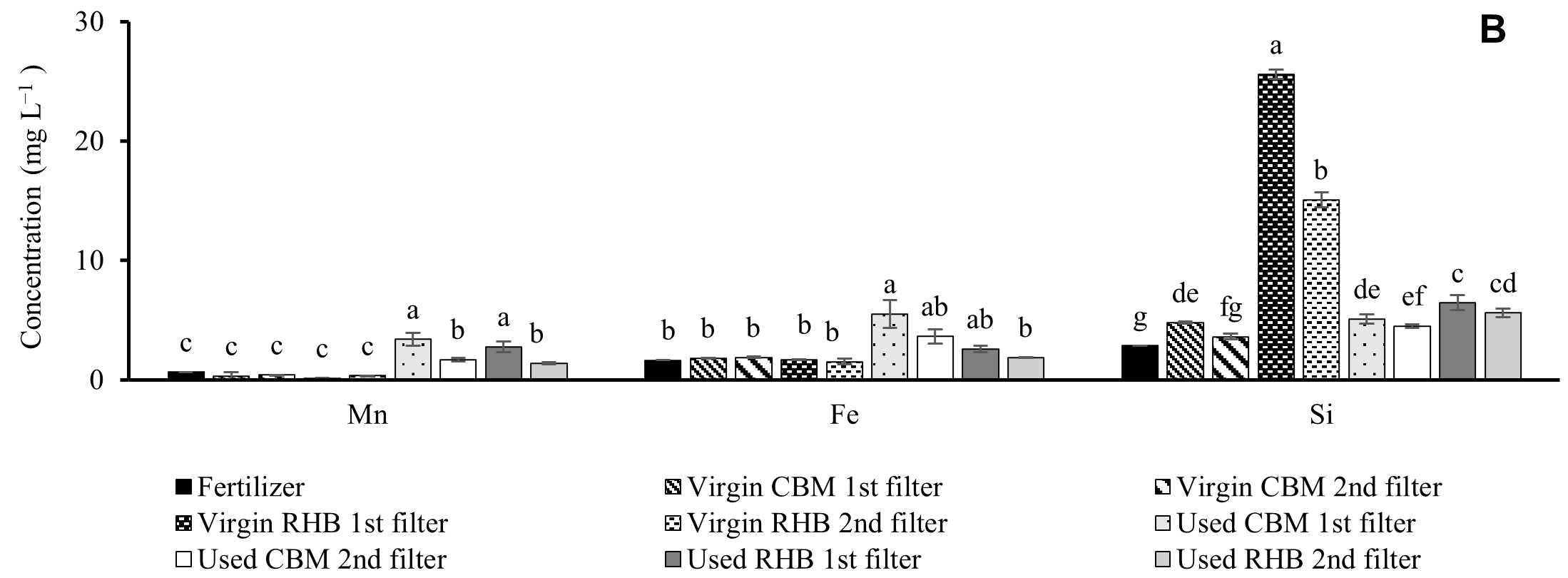
Fig. 1 Concentration of elements in aqueous solution filtered through each substrat
Lowercase letters represent significant differences among filtrates through the substrates and the fertilizer solution, within each element, based on ANOVA (p < 0.05).
The concentrations of K, Ca, and Mg in the fertilizer were high, thus reusing substrates would lead to the accumulation of these elements in the used substrates. Therefore, to enhance fertilizer-use efficiency, it would be required to utilize the accumulated elements by reducing these through adjusting the fertilizer solution. Fe in the used RHB showed minimal accumulation because Fe concentration in fertilizer solution was lower (1.5 ppm), and potentially due to the antagonistic effects of Ca and Fe (Palani, 2019).
These results indicate that the relationships between mineral elements and physical and chemical properties are significantly different between CBM and RHB. CBM indicated stable adsorption and desorption characteristics toward metal elements while RHB indicated active ion exchange. As a result, continued use of the substrate appeared to stabilize the adsorption and desorption of ions in the nutrient solution, leading to decreasing pH and increasing EC. These EC increases were attributed to the substantially higher ion‑exchange capacity of organic media compared with soil (Dunlop et al., 2015), which led to greater accumulation within the media of salts originating from the nutrient solution. In conventional soil-based cultivation, EC exceeding 0.1 S m−1 indicates a potential risk of salt accumulation, which can inhibit plant nutrient uptake and consequently reduce overall yield (Ries et. Al., 2025). However, the overall yields from the continuous cultivation by both substrates were satisfactory, with no detectable effect of the increased EC on yield. Accordingly, the optimum EC for both substrates was considered appropriate and higher than that for normal soil cultivation.
3.3. Strawberry yield and its relationship to the substrate propertiesTotal yields of strawberry fruits and marketable yields without bruises, disorders, infections, and above 10 g of fruit weigh are shown in Fig. 2 (A) and (B). By the end of the 15th week, virgin CBM showed the highest total yield at 413 g/plant and the highest marketable yield (378 g) compared to virgin RHB as 354 g and 314 g, respectively. This difference might have resulted from distinctive properties between CBM and RHB. Virgin CBM indicated the favorable physical and chemical properties and virgin RHB indicated the limited nutrient retention and availability at high SHC and alkaline pH, which might cause plant stress and lower plant growth (Choi et al., 2018; García-Rodríguez et al., 2022). Similarly, biochar has provided only moderate growth and yield performance for Korean strawberry cultivars (Rabbani et al., 2025). Therefore, RHB is often used as a minor component in substrate mixtures rather as a stand-alone substrate (Choi et al., 2018). However, when comparing 314 g/plant yield from RHB in literature, 163–342 g/plant variability was found in different substrates and cultivars, indicating its potential as a productive substrate for strawberry cultivation, along with CBM (Alsmairat et al., 2018; Mitsui et al., 2000; Palencia et al., 2016; Prasad et al., 2022; Zahid et al., 2021).

(A) Cumulative total yield per plant, (B) Cumulative marketable yield per plant, (C) Weekly fruit number per plant, (D)Weekly strawberry weight variation.
Factors are; Substrate (S) either CBM or RHB and State (T) either virgin (Year I) or used state (Year II). In (A) and (B) the factor effects are represented for the total cumulative value at the 15th week. Star * represents the significant effect (p ≤ 0.05) of factors. Different letters in the legend and near data points indicate significant differences at p ≤ 0.05 as main effects according to the Tuckey test.
When reused, CBM indicated a 4 % increase (429 g) in yield, while RHB indicated an 18 % increase (419 g), potentially due to the gradual decrease in pH and SHC, ultimately improving yield performance. Marketable yields in used substrate were 30–35 % lower than those of virgins because of unmarketable smaller fruits than 10 g (18–21 %; 146–176 g/plant), powdery mildew infestation (8–7 %; 70– 64 g/plant), and misshapen fruits (8–7 %; 67–60 g/plant) (data not shown).
The total fruit number per plant increased over time, reaching a maximum in February and early March, and then gradually decreased (Fig. 2 (C)). Among the virgin substrates, RHB produced the lowest fruit numbers, while both virgin substrates showed a gradual increase in the mid-season, followed by a decline towards the later weeks. In contrast, the used substrates had higher initial fruit numbers, a mid-season dip (weeks 4–6) due to powdery mildew infestation, and a rapid increase in the final weeks.
The average fruit weight was initially lower for virgin substrates. It increased to approximately 17 g at week 5 in January and then stabilized from week 7 onwards (Fig. 2 (D)). In contrast, in the used substrates, the average fruit weight began around 20 g, decreased in week 6, and stabilized from week 7 onwards.
For the used substrates, the number of fruits increased during the peak yield period (11–13 weeks). However, the average fruit weight remained slightly below 10 g, thus the number of marketable fruits decreased because the threshold was set at 10 g. These results might be due to the substrate compaction towards the end of the season, as shown in Table 2, where increased bulk density and reduced porosity were associated (R2 = 0.5) with decreased number of marketable fruits and the average fruit weight. Lower AFP reduces oxygen uptake and affects strawberry phenology (Ameri et al., 2020). When oxygen is depleted in the rhizosphere, hypertrophic tissue of the root is formed to compensate for the reduced oxygen uptake (Shimamura et al., 2010), which may have caused delays in fertilizer absorption from the root, preventing the fruits from reaching their maximum weight (Shimamura et al., 2010). This may have caused delays in fertilizer absorption from the root that prevented the fruits from reaching their maximum weight. Therefore, it is essential to eliminate the effects of substrate physical changes and maintain stable rhizosphere conditions, and increasing the frequency of fertigation with small amounts is considered an effective method during the yield peak.
| Contribution ratio | R2 | Linear regression equation | |
|---|---|---|---|
| Marketable Fruit No. | × BD | 0.566 | y = −216.85x + 46.587 |
| × PD | 0.573 | y = 8.6244x + 12.371 | |
| × TP | 0.515 | y = 0.4575x − 18.069 | |
| × EC | 0.575 | y = −29.765x + 26.274 | |
| × SHC | 0.535 | y = 12.664x + 14.262 | |
| Average fruit size | × BD | 0.505 | y = −55.219x + 19.777 |
| × PD | 0.572 | y = 2.3218x + 10.928 | |
Table 3 shows the remaining carbon in RHB as the sustainability criteria for substrates. Upon sulfuric acid hydrolysis, virgin RHB had 2.20 % uncarbonized carbohydrates, which would degrade over time while retaining 97.8 % of the biochar. After 7 years of cultivation, RHB had a total of 25.73 % uncarbonized carbohydrates and plant residues that had accumulated in the substrate. By comparing the total carbon in 1 L substrate, virgin RHB contained 87.72 g and after 7 years of cultivation, it retained 86.32 g, indicating a carbon retention of approximately 98.4 %. The reduced 1.60 % of carbon was considered to have been finely crumbled and run off from cultivation through beds. At this time, the weight of carbon stock was 0.53 kg/kg of virgin and 0.40 kg/kg after 7 years.
| Virgin RHB | 7 year RHB | |
|---|---|---|
| Dry weight (DW) (g/L) | 166.5 | 215.8 |
| Uncarbonized carbohydrate (g/L), (%) |
3.7 (2.22) |
55.5 (25.71) |
| Char without uncarbonized material (g/L) | 162.8 | 160.3 |
| Ash (g/L) | 75.12 | 73.95 |
| Retaining carbon (g/L) | 87.72 | 86.32 |
| Carbon Stock (Kg C Kg−1) | 0.53 | 0.4 |
The estimated carbon stock of RHB after 100 years was calculated as 0.43 kg/kg, with 1.57 kg of CO2 sequestered (IPCC, 2006). Around 0.40 kg/kg of the carbon-stock retained in 7 years of cultivation was similar value to this theoretical estimation considering the reduction in char volume due to fines running off with the drainage. For CBM, the organic carbon content was estimated to be 51.1 %. This will be its entire carbon stock over time, making it less sustainable in the long term, then it will be assumed to be completely decomposed after 100 years (Matthews, 1993). Assessing the effectiveness of CBM in carbon sequestration remains a significant challenge for future research.
In this study, RHB used in two 11-m-long trough beds (484 L; 23.7 kg) of biochar provided 12.56 kg of carbon stock, indicating substantial carbon storage and greenhouse gas reduction benefits of RHB in large-scale systems. Usually, biochar mitigate the carbon footprint either through closed-loop systems or as a peat substitute, thereby enhancing the sustainability of growing systems (Dunlop et al., 2015; Vandecasteele et al., 2023). However, RHB’s contribution to sustainability here aligns with its excellent water and nutrient retention properties, reusability, stability and local suitability. In contrast, CBM exhibited moderate retention capacities and favorable leachate behavior; and a gradual reduction in its carbon stock during the growing cycle, suggesting gradual diminishing over time compared to RHB.
Our research indicates that RHB can be reused in hydroponic systems to improve yield. This is because RHB retains its structural integrity, as demonstrated by its lower organic matter content (46–49 %). Similar research has found that the reuse of substrates can result in a 10 % reduction in environmental emissions, and for each percentage increase in biochar, GWP decreased by 7.6 % (Ruett et al., 2024). Reusing substrates can also reduce waste and resource consumption (Gruda, 2019). In contrast, according to the data by Depardieu et al. (2016), the gradual decomposition of the plant fiber structure in CBM leads to a 3.4 % decrease in organic matter within one year, thereby altering its physical and chemical properties. Therefore, to maintain wood-based substrates such as CBM as a stable solid phase over a long period, it is necessary to periodically add fresh substrate to compensate for the loss.
As the demand for sustainable and productive alternative substrates in horticulture increases, this study evaluated RHB as a viable stand-alone option for hydroponic strawberry production over consecutive years compared to a wood-based substrate, CBM. Both RHB and CBM produced comparable strawberry yields, with virgin CBM initially producing slightly higher total and marketable yields, while long-term repeated usage would induce compaction and degradation of physical structure. In contrast, while initial deviations in alkalinity can affect nutrient adsorption and desorption, and low AFP may pose a risk to root oxygenation, RHB demonstrates stable water retention and nutrient availability leading to improved yields with continuous use. Simultaneously, RHB minimized substrate disposal and enhanced carbon stocks, thereby improving resource-use efficiency and carbon sequestration. These characteristics position RHB as a better substrate with both economic and environmental advantages for hydroponic cultivation. An emphasis can be put on the use of RHB as a low-cost stand-alone substrate that requires minimal labor for substrate mixture preparation and seasonal renewal. However, its limitations should be monitored and managed through frequent small-volume irrigation.
These aspects are especially important in the context of emerging voluntary carbon markets, because RHB has the potential to introduce carbon-neutral hydroponic production systems. Hence, this research provides valuable insights for strawberry growers in selecting substrates not only for higher productivity but also for the sustainability of their growing systems.
The authors declare no conflicts of interest.
The supplementary data, Equations in this article are published in J-STAGE Data.
(URLs on references were accessed on 23 April 2026.)


