Effect of dolomite fine powder on the flow and pasting properties of starch

2026 Volume 19 Issue 3 Pages 162-168
Details
2026 Volume 19 Issue 3 Pages 162-168
This study assessed the effects of dolomite powder addition on the flowability and gelatinization properties of potato and cassava starch (CS) powders. Dolomite, rich in calcium and magnesium, was added at 2 % (w/w), and alterations in bulk density, angle of repose, compressibility, and air permeability were assessed. Dolomite addition enhanced the flowability and reduced cohesion of potato starch (PS), whereas alterations in CS were minimal. Scanning electron microscopy revealed that dolomite particles adhered to the starch surfaces, affecting the powder morphology. Pasting property revealed that dolomite altered the gelatinization behavior, reducing the peak viscosity in PS while causing minor alterations in CS. These results indicate that the effect of dolomite addition on powder properties depends on the starch type.
Osteoporosis causes bone loss and increases fracture risk, and in women, estrogen deficiency is a contributing factor. Additionally, nutritional factors are thought to be associated with osteoporosis development, with low calcium intake observed in numerous women and elderly individuals. Calcium deficiency is associated with an increased risk of osteoporosis, pre-eclampsia, hypertension, rickets in children, and other health conditions (Aggarwal et al., 2012; Miller et al., 2001; Yousef et al., 2016). In one study, 74 countries, including numerous Asian countries, reported a dietary calcium intake below 500 mg/day (Balk et al., 2017). Therefore, adequate calcium intake is necessary to prevent deficiency-related diseases. Additionally, magnesium plays a significant role in osteoporosis prevention, and its deficiency has been identified as a risk factor (Rude et al., 2003; Toba et al., 1999). Therefore, adequate supplementation with calcium and magnesium is an effective strategy for preventing osteoporosis.
Dolomite, primarily composed of calcium magnesium carbonate (CaMg(CO3)2), is used as a food supplement to provide calcium and magnesium (Mattos et al., 2006). It is an attractive additive for nutrient fortification; however, to the best of our knowledge, no studies have assessed its effects on food quality. To address this gap, this study assessed the use of dolomite in powdered food products that are widely used both industrially and domestically worldwide. The quality of powdered foods is determined by their nutritional value, taste, and flavor. Additionally, the flow properties of powdered foods affect their stability during processing stages, such as storage, packaging, transportation, and manufacturing (Irie et al., 2021; Teunou et al., 1999). Particle size distribution affects the powder flow properties, with smaller particles increasing the contact area and reducing the flowability (Nei, 2022; Shah et al., 2023). Additionally, the particle shape affects the flow; Fu et al. (2012) reported that more spherical lactose powders flow better, likely because the mechanical interlocks between the particles are minimized. Poor flow properties can cause waste, maintenance issues, and downtime, significantly affecting the profitability of industrial processes (Shenoy et al., 2015). Therefore, understanding powder flow properties is crucial for process optimization.
When different powders are mixed, the resulting mixture exhibits a flow behavior distinct from that of individual powder (Benković et al., 2013). Even minute additions can significantly alter the flow properties (Benković et al., 2013; Shenoy et al., 2015). Accurate evaluation of the mixture’s flow properties is crucial to prevent production shutdowns because of unexpected flow behavior (Benković et al., 2013). The behavior of dolomite powder used for calcium and magnesium fortification remains unclear. A part of the guest particle, dolomite, may adhere to the surface of the host powder and act as a complex, or it may remain separate and behave as a single particle.
Since various factors, including the particle size of the host and guest and mixing conditions, affect the flow properties of mixed powders (Shah et al., 2023), documenting the alterations in flow properties owing to dolomite addition under various conditions may be useful for powder engineers.
This study aimed to provide basic knowledge on the addition of dolomite to powdered food products. Potato and cassava starches were used as model powders, and alterations in flowability induced by adding fine dolomite were closely assessed. Additionally, alterations in gelatinization properties were analyzed to determine their effects on the basic physicochemical properties of starch. Eggshell addition significantly modifies the gelatinization properties of potato starch (PS) (Nei et al., 2024). Dolomite and eggshells are calcium carbonate-rich materials that may significantly modify the gelatinization properties of starch; however, no data are available to date—therefore, this effect was examined in this study. Therefore, this study is the first to systematically evaluate the effects of dolomite addition on the flow and gelatinization properties of powdered foods, and the findings are expected to aid in optimizing and manufacturing of mineral-fortified foods.
PS (Kuroyanagi Seifun Co. Ltd., Japan), cassava starch (CS; House Gaban Corporation, Japan), and two different types of standardized dolomite powders (MW10 and MW100; Murakashi Lime Industry Co., Ltd., Japan) were used in these experiments. The MW10 and MW100 products are commercial food-grade dolomite powders that differ with respect to particle size (Table 1). According to the product specifications provided by the manufacturer, these powders contain ≥20 % (w/w) calcium and ≥10 % (w/w) magnesium. The particle sizes and moisture contents of PS, CS, and food powders are listed in Table 1.
| Sample | D50 (μm) | Span (–) | Water content (% w.b.) |
|---|---|---|---|
| PS | 36.7 ± 1.9 a | 1.3 ± 0.2 a | 16.4 ± 0.2 |
| CS | 14.5 ± 0.1 b | 0.9 ± 0.0 b | 12.0 ± 0.1 |
| MW10 | 1.9 ± 0.0 c | 1.8 ± 0.0 c | 0.7 ± 0.0 |
| MW100 | 3.7 ± 0.1 d | 1.4 ± 0.1 a | 0.6 ± 0.0 |
Data are expressed as the means and standard deviations of three measurements.
A laser scattering diffraction particle size analyzer (LS 13 320; Beckman Coulter Inc., USA) was used to measure the 50 % cumulative volume (D50) of the powdered samples. A dry powder system module was used for the measurements, and the particle size was calculated using a sample with a refractive index of 1.60.
2.3. Sample preparation methodDolomite powders (MW10 and MW100) were added to PS and CS to achieve a concentration of 2.0 % (w/w) yielding PS/MW10, PS/MW100, CS/MW10, and CS/MW100. Subsequently, the mixtures were processed for 1 h at 60 rpm using a stirring device (PM-1; AS ONE Corp., Japan).
2.4. Scanning electron microscopeScanning electron microscopy (SEM, JFC-1500; JEOL Ltd., Japan) was used to observe the powder morphology. The powdered samples were sputter-coated with gold (JFC-1500; JEOL Ltd.) before imaging at an acceleration voltage of 5 kV.
2.5. Measurement of bulk density and angle of repose (AR)Bulk density and AR were measured using a powder property tester (MT-1001; Seishin Enterprise Co., Ltd., Japan) with minor modifications to the method described by Nei et al. (2024). Samples were collected in a 100 mL container using a 710 µm mesh sieve from the top of the apparatus. After removing the excess powder, the container was weighed to calculate the aerated bulk density (ABD). The packed bulk density (PBD) was determined by performing 180 tapping operations at a drop height of 18 mm. The Hausner ratio (HR) was obtained from the ABD and PBD values as follows.
| (1) |
The AR was obtained by passing the powder through a 710 µm sieve, enabling it to fall freely onto the center of a circular table (diameter = 80 mm), and measuring the angle of the cone formed.
2.6. Compressibility and permeability testsBulk property tests were performed using an FT4 powder rheometer (Freeman Technology, Ltd., Worcestershire, UK) with a 25 mm accessory kit, following the method described by Freeman (2007) and Leturia et al. (2014) to determine powder compressibility permeability. The samples were placed in a vessel and conditioned in triplicate by the rotating blades downward and upward within the powder bed. After conditioning, the excess powder was removed from the vessel, and the rotating blade was replaced with a 23.5 mm vent piston. The piston was moved downward at 0.05 mm s–1 to apply a normal stress of 1–15 kPa to the powder bed, and the resulting volume was measured. The relationship between the applied normal stress and rate of volume change of the powder layer was used to compare the powder compressibility. For permeability testing, the rotor blade was replaced with a 23.5 mm vent piston after three conditioning cycles and excess powder removal. Air was introduced at 2 mm s–1, and a normal stress of 1–15 kPa was applied. The pressure drop as air passed through the powder bed was measured. Permeability was evaluated by plotting the relationship between the applied normal stress and pressure drop.
2.7. Pasting propertiesThe pasting properties were analyzed to determine the quality alterations in PS and CS after adding dolomite powder. Pasting properties were evaluated using a Rapid Visco Analyzer (RVA-4; Newport Scientific Pty. Ltd., Australia), following a slightly modified method from a previous study (Noda et al., 2004). Suspensions were obtained by adding distilled water to the powdered samples at concentrations of 4 % (w/w) and 8 % (w/w) for PS and CS, respectively. Preliminary tests revealed that PS suspensions at 8 % exceeded the measurable viscosity range of the instrument, whereas a CS concentration of 8 % was necessary to obtain a clear peak and stable profile. Consequently, PS and CS were used at concentrations of 4 % and 8 %, respectively, to ensure reliable RVA measurements. These suspensions were maintained at 50 °C for 1 min, heated to 95 °C at a rate of 12.2 °C/min, and retained at 95 °C for 2.5 min. Subsequently, the suspensions were cooled to 50 °C at 11.8 °C/min and maintained for 2 min. The viscosity of the suspension was measured under these temperatures.
2.8. Statistical analysisStatistical analysis was performed using the R package (version 4.1.2; R Core Team, 2021). All experiments were conducted in triplicate, and mean differences were determined using Tukey’s test, with statistical significance was set at p < 0.05.
Table 2 presents the ABD, PBD, HR values, and AR for the PS and CS powders with added dolomite. The ABD and PBD of PS and CS without dolomite were 0.52 and 0.48 g mL–1, and 0.85 and 0.75 g mL–1, respectively. With dolomite addition, both the ABD and PBD of PS increased significantly (p < 0.05). Additionally, the dolomite type affected the bulk density (p < 0.05)—PS/MW10 demonstrated ABD and PBD values of 0.69 and 0.91 g mL–1, respectively. For PS/MW100, ABD and PBD were 0.64 and 0.89 g mL–1, respectively, with MW10 resulting in slightly greater increases in ABD and PBD (p < 0.05). Alterations in the ABD and PBD of CS owing to dolomite addition were minimal, and no significant differences were observed with MW100 addition (p > 0.05). Bulk and packed densities are the crucial indicators of powder flow properties (Nascimento et al., 2025). Increase in the ABD of PS following dolomite addition indicates enhanced flowability and more favorable packing. Additionally, dolomite-induced alterations in the ABD and PBD of PS affected the HR values, with the HR reducing from 1.64 to 1.31 (PS/MW10) and 1.39 (PS/MW100). Because alterations in CS bulk density were minimal, no significant effect on HR calculated from bulk density was observed (p > 0.05). When HR is used as an indicator of flow properties, powders with HR values < 1.2 are considered free-flowing, those with HR values between 1.2 and 1.4 have intermediate flowability, and powders with HR values > 1.4 are highly cohesive and not free-flowing (Hausner, 1967). According to the HR-based assessment, the use of MW10 and MW100 shifted the PS flow properties from cohesive to intermediate flowability.
| Sample | ABD(g mL–1) | PBD(g mL–1) | HR (–) | AR (degree) |
|---|---|---|---|---|
| PS | 0.52 ± 0.00 c | 0.85 ± 0.00 c | 1.64±0.02 c | 47.8 ± 0.3 c |
| PS/MW10 | 0.69 ± 0.01 a | 0.91 ± 0.00 a | 1.31±0.02 a | 37.5 ± 0.7 a |
| PS/MW100 | 0.64 ± 0.01 b | 0.89 ± 0.00 b | 1.39±0.02 b | 43.4 ± 1.0 b |
| CS | 0.48 ± 0.00 y | 0.75 ± 0.01 y | 1.57±0.02 x | 51.9 ± 0.6 y |
| CS/MW10 | 0.50 ± 0.00 x | 0.78 ± 0.00 x | 1.56±0.01 x | 45.9 ± 1.4 x |
| CS/MW100 | 0.48 ± 0.00 y | 0.75 ± 0.01 y | 1.57±0.01 x | 48.1 ± 0.9 x |
Data are means ± SD (n = 3). Within each starch group (PS, CS), different letters in the same column indicate significant differences (p < 0.05).
AR of the untreated PS and CS were 47.8 and 51.9 °, respectively, and were significantly reduced by dolomite addition (p < 0.05). AR reflects the interparticle interaction forces and serves as an indicator of powder flowability (Cárdenas-Barrantes et al., 2025; Shen et al., 2022). A lower AR indicates reduced friction between the particles and higher powder flowability. The addition of dolomite powder enhanced the flowability of both PS and CS, with PS demonstrating a greater reduction in AR than that of CS. Additionally, the dolomite type affected AR, with MW10 causing a greater reduction in AR than that of MW100.
Therefore, the HR and AR responses in the mixed powders varied based on the type of food powder and grade of dolomite used, and these effects were also reflected in mixture appearance (Fig. 1). Untreated PS and CS exhibited irregular appearances with several large aggregates. Dolomite powder addition resulted in a more uniform appearance, with fewer PS aggregates. Additionally, the greater reductions in HR and AR observed with MW10 were reflected in its appearance (Table 2, Fig. 1), because PS mixed with MW10 exhibited a more homogeneous powder morphology than that of PS mixed with MW100. In contrast, dolomite addition-based alterations in HR and AR were minimal in CS (Table 2), and minimal effect was observed on the appearance.

Figure 2 illustrates the SEM images of PS and CS with added dolomite. As reported previously, the PS morphology is circular or elliptical (Mojo-Quisaniet et al., 2024), and dolomite adhered to its surface. Cohesive forces acting between powder particles arise from van der Waals, electrostatic, and magnetic forces, liquid bridging, and interlocking. For dry powders, such as PS, van der Waals forces are dominant (Tomas et al., 2009), and the interparticle distance is one of the affecting factors. Dolomite may have acted as a spacer, increasing the distance between the PS particles and potentially mitigating agglomeration. MW100 exhibited fewer particles attached to PS than that of MW10 (Fig. 2). Although the difference in D50 between MW100 and MW10 was relatively small (3.7 and 1.9 μm, respectively), the larger particle size of MW100 likely resulted in a lower number of particles per unit weight, thereby explaining the reduced attachment to PS. Consistent with previous studies, CS particles exhibited various morphologies, including spherical, elliptical, and bell-shaped (Cremasco et al., 2025; Velásquez-Castillo et al., 2023). The added dolomite powder adhered to the CS surface. However, the number of attached particles was lower than that on PS. Although this inference is based on subjective observations, one possible explanation is the difference in surface properties between the PS and CS particles. As reported by Suhag et al. (2024), the interaction between particles with different surface properties and chemical compositions can significantly affect the adhesion and cohesion forces. This indicated that CS possesses a property that makes dolomite less likely to adhere to its surface, indicating that dolomite may function less effectively as a spacer. This characteristic can be associated with the smaller alterations observed in the HR, AR, and visual appearance of CS upon dolomite addition. Additionally, the more irregular morphology of CS than that of PS may contribute to this phenomenon, warranting further assessment.

Figure 3 illustrates the effect of dolomite addition on the compressibility of the PS and CS. Untreated PS exhibited the highest compressibility, with a 15.9 % compression ratio at 15 kPa. Dolomite reduced the PS compressibility by 11.9 and 8.6 % for PS/MW10 and PS/MW100, respectively at 15 kPa. Among these, PS/MW10 exhibited the lowest compression ratio, indicating that even a slight difference in dolomite particle size (1.9 and 3.7 μm for MW10 and MW100, respectively) resulted in a more significant reduction in compressibility when smaller particles were used. Although compressibility is not a direct parameter of powder flowability, it helps assess the cohesive behavior (Jan et al., 2017). Cohesive powders have loosely packed initial states and are highly sensitive to external stress, resulting in greater compressibility (Liu et al., 2023). The enhancement in PS flowability upon dolomite addition likely enabled more optimal packing within the container, resulting in a more gradual volume change under the applied normal stress. For CS, MW10 addition reduced compressibility, whereas MW100 had no significant effect (p > 0.05). These findings indicate that even slight differences in dolomite particle size can affect CS compressibility, and such variations should be considered when assessing potential alterations in the powder-handling properties.


Fig. 3 Compressibility of PS (a) and CS (b) supplemented with dolomite powders
Data are expressed as the means and standard deviations from triplicate experiments.
Figure 4 illustrates the effect of dolomite addition on the permeability of PS and CS. For both powders, the samples without dolomite exhibited lower pressure drops. Dolomite addition increases the pressure drop across the powder bed, indicating reduced air permeability. This may be attributed to dolomite particles obstructing air pathways within the powder layer (Barretto et al., 2022). Because MW10 has a smaller particle size, it likely contains more particles per unit weight. Consequently, PS/MW10 and CS/MW10 that received more fine particles, exhibited higher pressure drops.
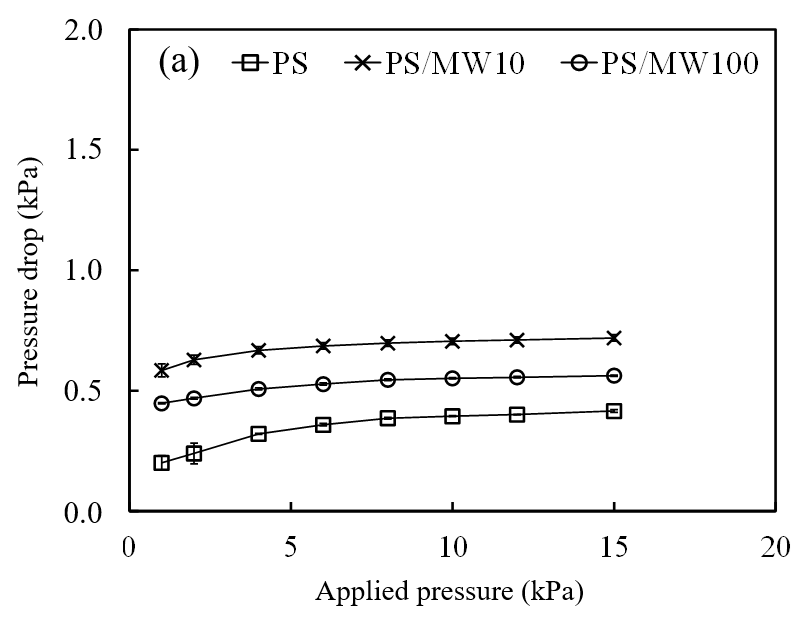

Fig. 4 Pressure drop of PS (a) and CS (b) supplemented with various concentrations of dolomite powders
Data are expressed as the means and standard deviations from triplicate experiments.
Figure 5 illustrates the RVA profiles, demonstrating the pasting properties of the powdered samples. For PS, a sharp and distinct peak appeared in the RVA profile, whereas no clear peak was observed upon dolomite addition. In these samples, the increase in viscosity during heating was significantly lower than that of PS alone, and the viscosity remained relatively stable throughout heating. Owing to the absence of a distinct peak, the RVA parameters, such as peak viscosity and breakdown, were not determined. These alterations in pasting properties are likely affected by the calcium and magnesium in dolomite. Divalent and trivalent cations can crosslink adjacent phosphate groups in potato starch, thereby inhibiting starch swelling (Reyniers et al., 2019). Similarly, Noda et al. (2014) observed reduced peak viscosity in calcium- and magnesium-substituted potato starch treated with various concentrations of CaCl2 (0.005–1 %) and MgCl2·6H2O (0.02–2 %). In this study, a comparable phenomenon was presumed to have occurred because of the abundance of calcium and magnesium in the dolomite used. In addition to ionic effects, SEM observations indicated that dolomite particles adhered to the surfaces of starch granules (Fig. 2), potentially acting as a physical barrier that modulates hydration and swelling; notably, MW10 was characterized by more extensive attachment than MW100 (Fig. 2). Although the contribution of this physical effect cannot be isolated from the ionic interactions, we hypothesized that the variations in surface coverage observed via SEM may partially account for the established differences in pasting behavior.


Fig. 5 Pasting behavior of PS (a) and CS (b) supplemented with dolomite powders
Unlike PS, the RVA profile of CS retained a distinct peak even after dolomite addition. Both the peak and final viscosities exhibited a slight reduction in CS with dolomite addition. The absence of peak disappearance, as observed in PS, may be attributed to the lower phosphate content in CS than that in PS (Absar et al., 2009)—that likely reduces the extent of cation binding in CS.
The alterations in the pasting properties induced by dolomite addition differed significantly between PS and CS. For PS, the viscosity remained stable even during high-temperature heating—that can benefit certain applications. In contrast, dolomite affected viscosity differently during thermal processing, based on the starch type. In this study, PS and CS exhibited B- and A-type crystallinities, respectively (Van Hung et al., 2017). A- and B-type starches are known to differ in terms of crystalline packing (dos Santos et al., 2016), and such polymorphic differences may influence hydration and swelling behavior during heating. Consequently, it is plausible that these differences influence RVA pasting profiles; however, the independent contribution of crystalline polymorphism could not be determined within the scope of the present study.
Thus, the overall effects of dolomite may differ depending on the type of starch. Therefore, to effectively use dolomite as a mineral supplement, it is crucial to assess its effects on the cooking and processing properties across a wide range of food powders.
Dolomite is rich in calcium and magnesium, making it an attractive mineral supplement. In this study, we demonstrated that dolomite addition—supplied as a fine powder for food applications—alters the flow properties of food powders. These alterations in flowability depend on both the food powder type and dolomite particle size. From a powder engineering perspective, even slight differences in particle size can significantly affect the flow behavior, with smaller particles exerting a greater effect. Because variations in flow properties affect handling during storage, transportation, and processing, it is essential to establish fundamental knowledge on the interactions between dolomite particle size and food powder type. Dolomite can alter the thermal processing properties based on the starch type. PS exhibited a lower pasting viscosity and minimal alterations during heating—indicating its effect on the cooking and processing characteristics of starch. Although dolomite is a promising source of calcium and magnesium, its effective use as a mineral supplement requires further assessment of its effects on the cooking and processing properties across various food products.
We are grateful to Murakashi Lime Industry Co., Ltd. for their financial support and for providing dolomite powder.
This research was supported by Murakashi Lime Industry Co., Ltd., which provided both funding and product samples. The authors declare that there are no additional conflicts of interest.
(URLs on references were accessed on 13 July 2026.)


