Abstract
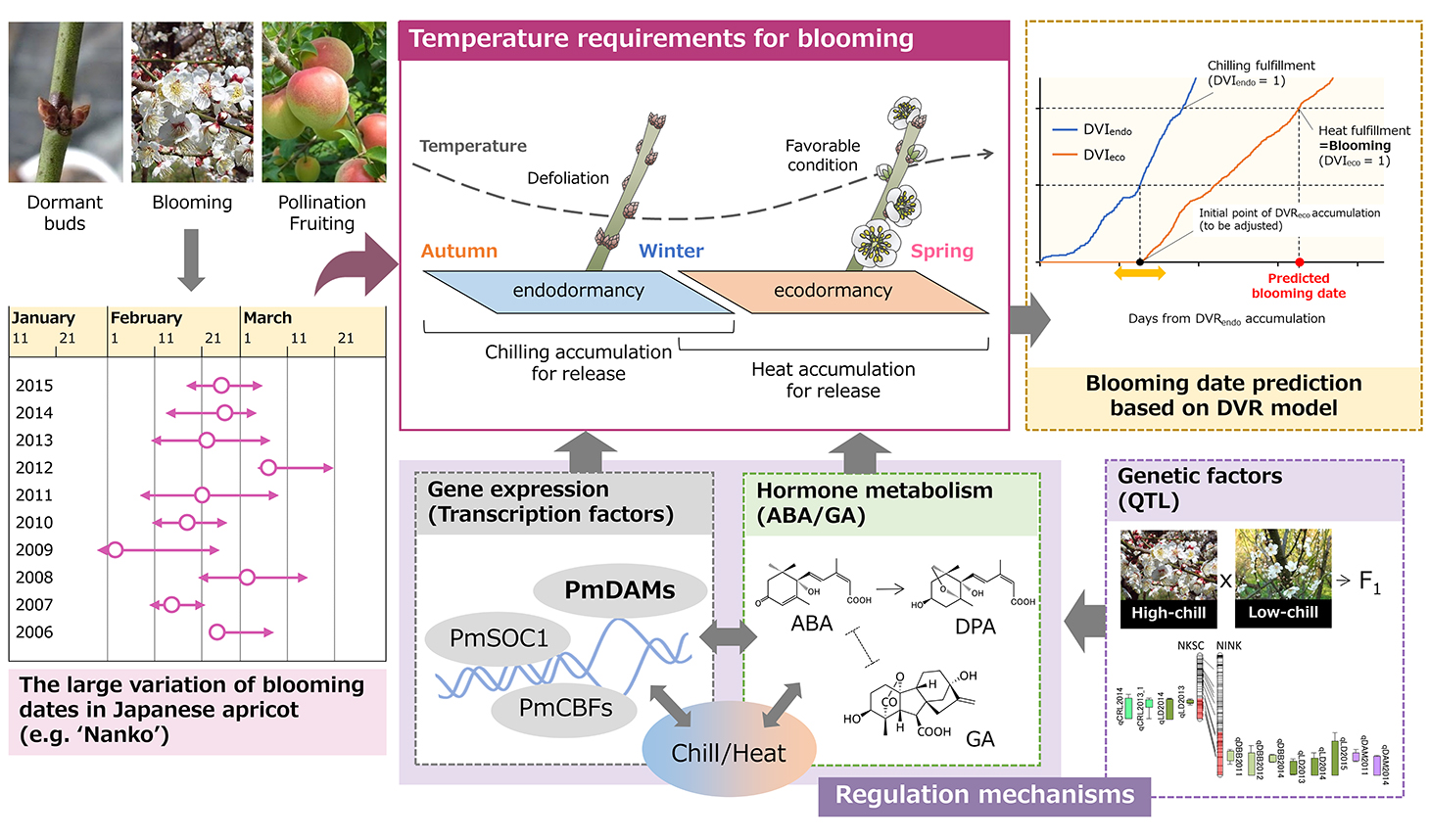
Japanese apricot, which is a traditional fruit and ornamental tree species in Japan, blooms from late January to early March, depending on the year, site, and cultivar. The blooming time of temperate deciduous trees is determined by the following two genotype-specific flower bud temperature requirements: a chilling requirement (endodormancy release) and a heat requirement (ecodormancy release). Both temperature requirements have been analyzed using several temperature accumulation-based models, including the chill hour, chill unit, chill portion, and growing degree hours. However, the development rate (DVR) model, in which the amount of dormancy release per unit time is expressed as a numerical value, was recently proposed for Japanese apricot, as well as other fruit tree species. This model, which is useful for predicting blooming times, sequentially accumulates DVRs for endodormancy and ecodormancy release in accordance with external temperatures. Models for predicting Japanese apricot blooming times suggest that the heat response for ecodormancy release is initiated before the chilling requirement of flower buds is fulfilled. Moreover, differences in the blooming times of the primary cultivar ‘Nanko’ and its pollinizer cultivars are expected to increase because of global warming. Additionally, the physiological and genetic mechanisms regulating temperature requirements have recently been clarified. In terms of fluctuations in plant hormone levels, the antagonism between abscisic acid and gibberellic acid, as well as the catabolism of these hormones, are related to dormancy depth. Furthermore, recent genetic and transcriptomic studies showed that interactions between DORMANCY-ASSOCIATED MADS-box genes regulate the synthesis and catabolism of hormones, affecting the induction of bud dormancy and the maintenance of bud growth cessation during chilling accumulation and prolonged exposure to chilling stress. However, crucial factors that define the genotype-dependent temperature requirements of Japanese apricot flower buds remain to be identified. To comprehensively characterize how blooming time is controlled, more accurate phases of chilling and heat response must be distinguished.
Introduction
Japanese apricot (Prunus mume Sieb. et Zucc.), which is a traditional fruit tree species grown in Japan, originated from Southwest China and spread to Japan during the Yayoi Period (approximately 300 BCE–300 CE) (Huang et al., 2022; Yoshida, 1996). Because Japanese apricot fruit is too sour to be eaten fresh, it is processed and consumed as salty pickles (umeboshi), liqueur (umeshu), jams, and other food products (Yaegaki, 2013). Additionally, Japanese apricot flowers have been popular since the Heian Period (approximately 8th–12th centuries) when they were admired for their ornamental properties. They are still used as a symbol of early spring.
Japanese apricot flower blooming times are relevant to blossom viewing and fruit production. The cultivation of Japanese apricot often requires inter-planted pollinizer cultivars because most Japanese apricot cultivars are self-incompatible (Hasebe, 1980; Miyake et al., 1995; Watanabe, 1984). Moreover, among temperate deciduous fruit tree species, Japanese apricot has the earliest blooming time. Therefore, flower-visiting insects, such as honey bees, tend to be inactive under cold conditions, resulting in unstable pollination and fruit set. In addition, recent climate changes can disrupt bud break, thereby increasing the differences in blooming times between the main Japanese apricot cultivars and pollinizer cultivars (Beppu, 2020; Kitamura et al., 2024a).
Generally, the genotype-dependent chilling requirement (CR) and heat requirement (HR) of dormant flower buds determine the blooming time of deciduous trees. These two temperature requirements that reflect the physiological status have been determined using several models, but precise analyses remain difficult because of the diversity in flower bud responses across temperature zones and cultivars. Alternatively, the development rate (DVR) model, which was first proposed to estimate the CR of Japanese pear buds on fruit trees (Sugiura and Honjo, 1997), has accelerated quantifications of dormant bud temperature requirements from various fruit tree species, including Japanese apricot (Kitamura et al., 2017; Pawasut et al., 2004; Sakamoto et al., 2015; Sugiura et al., 2010). If a model for quantifying temperature requirements regardless of environmental temperature variations is established, blooming times can theoretically be predicted at any production site.
Molecular and physiological mechanisms controlling Japanese apricot bud dormancy were well-elucidated by recent comprehensive studies (reviewed in Yamane, 2014; Yamane et al., 2021, 2023). Notably, chilling responses mediated by DORMANCY-ASSOCIATED MADS-box (DAM) transcription factors are key processes for endodormancy release (Sasaki et al., 2011; Yamane et al., 2008, 2011a, b). Plant hormone metabolism is also associated with bud dormancy release. During the dormancy stage transitions of deciduous trees, the active abscisic acid (ABA) level in buds peaks in the deepest dormancy phase, but then decreases in response to chilling conditions (Tamura et al., 1993; Veerabagu et al., 2023). In contrast, inverse trends were observed for gibberellic acid (GA) biosynthesis (Rinne et al., 2011). The complex crosstalk among hormones and their metabolites, which involves the expression of many dormancy-related genes, is expected to be clarified in future studies.
In this review, methods for assessing genotype-specific CR and HR, which determine blooming times, and technology relevant to predicting the blooming time of Japanese apricot are described. Moreover, recent insights into the molecular and biochemical regulation of flower bud responses to temperature, which influence bud phenology from late autumn to early spring, are discussed in terms of stable Japanese apricot production.
Diversity in Japanese apricot blooming times
Fluctuations in environmental temperatures
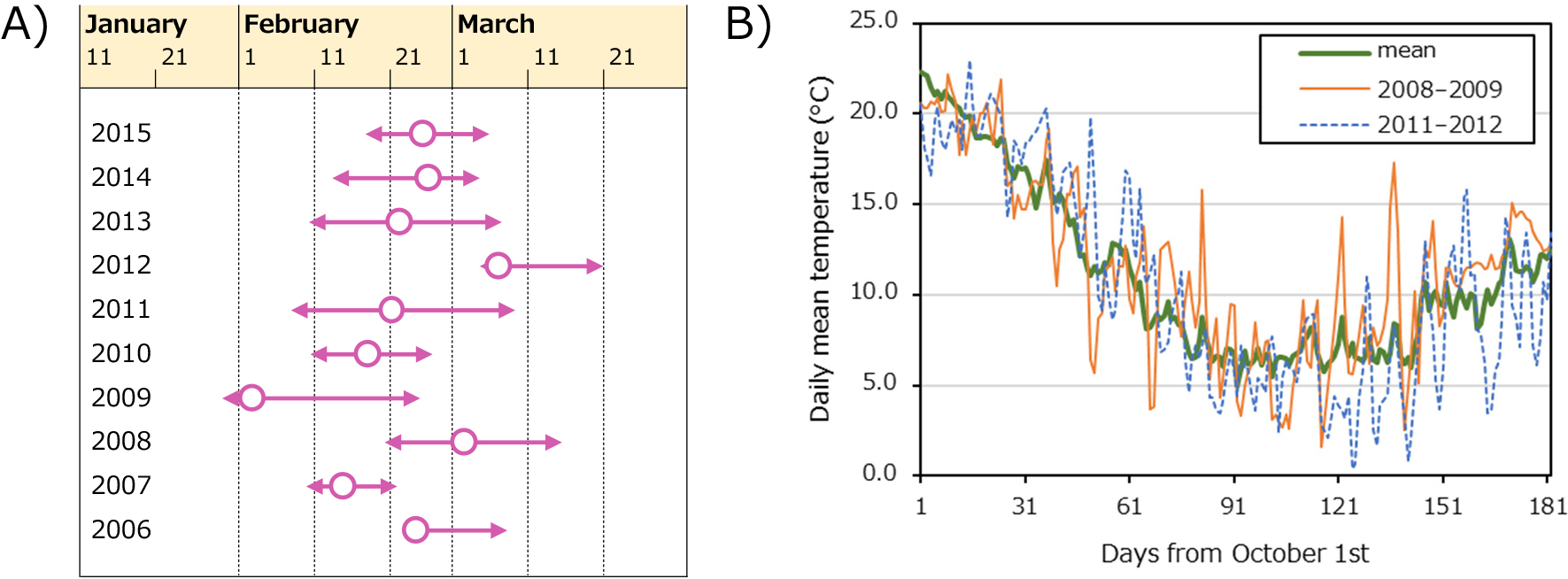
Although Japanese apricot is considered to bloom in February in Japan, the blooming time may vary among cultivars, districts, and years. At the Japanese Apricot Laboratory, Wakayama Fruit Tree Experimental Station, in Minabe, Wakayama, Japan (33.49°N, 135.21°E), the primary Japanese apricot cultivar ‘Nanko’ typically begins to bloom in mid-February. However, the blooming time of ‘Nanko’ can range from late January to early March, depending on the year, even at the same site (Fig. 1A). High and low temperatures during dormancy tend to result in relatively early and late blooming, respectively (Kashiwamoto et al., 2025) (Fig. 1B). These year-dependent fluctuations in the blooming time are greater for Japanese apricot than for other deciduous Rosaceae fruit tree species, such as peach, pear, and apple, which usually bloom in late March to May. Thus, Japanese apricot fruit production is more vulnerable to climate change.
Diversity in blooming times among various genotypes
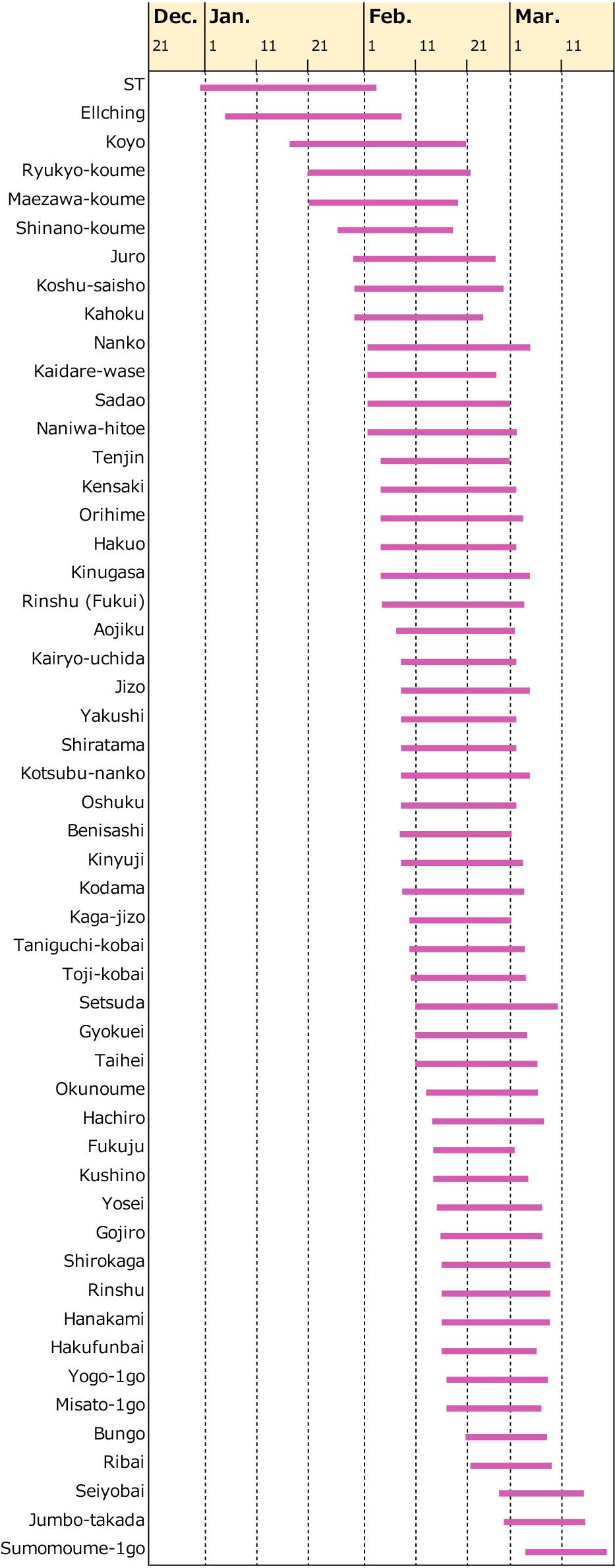
Different Japanese apricot cultivars vary in terms of blooming time, with the earliness of blooming time being almost fixed among genotypes (Fig. 2). For example, ‘ST’ and ‘Ellching’, which are subtropical cultivars originating from Taiwan, bloom extremely early. However, ‘Bungo’, ‘Seiyobai’, and ‘Jumbo-takada’, which are putative interspecific hybrids derived from a cross with apricot (Prunus armeniaca), and ‘Ribai’ and ‘Sumomoume-1go’, which are hybrids resulting from a cross with Japanese plum (Prunus salicina), have a late blooming time, reflecting the inheritance of apricot and Japanese plum blooming traits. Most of the local cultivars of these hybrids are grown in the Tohoku region (northeastern part of Japan). Even in pure Japanese P. mume cultivars, blooming times vary considerably. “Koume” group cultivars, which produce small fruit and are mainly grown in Nagano and Yamanashi prefectures, bloom relatively early. However, cultivars grown in the warmer southwestern region of Japan, including ‘Nanko’ and ‘Oshuku’, have intermediate blooming times (i.e., between early and late blooming). ‘Shirokaga’, which is a secondary cultivar mainly grown in the Kanto region (eastern part of Japan), has the latest blooming time among Japanese apricot cultivars. Thus, in Japan, local production sites contain specific cultivars selected according to their blooming traits, as well as environmental conditions.
Temperature requirements of dormant flower buds
Dormancy and temperature requirements
Bud dormancy of temperate perennial plant species is a defense mechanism that protects against chilling stress in winter (Cooke et al., 2012). Dormancy can be physiologically classified into the following three stages: paradormancy (also known as ectodormancy), endodormancy, and ecodormancy (Lang, 1987; Lang et al., 1987). Paradormancy refers to the relative growth cessation of tissues (e.g., apical dominance and inhibition by leaves). Both endodormancy and ecodormancy are important for controlling blooming times. Endodormancy, during which bud growth is inhibited by endogenous factors, is released after a chilling accumulation threshold is reached. By contrast, during ecodormancy, an exposure to favorable conditions (e.g., a warm climate) can promote bud development, with bud break or blooming occurring if a certain heat accumulation threshold is reached (Faust et al., 1997). Thus, analyzing the duration of the period required to sequentially fulfill CR and HR from the dormancy induction phase in late autumn is essential to determine the blooming time of Japanese apricot (Fig. 3).

Previous studies proposed three models to quantify responses to low temperatures during endodormancy. First, the chilling hour (CH) model considers hourly temperatures below 7.2°C (45°F) as efficient chilling for endodormancy release (Weinberger, 1950). Second, the chill unit (CU; Utah) model provides the gradual weights of chilling accumulation values per hour for each temperature zone (Richardson et al., 1974). The CU model, which was first developed for the peach (Prunus persica) cultivars ‘Redhaven’ and ‘Elberta’, is widely used for other Prunus species (Anderson et al., 1986; Guak and Neilsen, 2013; Mahmood et al., 2000). Finally, in the chill portion (CP) model, a certain amount of chilling accumulation is converted into “the irreversible portion”, and CRs are represented by cumulative portions (Fishman et al., 1987a, b). Fernandez et al. (2020) reported that geographically appropriate models should be selected to assess CRs. The CH model is easily applied, requiring only hourly temperature records and basic accumulations, but cumulative values at endodormancy release can vary significantly across years and sites because a single threshold value is used. Although CU and CP models addressed the problem associated with thresholds, the CP model predicted Japanese apricot endodormancy release dates more accurately in an earlier study (Gao et al., 2012). However, the utility of these models for production sites with diverse climate conditions remains unclear.
HRs for ecodormancy release are mainly determined using the growing degree hours (GDH) model, in which relative values depending on the hourly external temperature are accumulated until a specific developmental phase is completed. GDH is widely used to predict the growth of many fruit crops (e.g., estimating harvest time) (Ben Mimoun and DeJong, 1999; Tang et al., 2025). GDH models are classified as linear GDH and non-linear GDH models (Anderson et al., 1986; Anderson and Seeley, 1992). When the GDH model is used to calculate heat accumulation for bud break, thresholds range from 4°C (basal temperature; temperatures below this threshold are not regarded as heat) to 36°C (crucial temperature; temperatures above this threshold are not regarded as heat), with 25°C considered to be the optimal temperature (heat accumulation is highest) (Anderson et al., 1986). Within this range, heat responses are based on a non-linear cosine curve relationship to temperature.
DVR model construction
To evaluate temperature requirements for bud dormancy release in various species and genotypes, DVR models have recently been proposed. DVR values indicate the amount of dormancy release per unit time, with dormancy considered to be released when the accumulated DVR, which is referred to as the development index (DVI), reaches 1. DVR values for endodormancy and ecodormancy release (i.e., DVRendo and DVReco, respectively) were first calculated for Japanese pear, but they have subsequently been calculated for many other fruit tree species, including peach, chestnut, and persimmon (Sakamoto et al., 2015; Sugimura et al., 2006; Sugiura et al., 2010). DVR values of Japanese apricot were also examined, providing the approximating functions for relationships between temperatures and DVR values as temperature requirements (Kitamura et al., 2017).
In these fruit tree species, numerous bud break tests have been conducted using young trees and various combinations of temperatures and treatment periods to determine DVR values at each temperature. In these tests, DVRs were calculated as the reciprocal of the period required to reach the thresholds for endodormancy and ecodormancy release under the tested temperature. Recent research showed that regression analyses can determine the DVR value of species with long-term records of blooming or bud break dates and ambient temperatures, thereby decreasing labor (Adachi et al., 2018; Kamimori et al., 2020). However, analyses of the temperature requirements of non-leading genotypes lacking long-term records remain a concern. A recent study involving various Japanese apricot cultivars attempted to use shoot cuttings to estimate DVR values for flower buds (Kitamura et al., 2024c). These investigations may contribute to the efficient breeding of new cultivars with modified temperature requirements appropriate for the post-climate change era.
Predicting blooming times
Models for predicting blooming dates have been constructed. For several woody ornamental crops, including cherry blossom, rhododendron, wisteria, hydrangea, and Japanese apricot, blooming times have been estimated using the number of days transformed to the standard temperature (DTS) model (Aono and Omoto, 1990, 1992; Aono and Sato, 1996). The DTS model optimizes three parameters (initiation dates, days required for blooming, and temperature sensitivity), using past measurements as target variables. In this model, daily development is approximated using the Arrhenius equation. The accuracy of predictions made by the DTS model may be enhanced by considering endodormancy release dates (Aono and Moriya, 2003; Aono and Sato, 1996). However, significant errors (compared with observed dates) may occur depending on the location and season (Ono and Konno, 1999).
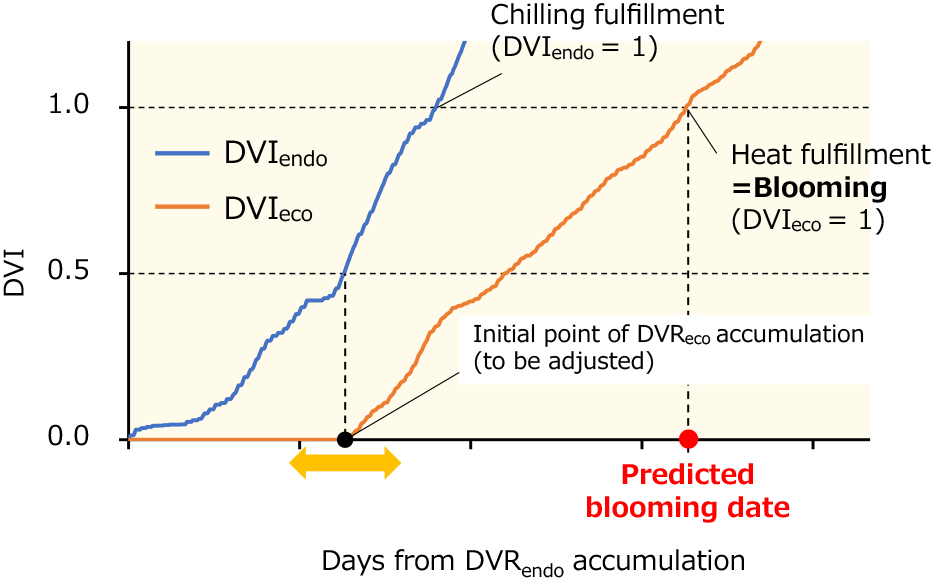
DVR models have been used to precisely predict the blooming time of fruit tree species (Sugiura and Honjo, 1997; Sugiura et al., 2010). Specifically, DVRendo (chilling response) and DVReco (heat response after CR is fulfilled) values are sequentially accumulated according to external temperatures (DVIendo and DVIeco, respectively), assuming that blooming occurs when DVIeco is 1 (Horie and Nakagawa, 1990). Variables for predicting blooming in the DVR model include thresholds for the completion of endodormancy and ecodormancy (blooming) as well as the initial point of DVReco accumulation (Fig. 4). These variables have been adjusted to minimize errors between predicted and observed dates for several species. A previous study conducted to predict the blooming of the Japanese apricot cultivar ‘Nanko’ determined that the optimal initial DVReco accumulation time point corresponded with the time point for a DVIendo value of 0.5 (Kitamura et al., 2017). This is earlier than the corresponding timing for Japanese pear (i.e., the optimal initial time point corresponded to the time point for a DVIendo value of 2.2) (Oya, 2006). Although the threshold settings of dormancy release differed between models for these two species, the reported findings suggest that Japanese apricot flower buds start to respond to heat relatively early (before CR is completely fulfilled).
A model for predicting the blooming date of the Japanese apricot cultivar ‘Nanko’ reportedly has an error of approximately 3 days (Kitamura et al., 2017), which is a larger error than for other fruit crops, including Japanese pear, peach, apple, and grape (Adachi et al., 2018; Kamimori et al., 2020; Oya, 2006). One of the reasons for the larger error is the high DVR values per unit time due to the relatively short period from endodormancy induction to blooming for Japanese apricot, which blooms earlier than other deciduous fruit trees. Nevertheless, predicted Japanese apricot blooming times may be used to schedule pollination-related practices, including the pasturage of honey bees. To ensure stable fruit production in self-incompatible crops, the blooming periods of the main and pollinizer cultivars must overlap (Yaegaki, 2013). The blooming times of several pollinizer cultivars for ‘Nanko’ have been predicted using DVR models. These models revealed that future global warming may increase the differences between the blooming times of ‘Nanko’ and its pollination cultivars ‘Kotsubu-nanko’ and ‘Hakuo’, which have been conventionally introduced in Japanese apricot orchards in Wakayama Prefecture (Kitamura et al., 2024a). On the other hand, the blooming of ‘NK14’, which is a new self-compatible cultivar bred by the Wakayama prefectural government (Negoro et al., 2009), was predicted to synchronize with that of ‘Nanko’ regardless of temperature conditions.
Mechanisms controlling temperature requirements
Physiological changes controlled by plant hormone metabolism
Physiological activities in the dormant buds of deciduous tree species are controlled from the induction phase to the release phase. Generally, bud respiration is suppressed during the deep dormancy phase, but respiration is restored prior to dormancy release. In Japanese apricot flower buds, soluble sugar contents and peroxidase activities gradually increase as dormancy is released (Zhang et al., 2023). The regulatory effects of plant hormones on dormancy depth, especially ABA, which maintains dormancy, and GA, which promotes bud growth and starch degradation, have been investigated (Liu and Sherif, 2019; Pan et al., 2021; Veerabagu et al., 2020). However, relationships between these hormone concentrations and temperature accumulation as dormancy stages progress remain to be thoroughly characterized in fruit trees.
Some studies showed that endogenous ABA levels in Japanese apricot flower buds decrease during endodormancy release and chilling accumulation (Kitamura et al., 2018b; Zhang et al., 2023). In plant cells, excess ABA is inactivated and converted into its metabolites, such as dihydrophaseic acid (DPA) and ABA glucosyl ester (ABA-GE), in enzyme-catalyzed reactions (Saito et al., 2004; Xu et al., 2012). Notably, DPA and ABA-GE contents increase in the flowers and vegetative buds of ‘Nanko’ (relatively high-CR cultivar) following exposure to chilling conditions (Hsiang et al., 2024; Kitamura et al., 2018b). Interestingly, a comparison between a high-CR Japanese cultivar and a low-CR Taiwanese cultivar revealed that in the flower buds of the low-chill cultivar, ABA levels decreased rapidly, while DPA and ABA-GE levels did not increase, even after endodormancy release, which was in contrast to the findings for the high-chill cultivar. These observations suggest that ABA metabolism is closely associated with Japanese apricot bud responses to chilling, but inhibited ABA synthesis may lead to the extremely low-chill characteristics of subtropical genotypes. GA and ABA have antagonistic regulatory effects on various plant developmental stages and processes, including abiotic stress responses, leaf senescence, and seed dormancy release (Fan et al., 2020; Shu et al., 2018; Zuo and Xu, 2020). Active GA levels in the flower buds of Japanese apricot are higher in the dormancy release stage (i.e., ecodormancy stage) than in the endodormancy stage (Wen et al., 2016; Zhang et al., 2023).
The antagonistic effects of ABA and GA during dormancy are supported by analyses of the expression of genes related to ABA and GA biosynthesis and catabolism. Comprehensive transcriptomic studies indicated that 9-cis epoxycarotenoid dioxygenase genes, which are important for ABA biosynthesis, and GA2-oxidase (GA2OX) genes, which contribute to GA catabolism, have expression patterns that are consistent with changes in hormone levels in Japanese apricot flowers and vegetative buds (Hsiang et al., 2024; Zhang et al., 2018).
Molecular basis of dormancy release following temperature accumulation
Previous molecular biology-related research further characterized mechanisms controlling bud dormancy, while also identifying genes involved in responses to low and high temperatures, ultimately leading to endodormancy and ecodormancy release (Yamane, 2014). The mechanism controlling endodormancy release, which is mediated by DAM-like genes, has been clarified in Rosaceae fruit tree species on the basis of transcriptomic analyses (Ito et al., 2016; Mimida et al., 2015; Yamane et al., 2008). Of the six PmDAM genes in the Japanese apricot genome, PmDAM5 and PmDAM6 were shown to be the most effective growth inhibitors during the endodormancy phase, with down-regulated expression levels following a prolonged exposure to chilling conditions (Kitamura et al., 2016; Sasaki et al., 2011). Additionally, SUPPRESSOR OF OVEREXPRESSION OF CONSTANS1 and C-Repeat Binding Factor5 proteins can interact with PmDAM6 to form a heteromeric complex (Kitamura et al., 2016; Zhao et al., 2018). Despite interactions between PmDAMs and PmCBFs, seasonal up-regulated expression occurs slightly later for CBF genes than for PmDAM genes, with relatively high expression levels maintained during chilling temperatures in winter. Furthermore, some PmCBF proteins can bind to the PmDAM6 promoter (Zhao et al., 2018). If flower buds are subsequently continuously exposed to freezing conditions, PmCBFs may play a role in maintaining DAM expression and suppressing bud growth to prolong cold tolerance until plants are exposed to favorable climate conditions in early spring. Moreover, overexpression of PmDAM6 in apple plants promoted the expression of ABA synthesis- and GA metabolism-related genes (e.g., ARABIDOPSIS ALDEHYDE OXIDASE 3 and GA2OX), but repressed ABA metabolism- and GA and cytokinin synthesis-related genes (e.g., CYTOCHROME P707A, GA20-oxidase, CYTOCHROME P735A and isopentenyl transferase) (Hsiang et al., 2024; Yamane et al., 2019). Considered together, these study findings suggest that flower bud endodormancy induced by the module containing PmDAM is gradually released under low-temperature conditions and that PmDAM acts as a hub for hormone networks controlling the blooming time (Fig. 5). These gene expression and endogenous hormone levels may serve as biomarkers for measuring the temperature fulfillment states of dormant buds.

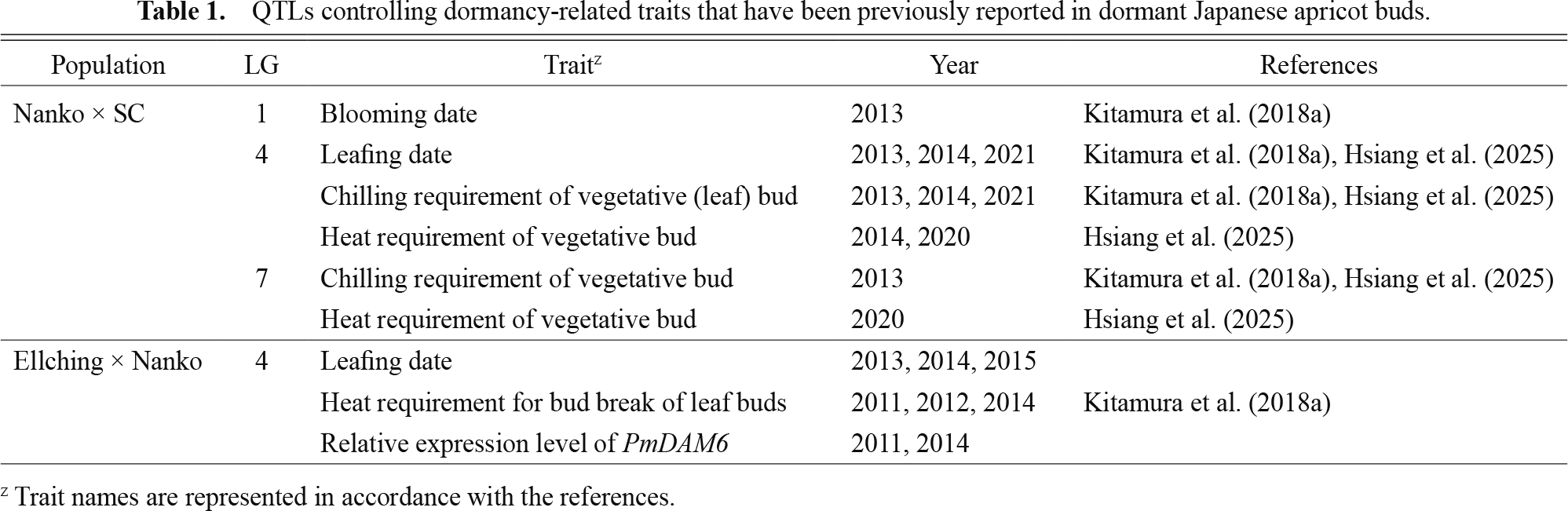
The blooming time of deciduous trees, especially Japanese apricot, is strongly affected by environmental conditions. To identify genetic factors influencing the timing of bud break, as well as the temperature requirements of dormant buds, QTL analyses have been conducted using segregating populations derived from a cross between a temperate high-CR cultivar and a subtropical low-CR cultivar (Hsiang et al., 2025; Kitamura et al., 2018a). Several significant loci for leafing date and the CR of vegetative buds were identified, but only a few minor loci for flower bud traits were detected (Table 1). However, QTLs for blooming traits have been successfully identified in other Prunus tree species, including peach, apricot, and sweet cherry (Bielenberg et al., 2015; Castéde et al., 2014; Dirlewanger et al., 2012; Fan et al., 2010). These results imply that different mechanisms control the temperature requirements of flower and vegetative buds. Moreover, the distinct evaluation of CR and HR of Japanese apricot flower buds is challenging because of the ambiguity in the timing of the switch between chilling and heat sensitivity.
Future prospects
The impact of climate change on fruit production is imminent (Sugiura, 2025; Sugiura et al., 2012). For example, bud break disorder, which is due to deficient chilling, has already occurred in Japanese pear production in Japan (Tominaga et al., 2022). To adapt to post-climate change environmental conditions, breeding programs will need to target current blooming times as well as simulated blooming times based on the CR and HR of flower buds. Furthermore, the development of a more precise method for predicting blooming times and a deeper understanding of how dormancy is regulated depend on whether the true periods during which buds respond to chilling and heat can be clearly distinguished, even when these periods overlap. For example, a partial least squares regression analysis of long-term blooming time observation and hourly ambient temperatures enabled the detection of phases in which plants are responsive to chilling and heat (Luedeling et al., 2013). This analysis has also been used to estimate the durations of chilling and forcing periods of grape and Japanese apricot (Kamimori and Hosomi, 2024; Kitamura et al., 2024b). Future investigations on the relationships between flower bud temperature requirements and environmental cues may provide valuable insights relevant to sustainable Japanese apricot fruit production and the success of traditional culture for Japanese apricot in the future.
Acknowledgements
The author would like to thank Dr. Hisayo Yamane of Kyoto University for providing valuable comments regarding this review. The author is also deeply grateful to the researchers at the Japanese Apricot Laboratory, Wakayama Fruit Tree Experimental Station, for providing data related to the blooming times of numerous Japanese apricot cultivars and temperatures in the experimental orchard. The author thanks Edanz (https://jp.edanz.com/ac) for editing a draft of this manuscript.
Literature Cited
- Adachi, Y., H. Shimura, M. Nukada, Y. Saito, A. Kuwana and M. Abe. 2018. Verification of the developmental rate (DVR) model of fruit tree on global warming. Bull. Fukushima Agric. Technol. Cent. 9: 11–21 (In Japanese with English abstract).
- Anderson, J. L., E. A. Richardson and C. D. Kesner. 1986. Validation of chill unit and flower bud phenology models for ‘montmorency’ sour cherry. Acta Hortic. 184: 71–78.
- Anderson, J. L. and S. D. Seeley. 1992. Modelling strategy in pomology: Development of the Utah models. Acta Hortic. 313: 297–306.
- Aono, Y. and C. Moriya. 2003. A generalized model to estimate flowering for cherry tree (Prunus yedoensis) considering both processes of endodormancy completion and development. J. Agric. Meteorol. 59: 165–177 (In Japanese with English abstract).
- Aono, Y. and Y. Omoto. 1990. A simplified method for estimation of blooming date for the cherry employing DTS. J. Agric. Meteorol. 46: 147–151 (In Japanese with English abstract).
- Aono, Y. and Y. Omoto. 1992. Estimation of blooming date of Rhododendron kaempferi, Wisteria floribunda and Hydrangea macrophylla. J. Agric. Meteorol. 47: 233–240 (In Japanese with English abstract).
- Aono, Y. and K. Sato. 1996. Estimation of flowering date for Japanese apricot tree (Prunus mume) in western Japan considering both processes of rest break and development. J. Agric. Meteorol. 52: 125–134 (In Japanese with English abstract).
- Ben Mimoun, M. and T. M. DeJong. 1999. Using the relation between growing degree hours and harvest date to estimate run-times for peach: a tree growth and yield simulation model. Acta Hortic. 499: 107–114.
- Beppu, K. 2020. Problems in cultivation of Prunus fruit tree species due to global warming and future directions. Hort. Res. (Japan) 19: 219–228 (In Japanese).
- Bielenberg, D. G., B. Rauh, S. Fan, K. Gasic, A. G. Abbott, G. L. Reighard, W. R. Okie and C. E. Wells. 2015. Genotyping by sequencing for SNP-based linkage map construction and QTL analysis of chilling requirement and bloom date in peach [Prunus persica (L.) Batsch]. PLoS One 10: e0139406. DOI: 10.1371/journal.pone.0139406.
- Castéde, S., J. A. Campoy, J. Quero-Garcia, L. Le Dantec, M. Lafargue, T. Barreneche, B. Wenden and E. Dirlewanger. 2014. Genetic determinism of phenological traits highly affected by climate change in Prunus avium: flowering date dissected into chilling and heat requirements. New Phytol. 202: 703–715.
- Cooke, J. K., M. E. Eriksson and O. Junttila. 2012. The dynamic nature of bud dormancy in trees: environmental control and molecular mechanisms. Plant Cell Environ. 35: 1707–1728.
- Dirlewanger, E., J. Quero-García, L. Le Dantec, P. Lambert, D. Ruiz, L. Dondini, E. Illa, B. Quilot-Turion, J. M. Audergon, S. Tartarini, P. Letourmy and P. Arùs. 2012. Comparison of the genetic determinism of two key phenological traits, flowering and maturity dates, in three Prunus species: peach, apricot and sweet cherry. Heredity 109: 280–292.
- Fan, S., D. G. Bielenberg, T. N. Zhebentyayeva, G. L. Reighard, W. R. Okie, D. Holland and A. G. Abbott. 2010. Mapping quantitative trait loci associated with chilling requirement, heat requirement and bloom date in peach (Prunus persica). New Phytol. 185: 917–930.
- Fan, Z. Q., X. L. Tan, W. Shan, J. F. Kuang, W. J. Lu, H. T. Lin, X. G. Su, P. Lakshmanan, M. L. Zhao and J. Y. Chen. 2020. Involvement of BrNAC041 in ABA-GA antagonism in the leaf senescence of Chinese flowering cabbage. Postharvest Biol. Technol. 168: 111254. DOI: 10.1016/j.postharvbio.2020.111254.
- Faust, M., A. Erez, L. J. Rowland, S. Y. Wang and H. A. Norman. 1997. Bud dormancy in perennial fruit trees: physiological basis for dormancy induction, maintenance, and release. HortScience 32: 623–629.
- Fernandez, E., C. Whitney and E. Luedeling. 2020. The importance of chill model selection—a multi-site analysis. Europ. J. Agron. 119: 126103. DOI: 10.1016/j.eja.2020.126103.
- Fishman, S., A. Erez and G. A. Couvillon. 1987a. The temperature dependence of dormancy breaking in plants: mathematical analysis of a two-step model involving a cooperative transition. J. Theor. Biol. 124: 473–483.
- Fishman, S., A. Erez and G. A. Couvillon. 1987b. The temperature dependence of dormancy breaking in plants: computer simulation of processes studied under controlled temperature. J. Theor. Biol. 126: 309–321.
- Gao, Z., W. Zhuang, L. Wang, J. Shao, X. Luo, B. Cai and Z. Zhang. 2012. Evaluation of chilling and heat requirements in Japanese apricot with three models. HortScience 47: 1826–1831.
- Guak, S. and D. Neilsen. 2013. Chill unit models for predicting dormancy completion of floral buds in apple and sweet cherry. Hortic. Environ. Biotechnol. 54: 29–36.
- Hasebe, H. 1980. Ume no hinsyu to saibai (In Japanese). Nobunkyo, Tokyo.
- Horie, T. and H. Nakagawa. 1990. Modelling and prediction of developmental process in rice. Jpn. J. Crop Sci. 59: 687–695 (In Japanese and English abstract).
- Hsiang, T. F., H. Yamane, M. Gao-Takai and R. Tao. 2024. Regulatory role of Prunus mume DAM6 on lipid body accumulation and phytohormone metabolism in the dormant vegetative meristem. Hortic. Res. 11: uhae102. DOI: 10.1093/hr/uhae102.
- Hsiang, T. F., H. Yamane, Y. J. Lin, M. Sugimori, S. Nishiyama, K. Nagasaka, R. Nakano and R. Tao. 2025. The haplotype-phased genome assembly facilitated the deciphering of the bud dormancy-related QTLs in Prunus mume. DNA Res. 32: dsae034. DOI: 10.1093/dnares/dsae034.
- Huang, X., Z. Ni, T. Shi, R. Tao, Q. Yang, C. Luo, Y. Li, H. Li, H. Gao, X. Zhou, L. Xu and Z. Gao. 2022. Novel insights into the dissemination route of Japanese apricot (Prunus mume Sieb. et Zucc.) based on genomics. Plant J. 110: 1182–1197.
- Ito, A., T. Saito, D. Sakamoto, T. Sugiura, S. Bai and T. Moriguchi. 2016. Physiological differences between bud breaking and flowering after dormancy completion revealed by DAM and FT/TFL1 expression in Japanese pear (Pyrus pyrifolia). Tree Physiol. 36: 109–120.
- Kamimori, M. and A. Hosomi. 2024. Evaluation of chilling and heat requirements for the budbreak of Delaware grape in Osaka, Japan. Am. J. Enol. Vitic. 75: 0750011. DOI: 10.5344/ajev.2024.23045.
- Kamimori, M., Y. Miwa, T. Isobe and A. Hosomi. 2020. Models for predicting dates of budding and full bloom of ‘Delaware’ grape based on the daily average temperature. Hort. Res. (Japan) 19: 175–181 (In Japanese with English abstract).
- Kashiwamoto, T., T. Kajino, Y. Inaba and Y. Kitamura. 2025. Influence of winter warming on blooming, sprouting and harvest date of Japanese apricot (Prunus mume). Bull. Wakayama Pref. Exp. Stn. Agric. Forest. Fish. 13: 32–45 (In Japanese).
- Kitamura, Y., T. Habu, H. Yamane, S. Nishiyama, K. Kajita, T. Sobue, T. Kawai, K. Numaguchi, T. Nakazaki, A. Kitajima and R. Tao. 2018a. Identification of QTLs controlling chilling and heat requirements for dormancy release and bud break in Japanese apricot (Prunus mume). Tree Genet. Genomes 14: 33. DOI: 10.1007/s11295-018-1243-3.
- Kitamura, Y., T. Kashiwamoto, K. Tanaka, K. Numaguchi and H. Yamane. 2024a. Prediction of differences in the blooming dates between Japanese apricot ‘Nanko’ and pollinizer cultivars using development rate models. Hort. J. 93: 344–352.
- Kitamura, Y., T. Kashiwamoto and H. Yamane. 2024b. Estimation of the chilling response phase during dormancy in Japanese apricot ‘Nanko’ flower buds using a partial least square regression program. Hort. Res. (Japan) 23 (Suppl. 1): 242 (In Japanese).
- Kitamura, Y., K. Numaguchi and Y. Naka. 2020. Application of a simple blooming time prediction program using development rate models for temperature requirements of Japanese apricot ‘Nanko’ flower buds. Bull. Wakayama Pref. Exp. Stn. Agric. Forest. Fish. 8: 79–84 (In Japanese).
- Kitamura, Y., T. Takeuchi, H. Yamane and R. Tao. 2016. Simultaneous downregulation of DORMANCY-ASSOCIATED MADS-box6 and SOC1 during dormancy release in Japanese apricot (Prunus mume) flower buds. J. Hortic. Sci. Biotechnol. 91: 476–482.
- Kitamura, Y., K. Tanaka, A. Inoue, T. Kashiwamoto, K. Numaguchi, T. Hsiang and H. Yamane. 2024c. Estimation of developmental rates of flower buds and blooming prediction in Japanese apricot collection using shoot cuttings. Hort. Res. (Japan) 23 (Suppl. 2): 333 (In Japanese).
- Kitamura, Y., H. Yamane, M. Gao-Takai and R. Tao. 2018b. Changes in plant hormone contents in Japanese apricot flower buds during prolonged chilling exposure. Acta Hortic. 1208: 251–256.
- Kitamura, Y., H. Yamane, A. Yukimori, H. Shimo, K. Numaguchi and R. Tao. 2017. Blooming date predictions based on Japanese apricot ‘Nanko’ flower bud responses to temperatures during dormancy. HortScience 52: 366–370.
- Lang, G. A. 1987. Dormancy—a new universal terminology. HortScience 22: 817–820.
- Lang, G. A., J. D. Early, G. C. Martin and R. L. Darnell. 1987. Endo-, para-, and ecodormancy: physiological terminology and classification for dormancy research. HortScience 22: 371–377.
- Liu, J. and S. M. Sherif. 2019. Hormonal orchestration of bud dormancy cycle in deciduous woody perennials. Front. Plant Sci. 10: 1136. DOI: 10.3389/fpls.2019.01136.
- Luedeling, E., A. Kunz and M. M. Blanke. 2013. Identification of chilling and heat requirements of cherry trees—a statistical approach. Int. J. Biometeorol. 57: 679–689.
- Mahmood, K., J. G. Carew, P. Hadley and N. H. Battey. 2000. Chill unit models for the sweet cherry cvs Stella, Sunburst and Summit. J. Hortic. Sci. Biotechnol. 75: 602–606.
- Mimida, N., T. Saito, T. Moriguchi, A. Suzuki, S. Komori and M. Wada. 2015. Expression of DORMANCY-ASSOCIATED MADS-BOX (DAM)-like genes in apple. Biol. Plant. 59: 237–244.
- Miyake, M., M. Yamaguchi and T. Haji. 1995. The self-compatibility in mume cultivars. J. Japan. Soc. Hort. Sci. 64 (Suppl. 2): 116–117 (In Japanese).
- Negoro, K., K. Hayashi and K. Iwamoto. 2009. Breeding of self-compatible new Japanese apricot cultivar ‘NK14’. Hort. Res. (Japan) 8 (Suppl. 1): 311 (In Japanese).
- Ono, S. and T. Konno. 1999. Estimation of flowering date and temperature characteristics of fruit trees by DTS method. Jpn. Agric. Res. Q. 33: 105–108.
- Oya, Y. 2006. Prediction method for anthesis of Japanese pears based on weather habit reactions. Bull. Tochigi Agric. Exp. Stn. 58: 7–16 (In Japanese with English summary).
- Pan, W., J. Liang, J. Sui, J. Li, C. Liu, Y. Xin, Y. Zhang, S. Wang, Y. Zhao, J. Zhang, M. Yi, S. Gazzarrini and J. Wu. 2021. ABA and bud dormancy in perennials: current knowledge and future perspective. Genes 12: 1635. DOI: 10.3390/genes12101635.
- Pawasut, A., N. Fujishige, K. Yamane, Y. Yamaki and H. Honjo. 2004. Relationships between chilling and heat requirement for flowering in ornamental peaches. J. Japan. Soc. Hort. Sci. 73: 519–523.
- Richardson, E. A., S. D. Seeley and D. R. Walker. 1974. A model for estimating the completion of rest for ‘Redhaven’ and ‘Elberta’ peach trees. HortScience 9: 331–332.
- Rinne, P. L., A. Welling, J. Vahala, L. Ripel, R. Ruonala, J. Kangasjärvi and C. van der Schoot. 2011. Chilling of dormant buds hyperinduces FLOWERING LOCUS T and recruits GA-inducible 1, 3-β-glucanases to reopen signal conduits and release dormancy in Populus. Plant Cell 23: 130–146.
- Saito, S., N. Hirai, C. Matsumoto, H. Ohigashi, D. Ohta, K. Sakata and M. Mizutani. 2004. Arabidopsis CYP707As encode (+)-abscisic acid 8′-hydroxylase, a key enzyme in the oxidative catabolism of abscisic acid. Plant Physiol. 134: 1439–1449.
- Sakamoto, D., H. Inoue, S. Kusaba, T. Moriguchi and T. Sugiura. 2015. The relationship between temperature and endodormancy completion in Japanese chestnut ‘Porotan’ (Castanea crenata Sieb. et Zucc.): Towards establishing a development rate (DVR). J. Agric. Meteorol. 71: 106–110.
- Sasaki, R., H. Yamane, T. Ooka, H. Jotatsu, Y. Kitamura, T. Akagi and R. Tao. 2011. Functional and expressional analyses of PmDAM genes associated with endodormancy in Japanese apricot (Prunus mume). Plant Physiol. 157: 485–497.
- Shu, K., W. Zhou, F. Chen, X. Luo and W. Yang. 2018. Abscisic acid and gibberellins antagonistically mediate plant development and abiotic stress responses. Front. Plant Sci. 9: 416. DOI: 10.3389/fpls.2018.00416.
- Sugimura, T., T. Urasaki, J. Imagawa and M. Wakisaka. 2006. Estimation of endodormancy completion stage and bud burst stage in forced culture of Japanese persimmon (Diospyros kaki Thunb.) ‘Tonewase’ by developmental rate model. Hort. Res. (Japan) 5: 45–49 (In Japanese with English abstract).
- Sugiura, T. 2025. Meteorological responses of fruit trees, impact of climate change on fruit production, and adaptation strategies. Hort. J. 94: 285–295.
- Sugiura, T. and H. Honjo. 1997. The effects of temperature on endodormancy completion in Japanese pear (Pyrus pyrifolia Nakai) and modeling the relationship. J. Agric. Meteorol. 53: 285–290 (In Japanese with English abstract).
- Sugiura, T., D. Sakamoto, T. Asakura and H. Sugiura. 2010. The relationship between temperature and effect on endodormancy completion in the flower bud of ‘Hakuho’ peach. J. Agric. Meteorol. 66: 173–179 (In Japanese with English abstract).
- Sugiura, T., H. Sumida, S. Yokoyama and H. Ono. 2012. Overview of recent effects of global warming on agricultural production in Japan. Jpn. Agric. Res. Q. 46: 7–13.
- Tamura, F., K. Tanabe and T. Ikeda. 1993. Relationship between intensity of bud dormancy and level of ABA in Japanese pear ‘Nijisseiki’. J. Japan. Soc. Hort. Sci. 62: 75–91 (In Japanese with English abstract).
- Tang, H., X. Zhai and X. Xu. 2025. Flowering variation induces apple maturity variation at harvest. Front. Agron. 7: 1545070. DOI: 10.3389/fagro.2025.1545070.
- Tominaga, A., A. Ito, T. Sugiura and H. Yamane. 2022. How is global warming affecting fruit tree blooming? “Flowering (dormancy) disorder” in Japanese pear (Pyrus pyrifolia) as a case study. Front. Plant Sci. 12: 787638. DOI: 10.3389/fpls.2021.787638.
- Veerabagu, M., L. K. Paul, P. L. H. Rinne and C. van der Schoot. 2020. Plant lipid bodies traffic on actin to plasmodesmata motorized by myosin XIs. Int. J. Mol. Sci. 21: 1422. DOI: 10.3390/ijms21041422.
- Veerabagu, M., C. van der Schoot, V. Turečková, D. Tarkowská, M. Strnad and P. L. Rinne. 2023. Light on perenniality: Para-dormancy is based on ABA-GA antagonism and endo-dormancy on the shutdown of GA biosynthesis. Plant Cell Environ. 46: 1785–1804.
- Watanabe, S. 1984. Ume no seisan antei to hinsitsu kaizen. Nougyo Gijutsu Taikei 39: 363–368 (In Japanese).
- Weinberger, J. H. 1950. Chilling requirements of peach varieties. Proc. Amer. Soc. Hort. Sci. 56: 122–128.
- Wen, L. H., W. J. Zhong, X. M. Huo, W. B. Zhuang, Z. J. Ni and Z. H. Gao. 2016. Expression analysis of ABA-and GA-related genes during four stages of bud dormancy in Japanese apricot (Prunus mume Sieb. et Zucc). J. Hortic. Sci. Biotechnol. 91: 362–369.
- Xu, Z. Y., K. H. Lee, T. Dong, J. C. Jeong, J. B. Jin, Y. Kanno, D. H. Kim, S. Y. Kim, M. Seo, R. A. Bressan, D. J. Yun and I. Hwang. 2012. A vacuolar β-glucosidase homolog that possesses glucose-conjugated abscisic acid hydrolyzing activity plays an important role in osmotic stress responses in Arabidopsis. Plant Cell 24: 2184–2199.
- Yaegaki, H. 2013. Production, marketing, processing and breeding objective of Japanese apricot. Bull. NARO Inst. Fruit Tree Sci. 16: 1–12 (In Japanese with English abstract).
- Yamane, H. 2014. Regulation of bud dormancy and bud break in Japanese apricot (Prunus mume Siebold & Zucc.) and peach [Prunus persica (L.) Batsch]: A summary of recent studies. J. Japan. Soc. Hort. Sci. 83: 187–202.
- Yamane, H., F. Andrés, S. Bai, E. Luedeling and E. Or. 2023. Editorial: Environmental and molecular control of bud dormancy and bud break in woody perennials: An integrative approach. Front. Plant Sci. 14: 1104108. DOI: 10.3389/fpls.2023.1104108.
- Yamane, H., Y. Kashiwa, T. Ooka, R. Tao and K. Yonemori. 2008. Suppression subtractive hybridization and differential screening reveals endodormancy-associated expression of an SVP/AGL24-type MADS-box gene in lateral vegetative buds of Japanese apricot. J. Amer. Soc. Hortic. Sci. 133: 708–716.
- Yamane, H., T. Ooka, H. Jotatsu, Y. Hosaka, R. Sasaki and R. Tao. 2011a. Expressional regulation of PpDAM5 and PpDAM6, peach (Prunus persica) dormancy-associated MADS-box genes, by low temperature and dormancy breaking reagent treatment. J. Exp. Bot. 62: 3481–3488.
- Yamane, H., T. Ooka, H. Jotatsu, R. Sasaki and R. Tao. 2011b. Expression analysis of PpDAM5 and PpDAM6 during flower bud development in peach (Prunus persica). Sci. Hortic. 129: 844–848.
- Yamane, H., A. K. Singh and J. E. Cooke. 2021. Plant dormancy research: from environmental control to molecular regulatory networks. Tree Physiol. 41: 523–528.
- Yamane, H., M. Wada, C. Honda, T. Matsuura, Y. Ikeda, T. Hirayama, Y. Osako, M. Gao-Takai, M. Kojima, H. Sakakibara and R. Tao. 2019. Overexpression of Prunus DAM6 inhibits growth, represses bud break competency of dormant buds and delays bud outgrowth in apple plants. PLoS One 14: e0214788. DOI: 10.1371/journal.pone.0214788.
- Yoshida, M. 1996. Ume no kigen to rekishi. p. 16–21. In: S. Horiuchi (ed.). Nihonnoume Sekainoume (In Japanese). Yokendo, Tokyo.
- Zhang, Y., K. Ma and Q. Li. 2023. Research on chilling requirements and physiological mechanisms of Prunus mume. Horticulturae 9: 603. DOI: 10.3390/horticulturae9050603.
- Zhang, Z., X. Zhuo, K. Zhao, T. Zheng, Y. Han, C. Yuan and Q. Zhang. 2018. Transcriptome profiles reveal the crucial roles of hormone and sugar in the bud dormancy of Prunus mume. Sci. Rep. 8: 5090. DOI: 10.1038/s41598-018-23108-9.
- Zhao, K., Y. Zhou, S. Ahmad, X. Yong, X. Xie, Y. Han, Y. Li, L. Sun and Q. Zhang. 2018. PmCBFs synthetically affect PmDAM6 by alternative promoter binding and protein complexes towards the dormancy of bud for Prunus mume. Sci. Rep. 8: 4527. DOI: 10.1038/s41598-018-22537-w.
- Zuo, Y. and Y. Xu. 2020. Research progress on the mechanism of GA and ABA during seed germination. Mol. Plant Breed. 11: 1–8.