Abstract
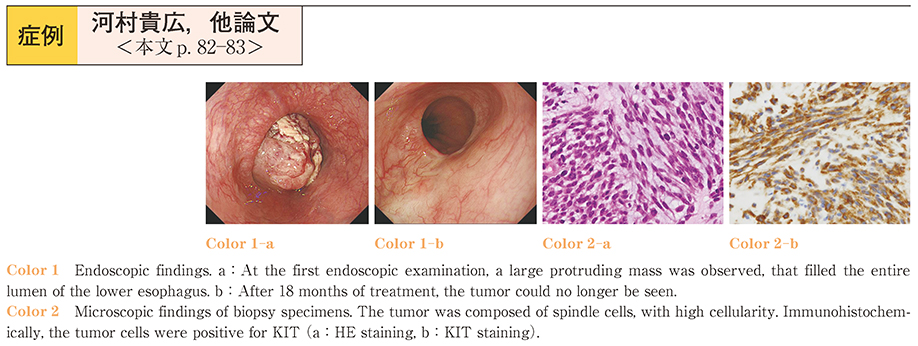
Esophageal GISTs are rare tumors, accounting for 2%-5% of all GISTs. Imatinib mesylate has been reported to have an excellent effect in patients with unresectable and recurrent esophageal GISTs, however, there are few reports on the adverse effects. We present the first case report of a patient with esophageal GIST who developed pleuritis during treatment with imatinib mesylate. A 67-year-old woman was referred to us with fever, cough and dysphagia. CT showed a large mass in the thoracic cavity. By endoscopic and histopathological examinations, the tumor was diagnosed as an esophageal GIST. Because the tumor was adherent to the thoracic aorta, heart and left lung, it was judged as being unresectable. Oral administration of imatinib mesylate at 400 mg/day was started, however, the patient developed pleuritis after 3 weeks of treatment. It appeared that because the tumor rapidly liquefied and reduced in size during the imatinib treatment, necrotic substances from the tumor were leaking into the thoracic cavity. The patient was treated for the pleuritis while being continued on imatinib mesylate. The pleuritis resolved by two months with drainage and antibiotic treatment. The clinical course after treatment of the pleuritis has been excellent, the patient is symptom-free and the effect of imatinib mesylate has remained sustained for over twelve months.