Abstract
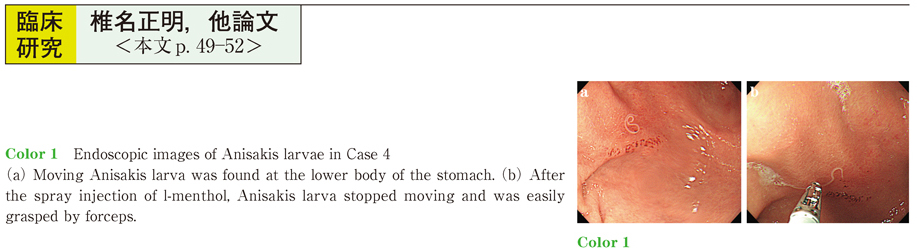
Alimentary canal anisakiasis is important among the differential diagnoses of acute abdomen. We experienced 10 cases of anisakiasis (7 males and 3 females) from August 2012 to April 2015, including 2 cases diagnosed through cancer screening. Anisakiasis was diagnosed throughout the year (4 cases diagnosed in February-March, 2 cases in April-June, 4 cases in September-November) and in patients of all ages. Epigastralgia was the most frequent symptom, and mackerel (raw or in vinegar) was the leading suspected food. Abdominal attack occurred 2 to 7 hours after ingestion, and upper gastrointestinal endoscopy was performed 8 to 72 hours later. Anisakis larvae were removed by using biopsy forceps in all ten cases, including 3 cases with additional use of l-menthol, a compound that inhibits gastrointestinal peristalsis. In Japan, complete prophylaxis against anisakiasis is difficult because of eating habits and food preferences. Since removal of larvae under endoscopy is the only definite treatment upon abdominal attack, we have to perform endoscopy as soon as possible when migration of Anisakis larvae is suspected by clinical findings and/or CT. In addition, spray injection of l-menthol to moving larvae might be helpful.