Abstract
Heart failure (HF), chronic kidney disease (CKD), and chronic obstructive pulmonary disease (COPD) frequently coexist and collectively constitute a high-risk multimorbid state characterized by shared pathophysiology, compounded exercise intolerance, frailty, and worse clinical outcomes. These overlapping conditions interact through several mechanisms, including neurohormonal activation, systemic inflammation, oxidative stress, endothelial dysfunction, hemodynamic interactions, and skeletal muscle abnormalities. These mechanisms restrict functional capacity through both central and peripheral pathways. Exercise-based rehabilitation has emerged as an essential nonpharmacological intervention across cardiovascular, renal, and pulmonary medicine and is supported by robust evidence for improvements in exercise capacity and health-related quality of life in single-organ disease populations. However, patients with overlapping cardio-renal-pulmonary impairment remain underrepresented in rehabilitation trials, and evidence for the triple overlap of HF, CKD, and COPD remains particularly scarce. This narrative review synthesizes current evidence on the pathophysiology of cardio-renal-pulmonary multimorbidity and the mechanisms of exercise intolerance. Furthermore, it summarizes functional phenotypes, clinical assessments, and the effects of exercise-based rehabilitation across single-organ and overlapping disease states. Finally, practical implications for individualized exercise prescription, delivery models, and safety monitoring are discussed. We propose a phenotype-guided, function-centered framework for rehabilitation in this complex population and outline key research priorities to strengthen the evidence base for this high-risk, underserved population.
Introduction
The global burden of chronic noncommunicable diseases is increasingly influenced by multimorbidity, commonly defined as the coexistence of 2 or more chronic conditions in the same individual. Among the most clinically consequential combinations is the overlap of cardiac, renal, and pulmonary diseases, which is not only additive comorbidity but also a unique multimorbid state characterized by shared pathophysiology, compounded exercise intolerance, accelerated functional decline, and excess mortality. Heart failure (HF) affects more than 64 million individuals worldwide and is commonly complicated by chronic kidney disease (CKD), which is present in several patients and is consistently linked to worse symptoms, more frequent hospitalization, and poorer survival1,2). Chronic obstructive pulmonary disease (COPD) is also highly prevalent in adults and commonly coexists with HF due to shared risk factors, including aging, smoking, physical inactivity, and systemic inflammation3). The resulting cardio-renal-pulmonary multimorbidity imposes a burden that exceeds that of any single disease alone and includes recurrent decompensation, progressive disability, and high healthcare utilization4).
Exercise intolerance is a cardinal and often disabling manifestation of multimorbidity. In affected patients, reduced cardiac reserve, ventilatory limitation, impaired peripheral oxygen extraction, autonomic dysfunction, anemia, skeletal muscle abnormalities, and frailty converge to limit physical performance and daily function5–7).
Exercise-based rehabilitation—including cardiac rehabilitation (CR), renal rehabilitation, and pulmonary rehabilitation (PR)—is an established component of care in cardiovascular and pulmonary diseases and is an increasingly recognized intervention for CKD, with evidence for improvements in exercise capacity, physical function, symptoms, and health-related quality of life (QOL) across these populations. Contemporary HF guidance supports supervised exercise training as an essential element of comprehensive care, and a joint scientific statement from the American Heart Association and American College of Cardiology concluded that supervised exercise training in chronic, stable HF is safe and clinically beneficial8–11). Renal rehabilitation has similarly been described as a feasible and promising multidimensional strategy in CKD, particularly for improving physical function and QOL12). However, patients with multimorbidity remain systematically underrepresented in rehabilitation trials and are frequently underserved in clinical practice, partly because of uncertainty regarding feasibility, safety, and expected benefit when multiple organ systems are simultaneously impaired.
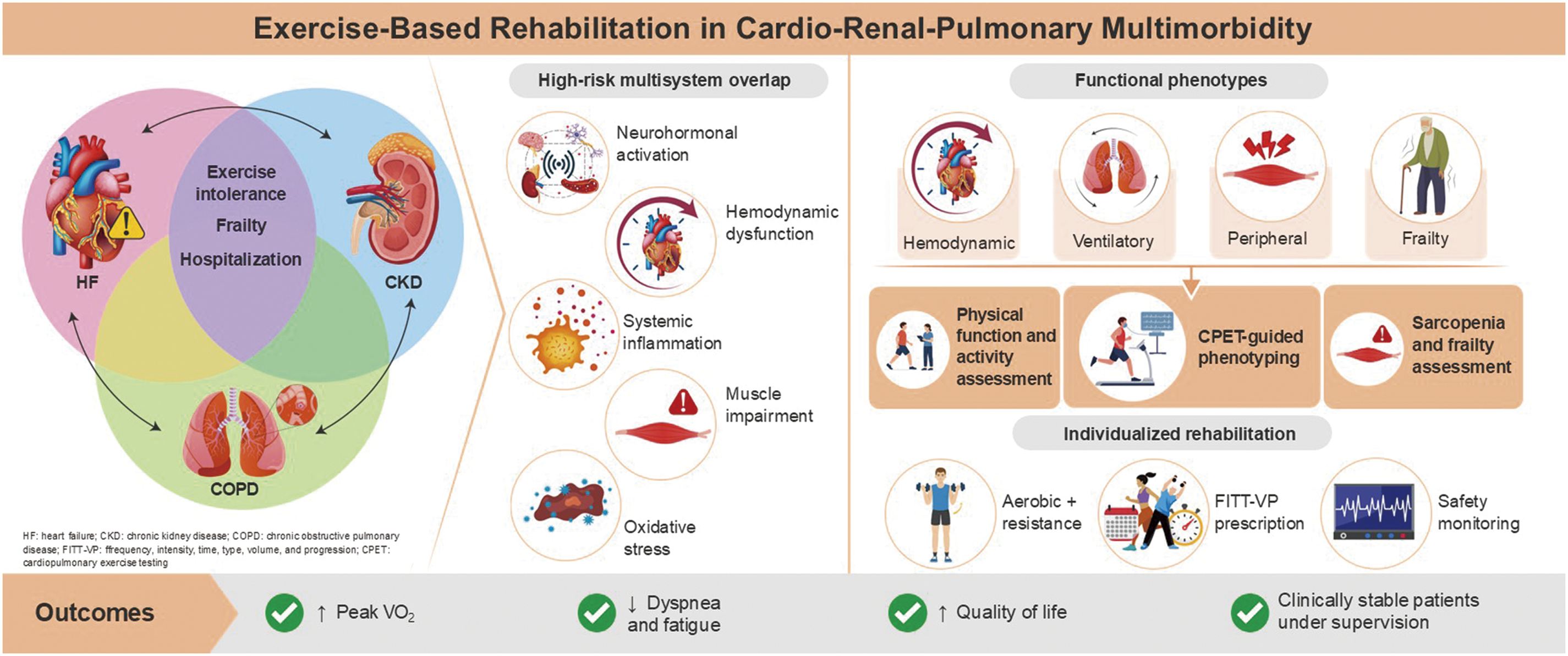
This narrative review addresses this gap by: (1) describing the shared pathophysiology of cardio-renal-pulmonary multimorbidity; (2) examining cardiopulmonary exercise testing (CPET)-derived functional phenotypes and mechanisms of exercise intolerance across HF, CKD, and COPD and their overlap; (3) synthesizing available evidence for exercise-based rehabilitation in single-organ and overlapping disease states; and (4) proposing clinical implications and future priorities for individualized rehabilitation in this high-risk, functionally vulnerable population. Consistent with the objectives of a narrative review, we prioritized clinical practice guidelines, randomized controlled trials (RCTs), meta-analyses, and mechanistic studies most relevant to exercise intolerance, functional phenotypes, rehabilitation delivery, and safety across HF, CKD, COPD, and their overlap (Fig. 1).
Pathophysiology of Cardio-renal-pulmonary Multimorbidity
Neurohormonal dysregulation is a core shared pathophysiological mechanism across HF, CKD, and COPD. In HF, reduced cardiac output activates the renin–angiotensin–aldosterone system (RAAS), the sympathetic nervous system (SNS), and arginine vasopressin, resulting in sodium and water retention, vasoconstriction, and maladaptive cardiac remodeling2). These responses initially preserve perfusion but ultimately perpetuate a cycle of congestion, end-organ injury, and progressive dysfunction. CKD intensifies these responses through impaired renal autoregulation, reduced natriuretic peptide clearance, and intrinsic RAAS hyperactivation, thereby further increasing afterload and promoting myocardial and renal fibrosis13). COPD contributes through hypoxia-driven SNS activation, increased myocardial oxygen demand, altered volume regulation, and skeletal muscle catabolism, thereby reinforcing the neurohormonal environment underlying multiorgan dysfunction3,14).
Systemic inflammation and oxidative stress form an additional shared substrate across all 3 conditions and are magnified in multimorbidity. Elevated levels of tumor necrosis factor-α, interleukin-6, C-reactive protein, galectin-3, and oxidative stress mediators have been described in HF, CKD, and COPD, and their coexistence generates a pro-inflammatory state that accelerates disease progression15,16). In HF with preserved ejection fraction (HFpEF), inflammatory signaling related to obesity, hypertension, and diabetes mellitus contributes to coronary microvascular dysfunction, myocardial fibrosis, and diastolic dysfunction16). In CKD, uremic toxins and advanced glycation end-products impair endothelial function and promote vascular oxidative stress, whereas COPD-related inflammation increases cardiovascular risk and skeletal muscle catabolism through proteolytic pathways3,17,18). These intersecting pathways contribute to skeletal muscle wasting, endothelial dysfunction, and progressive multiorgan injury that together underlie frailty and severe exercise limitation in patients with multimorbidity.
Hemodynamic interdependence is another defining feature of cardio-renal-pulmonary multimorbidity. In HF, elevated left-sided filling pressures are transmitted to the pulmonary venous circulation, causing pulmonary hypertension, right ventricular dysfunction, and renal venous congestion2). Increased central venous pressure directly impairs glomerular filtration and tubular function and is an essential mechanism underlying cardiorenal syndrome14). Pulmonary hypertension, common in both HF and COPD, further increases right ventricular afterload and may precipitate right-sided failure, worsening renal perfusion and systemic congestion4). In COPD, dynamic hyperinflation can decrease venous return and blunt right ventricular preload, thereby restricting the capacity to increase cardiac output during exercise7,19). The resulting instability in preload reserve, cardiac output, and ventilation–perfusion matching has major implications for rehabilitation prescription and monitoring.
The cardiac, renal, and pulmonary systems also engage in bidirectional crosstalk mediated by shared neurohormonal, inflammatory, and hemodynamic pathways. Renal dysfunction in HF is not only a passive consequence of low perfusion but also an active contributing factor to disease progression through fluid retention, neurohormonal activation, and uremic cardiomyopathy13,17). In contrast, cardiac dysfunction in CKD is influenced by volume overload, hypertension, anemia, and uremic toxins that promote left ventricular hypertrophy, diastolic dysfunction, and accelerated atherosclerosis1,17). Pulmonary disease interacts with both systems through hypoxia, systemic inflammation, and vascular dysfunction, while studies have identified shared molecular pathways—including nuclear factor kappa B (NF-κB) signaling, transforming growth factor beta (TGF-β)-mediated fibrosis, and mitochondrial dysfunction—that may serve as future therapeutic targets across the cardio-renal-pulmonary axis4,18).
Functional Phenotypes and Exercise Intolerance
Exercise intolerance in HF is multifactorial and involves both central hemodynamic limitation and peripheral skeletal muscle abnormalities, with the relative contribution varying according to HF phenotype. CPET classically demonstrates reduced peak oxygen uptake (peak VO2), an elevated minute ventilation/carbon dioxide production (VE/VCO2) slope, and an early anaerobic threshold5,20). In heart failure with reduced ejection fraction (HFrEF), peak VO2 is often constrained by impaired cardiac output augmentation resulting from reduced stroke volume reserve and chronotropic incompetence. In HFpEF, peripheral factors—including impaired oxygen extraction, skeletal muscle mitochondrial dysfunction, and chronotropic incompetence—appear to play a particularly important role5,21). Hyperlactatemia at submaximal exercise reflects impaired peripheral oxygen utilization and has been linked to reduced exercise capacity in HFpEF22). The VE/VCO2 slope, a marker of ventilatory inefficiency reflecting dead-space ventilation and chemoreflex sensitivity, is elevated in both HFrEF and HFpEF20,23).
Exercise intolerance in CKD appears to be influenced predominantly by peripheral mechanisms, distinguishing it from the more overt central hemodynamic limitation typical of advanced HFrEF24). CPET studies have demonstrated reduced peak VO2 across the spectrum of CKD severity, with progressive deterioration as the estimated glomerular filtration rate (eGFR) decreases. Near-infrared spectroscopy and related assessments indicate that impaired peripheral oxygen extraction is disproportionate to central cardiac limitations24,25). Potential contributors include uremic myopathy, anemia, autonomic dysfunction, physical inactivity, and chronic inflammation-mediated muscle catabolism6,24). Systematic reviews and meta-analyses confirm marked reductions in cardiopulmonary reserve in CKD compared with that in matched controls26,27). In patients with concomitant HF and CKD, peak VO2 is typically further reduced compared with that in patients with either condition alone, suggesting additive impairment of both central and peripheral oxygen transport mechanisms27).
In COPD, exercise intolerance is frequently dominated by ventilatory limitation, including dynamic hyperinflation, impaired gas exchange, and increased dead-space ventilation. However, skeletal muscle dysfunction and cardiovascular deconditioning also contribute substantially, particularly in advanced disease and in the presence of cardiovascular comorbidity. CPET in COPD may demonstrate reduced peak VO2, an elevated VE/VCO2 slope, early ventilatory limitation, and an impaired oxygen pulse7,28,29). When COPD coexists with HF, exercise capacity is consistently lower than in either condition alone, reflecting additive ventilatory and hemodynamic limitations7,30–32). In the Fitness Registry and the Importance of Exercise National Database registry, concomitant HF and COPD were associated with the lowest peak VO2, lower end-tidal partial pressure of carbon dioxide (PETCO2) and greater ventilatory inefficiency than HF or COPD alone29). These findings support the concept that overlap syndromes should be assessed using integrated functional phenotyping rather than disease labels alone.
Sarcopenia, frailty, and disability represent clinically important downstream functional phenotypes across HF, CKD, and COPD. Sarcopenia is highly prevalent across all 3 conditions and becomes more common with multimorbidity33). Shared mechanisms include chronic inflammation, anorexia and malnutrition, physical inactivity, uremic toxin-mediated muscle catabolism, corticosteroid exposure, and endocrine dysregulation6,15). Frailty—whether defined by the Fried phenotype or by clinical frailty scales—is likewise common and strongly linked to hospitalization, mortality, and rehabilitation noncompletion34–36). The resulting disability in activities of daily living contributes to poor health-related QOL, caregiver burden, and institutionalization. In patients with multimorbidity, the combined phenotype of low exercise capacity, sarcopenia, frailty, and disability has direct implications for exercise prescription, monitoring, and goal setting.
Effects of Exercise-based Rehabilitation in Single-organ Disease
The evidence base for exercise-based CR in HF is substantial and has expanded with contemporary RCTs and meta-analyses. In HFrEF, CR consistently improves peak VO₂ by clinically meaningful margins, reduces ventilatory inefficiency, and improves health-related QOL as evaluated using disease-specific instruments8,37). High-intensity interval training may yield larger gains in peak VO2 than moderate continuous training in selected HFrEF populations, although both approaches improve symptoms and functional capacity37). In the Heart Failure: A Controlled Trial Investigating Outcomes of Exercise Training (HF-ACTION), exercise-based training improved exercise capacity and QOL. Although the unadjusted primary composite endpoint of all-cause mortality or hospitalization was not significantly reduced, adjusted analyses demonstrated modest reductions in clinical events, supporting the incorporation of structured exercise training into guideline-based HF care9).
In HFpEF, where pharmacological strategies have historically shown limited benefit for symptoms and functional capacity, exercise training has emerged as a particularly essential intervention. Multiple meta-analyses confirm that supervised exercise training improves peak VO2 and health-related QOL in HFpEF, with combined endurance and resistance training showing particular promise10,11,37–39). A recent multicenter RCT of combined endurance and resistance training in HFpEF did not meet its primary composite endpoint; however, clinically relevant improvements in peak VO2 and New York Heart Association functional class were observed; however, changes in diastolic function parameters were not significantly different between groups40). Taken together, current evidence supports exercise training as a clinically beneficial and safe component of care in chronic, stable HFpEF9).
Exercise-based rehabilitation in CKD and dialysis populations is supported by a growing body of RCTs and meta-analyses showing consistent benefits for physical function, exercise capacity, and QOL. Intradialytic exercise is feasible and generally safe and has been linked to improvements in physical performance and patient-reported outcomes41–43). A training program combining aerobic exercise and strength training may be an effective intervention for improving functional outcomes in patients undergoing hemodialysis44,45). Mechanistic studies in animal models indicate that exercise favorably affects oxidative stress, nitric oxide signaling, glomerulosclerosis, and tubular injury46–49). However, although exercise appears safe in terms of renal parameters and may improve vascular and cardiopulmonary function, evidence for delayed CKD progression, reduced proteinuria, or improved eGFR trajectory remains heterogeneous and insufficient for definitive conclusions regarding renal endpoints12,50,51).
PR remains a cornerstone nonpharmacological intervention for COPD, with consistent benefits across disease severity for exercise capacity, dyspnea, and health-related QOL52–54). Endurance and resistance training are complementary core components of PR, and selected patients may also benefit from high-intensity interval training or inspiratory muscle training53,55,56). Contemporary guidance strongly supports PR in stable COPD and after hospitalization for exacerbation and provides either center-based PR or telerehabilitation according to access and patient preference52,54). Importantly, PR benefits are generally preserved in patients with cardiovascular and metabolic comorbidities, including HF; however, these patients may require more individualized intensity prescriptions and closer monitoring57,58).
Exercise-based Rehabilitation in Multimorbid Populations
CKD is among the most prevalent comorbidities in HF and may attenuate—but does not eliminate—the benefits of CR. Observational studies have reported that patients with HF and CKD can achieve significant improvements in peak VO2, walking distance, and health-related QOL during CR, although gains may be smaller than in patients without CKD and may diminish with increasing CKD severity59,60). Importantly, advanced CKD should not be considered an automatic reason to withhold CR, particularly when functional limitation is substantial and the patient is clinically stable59,61). Exercise training in patients with HF and CKD appears safe in terms of renal parameters; however, evidence for modification of CKD progression or improvement in eGFR trajectory remains heterogeneous and limited50,51,59–61).
HF-COPD overlap presents a distinctive rehabilitation challenge because both conditions impose different but additive constraints on exercise. Standard CR and PR protocols often necessitate adaptation to account for concurrent ventilatory and hemodynamic limitations62,63). Although evidence regarding this CR–PR model is limited, it has been shown that providing elderly patients with coexisting HF and COPD with a personalized program that combines regular aerobic exercise, bodyweight resistance training, and remote education on physical activity and disease management—delivered by physical therapists and nurses—can improve functional outcomes and QOL064). Audit data further suggest that completion rates and gains are lower in overlap populations than in single-disease populations, underscoring the need for individualized approaches that address both cardiac and pulmonary constraints65).
The triple overlap of HF, CKD, and COPD is the most complex and highest-risk rehabilitation scenario; however, dedicated trials are virtually absent. Epidemiological and cohort data suggest that this combination is linked to severe exercise intolerance, high frailty prevalence, recurrent hospitalization, and poor survival4). Available evidence from observational studies, pilot trials, subgroup analyses, and CPET-based assessments suggests that meaningful functional gains remain achievable with adapted, supervised programs that prioritize safety, realistic goal setting, and close monitoring66,67). However, the evidence base remains inadequate to define optimal modality, intensity, or delivery model in this population, underscoring a major unmet need in contemporary rehabilitation research (Table 1).
Table 1.Evidence summary of exercise-based rehabilitation across single-organ and overlapping cardio-renal-pulmonary disease states
| Population/disease state |
Dominant exercise-limiting features |
Main rehabilitation evidence |
Consistently improved outcomes |
Key references |
| HFrEF |
Low cardiac output reserve, chronotropic incompetence, ventilatory inefficiency |
Randomized trials and meta-analyses support cardiac rehabilitation. Functional and quality-of-life benefits are consistent; HF-ACTION suggested modest event reduction after adjustment |
Peak VO2, symptoms, quality of life, ventilatory efficiency |
8–10) |
| HFpEF |
Peripheral dysfunction, impaired oxygen extraction, chronotropic limitation, ventilatory inefficiency |
Meta-analyses and recent trials support supervised exercise training. Functional gains are consistent; cardiac structural changes are less clear |
Peak VO2, NYHA class, quality of life |
9,11,37–40) |
| CKD/dialysis |
Peripheral limitation, uremic myopathy, anemia, autonomic dysfunction |
Renal rehabilitation and intradialytic exercise are feasible and generally safe, with consistent benefits in physical function and patient-reported outcomes |
Physical function, exercise capacity, quality of life |
12,41–45,50,51) |
| COPD |
Ventilatory limitation, hyperinflation, gas exchange impairment, dyspnea, deconditioning |
Pulmonary rehabilitation consistently improves symptoms and performance across disease severity; center-based and selected home/tele models are supported |
Exercise capacity, dyspnea, quality of life |
52–54,56,57) |
| HF + CKD overlap |
Combined central and peripheral limitation; volume shifts, anemia, reduced renal reserve |
Observational studies and subgroup analyses show that cardiac rehabilitation can improve exercise capacity and quality of life, although gains may be smaller in advanced CKD |
Functional capacity, walking performance, quality of life |
50,51,59–61) |
| HF + COPD overlap |
Additive hemodynamic and ventilatory constraints |
Several studies have demonstrated the effectiveness of cardiopulmonary rehabilitation that combines aerobic exercise, strength training, respiratory muscle training, and symptom-based training |
Function, symptoms, quality of life |
62–65) |
| HF + CKD + COPD (triple overlap) |
Severe multi-system limitation with frailty and recurrent instability |
Direct trials are lacking. Current support is indirect, based on cohort data, pilot studies, subgroup analyses, and CPET-based observations |
Selected patients may still achieve functional gains |
4,66,67) |
HFrEF, heart failure with reduced ejection fraction; HFpEF, heart failure with preserved ejection fraction; CKD, chronic kidney disease; COPD, chronic obstructive pulmonary disease; HF, heart failure; HF-ACTION, Heart Failure: A Controlled Trial Investigating Outcomes of Exercise Training; peak VO2, peak oxygen uptake; NYHA, New York Heart Association; CPET, cardiopulmonary exercise testing
Clinical Implications and Exercise Prescription
Comprehensive preparticipation assessment is essential for safe and effective exercise-based rehabilitation in cardio-renal-pulmonary multimorbidity. Whenever feasible, CPET should be employed to characterize the dominant mechanism underlying exercise limitation and guide individualized prescription5,7). At minimum, evaluation should include functional capacity testing, cardiac assessment (e.g., echocardiography and natriuretic peptides), renal indices (eGFR, electrolytes, and hemoglobin), pulmonary function (spirometry and oxygen saturation), frailty screening, and nutritional assessment9,51). A phenotype-guided framework for assessment, exercise prescription, and monitoring is summarized in Table 2. Risk stratification should determine absolute contraindications, such as acute decompensation, unstable arrhythmia, severe valvular disease, acute pulmonary embolism, or uncontrolled resting hypoxemia, as well as relative contraindications, including severe anemia, major electrolyte disturbance, or very recent hospitalization.
Table 2.Phenotype-guided assessment, exercise prescription, and safety monitoring in cardio-renal-pulmonary multimorbidity
| Functional phenotype |
Typical clinical/CPET profile |
Key baseline assessment priorities |
Exercise prescription emphasis |
Monitoring priorities during rehabilitation |
Representative references |
| Hemodynamic-limited phenotype |
Low peak VO2, impaired cardiac output reserve, chronotropic incompetence, and possible elevation of filling pressures |
Echocardiography, natriuretic peptides, rhythm assessment, blood pressure response, and functional capacity testing |
Moderate-intensity aerobic training with gradual progression; interval approaches may be considered in selected stable patients; resistance training should be added as tolerated |
Heart rate response, blood pressure, symptoms of congestion, arrhythmia, and exertional intolerance |
5,8,9,20) |
| Ventilatory-limited phenotype |
Elevated VE/VCO2 slope, dyspnea, early ventilatory limitation, dynamic hyperinflation, and desaturation risk |
Spirometry, oxygen saturation, symptom burden, inhaler optimization, and dyspnea characterization |
Aerobic training with symptom-guided intensity; interval training and inspiratory muscle training may be useful adjuncts; combine with resistance training whenever feasible |
Oxygen saturation, Borg dyspnea score, recovery time, ventilatory distress, and need for supplemental oxygen |
7,28,29,52,56,62) |
| Peripheral-limited phenotype |
Reduced peak VO2 with disproportionate impairment of peripheral oxygen extraction/utilization, deconditioning, and muscle weakness |
Muscle strength/function testing, hemoglobin, renal indices, nutritional assessment, and physical activity history |
Combined aerobic plus resistance training with progressive loading and emphasis on restoring muscle function and exercise tolerance |
Perceived exertion, fatigue, post-exercise recovery, and renal/hematologic status where relevant |
24–26,44,51) |
| Frailty/sarcopenia-dominant phenotype |
Low gait speed, weakness, disability, low physiological reserve, and poor tolerance of conventional protocols |
Frailty screening, sarcopenia assessment, nutritional status, activities of daily living, fall risk, and caregiver support |
Low-start, slow-progression multimodal rehabilitation combining resistance, balance, functional task training, and aerobic conditioning |
Falls risk, post-exertional exhaustion, adherence, nutrition/hydration, and caregiver-reported tolerance |
33–36,44) |
| Mixed/triple-overlap phenotype |
Combined ventilatory, hemodynamic, peripheral, and frailty-related limitations with high symptom variability |
Multidomain assessment including CPET where feasible, echocardiography, renal function/electrolytes, spirometry, oxygenation, frailty, and nutritional status |
Highly individualized, supervised, symptom-guided rehabilitation emphasizing realistic functional goals, conservative progression, and flexible FITT-VP adaptation |
Volume status, oxygenation, blood pressure, symptoms, renal function, exacerbation/decompensation signals, and need for rapid escalation pathways |
4,5,7,51,66,68) |
CPET, cardiopulmonary exercise testing; peak VO2, peak oxygen uptake; VE/VCO2, minute ventilation/carbon dioxide production; FITT-VP, frequency, intensity, time, type, volume, and progression
Exercise prescription should follow the frequency, intensity, time, type, volume, and progression (FITT-VP) principle but be adapted according to dominant functional phenotypes—hemodynamic-limited, ventilatory-limited, peripheral-limited, or frailty-dominant—rather than applied uniformly based on diagnostic labels alone (Table 2). Aerobic training generally forms the foundation, often at moderate intensity, 3–5 days per week, with progression according to symptoms, exercise testing results, and clinical stability8,9,52). Resistance training is particularly important for patients with sarcopenia, frailty, disability, or severe peripheral deconditioning and should be incorporated alongside aerobic training whenever feasible9,44). Inspiratory muscle training can be a beneficial adjunct in selected patients with COPD or HF-COPD overlap who have prominent dyspnea or respiratory muscle weakness56,62). Symptom-guided monitoring with Borg scales, heart rate, blood pressure, and oxygen saturation is essential, and exercise targets should remain flexible in patients whose day-to-day hemodynamic or respiratory status varies substantially.
Multiple delivery models are available. Center-based CR and PR provide direct supervision and ready access to multidisciplinary expertise and are typically preferred for high-risk patients, those with recent decompensation, and those with severe functional limitation9,52,68). Home-based and hybrid programs may improve access and long-term adherence in selected lower-risk patients54,69–71). Telerehabilitation should be conceptualized not merely as a substitute for center-based programs but as a structured delivery model that can provide core components of comprehensive rehabilitation when supported by appropriate patient selection, remote monitoring, and quality standards. In patients with multimorbidity, implementation should account for digital literacy, caregiver support, and the need for prompt escalation pathways when symptoms worsen.
Exercise-based rehabilitation in cardio-renal-pulmonary multimorbidity is generally safe when patients are clinically stable and programs are appropriately supervised. However, monitoring priorities differ according to phenotype. Volume status and renal function require particular attention in HF-CKD overlap, where rapid fluid shifts and diuretic adjustments may influence exercise tolerance59,60). In COPD, exercise-induced desaturation and ventilatory limitation should be monitored closely, and supplemental oxygen should be considered when clinically indicated52). In populations undergoing dialysis, intradialytic exercise is feasible when appropriately timed and monitored41–43). Across all overlap phenotypes, safety depends not only on baseline disease severity but also on dynamic reassessment, individualized progression, and integration with broader chronic disease management (Table 2).
Evidence Gaps and Future Directions
The evidence base for exercise-based rehabilitation in cardio-renal-pulmonary multimorbidity remains constrained by several important limitations. First, patients with advanced CKD, severe COPD, marked frailty, multiple comorbidities, or fluctuating clinical instability are frequently systematically excluded from major rehabilitation trials, limiting generalizability to the populations most in need of intervention9,52). Second, dedicated RCTs in dual-overlap (HF-CKD and HF-COPD) and triple-overlap cardio-renal-pulmonary populations are scarce. Consequently, much of the available evidence is derived from subgroup analyses, observational studies, or small pilot trials59,60,67). Third, major clinical outcomes—including mortality, hospitalization, COPD exacerbation, and validated renal endpoints—have not been sufficiently evaluated in multimorbid rehabilitation populations.
Future research should move beyond disease-specific trial design toward phenotype-adapted pragmatic studies that reflect real-world multimorbidity. Priority areas include: (1) adequately powered multicenter trials in overlap populations with clinically meaningful functional and patient-centered outcomes; (2) frailty-adapted interventions that combine aerobic and resistance training with nutritional and behavioral strategies; (3) better evaluation of renal endpoints and their measurement validity in exercise trials involving CKD; (4) investigation of biomarkers, CPET signatures, and imaging markers that predict response to rehabilitation; and (5) comparative studies of center-based, hybrid, home-based, and telerehabilitation models in high-risk multimorbid populations50,66–68,70,71). A precision rehabilitation framework grounded in functional phenotype rather than diagnosis alone may be particularly valuable for the next generation of trials.
Conclusions
Cardio-renal-pulmonary multimorbidity represents a growing clinical challenge characterized by complex pathophysiology, severe exercise intolerance, a high burden of frailty, and poor prognosis. The convergence of neurohormonal dysregulation, systemic inflammation, hemodynamic interdependence, endothelial dysfunction, and skeletal muscle impairment creates a self-reinforcing cycle of functional decline that pharmacological therapy alone cannot fully interrupt.
Exercise-based rehabilitation represents a biologically plausible, function-centered therapeutic strategy that targets shared pathophysiological mechanisms across cardiac, renal, and pulmonary systems, even in the absence of definitive evidence for hard clinical endpoints in complex multimorbidity. Evidence from single-disease populations supports improvements in exercise capacity, symptoms, and health-related QOL, and emerging data from overlap populations suggest that benefits remain achievable when programs are individualized, phenotype-guided, and carefully monitored. Clinicians managing these patients should move beyond disease-based classification alone and incorporate multimodal assessment, functional phenotyping, and personalized rehabilitation into routine care. Simultaneously, the research community must prioritize rigorous studies in multimorbid populations to define optimal intervention strategies, validate clinically meaningful endpoints, and establish a stronger evidence base to support high-quality rehabilitation in this underserved population.
Conflict of Interest
The authors declare no conflicts of interest.
References
- 1) Patel RN, Sharma A, et al.: Heart failure with preserved ejection fraction with CKD: a narrative review of a multispecialty disorder. Kidney Med. 2023; 5: 100705.
- 2) Khandait H, Sodhi S, et al.: Cardiorenal syndrome in heart failure with preserved ejection fraction: insights into pathophysiology and recent advances. Cardiorenal Med. 2025; 15: 41–60.
- 3) Polman R, Hurst JR, et al.: Cardiovascular disease and risk in COPD: a state of the art review. Expert Rev Cardiovasc Ther. 2024; 22: 177–191.
- 4) Ibrayeva L, Bacheva I, et al.: Pulmo-cardio–renal continuum in chronic lung diseases: a 3-year prospective cohort study. J Clin Med. 2025; 14: 7631.
- 5) Larson K, Omar M, et al.: Clinical phenogroup diversity and multiplicity: impact on mechanisms of exercise intolerance in heart failure with preserved ejection fraction. Eur J Heart Fail. 2023; 26: 564–577.
- 6) Foulkes SJ, Wagner PD, et al.: Physiological determinants of decreased peak leg oxygen uptake in chronic disease: a systematic review and meta-analysis. J Appl Physiol. 2024; 136: 1293–1302.
- 7) Goulart CL, Santos PB, et al.: The value of cardiopulmonary exercise testing in determining severity in patients with both systolic heart failure and COPD. Sci Rep. 2020; 10: 4309.
- 8) Liu YT, Deng CJ, et al.: Efficacy of different modes of exercise-based cardiac rehabilitation delivery for patients with heart failure: a systematic review and network meta-analysis. Cardiovasc Diagn Ther. 2025; 15: 526–538.
- 9) Sachdev V, Sharma K, et al.: Supervised exercise training for chronic heart failure with preserved ejection fraction: a scientific statement from the American Heart Association and American College of Cardiology. Circulation. 2023; 147: e699–e715.
- 10) O’Connor CM, Whellan DJ, et al.: Efficacy and safety of exercise training in patients with chronic heart failure: HF-ACTION randomized controlled trial. JAMA. 2009; 301: 1439–1450.
- 11) Leggio M, Fusco A, et al.: Effects of exercise training in heart failure with preserved ejection fraction: an updated systematic literature review. Heart Fail Rev. 2020; 25: 703–711.
- 12) Kohzuki M: Renal rehabilitation: present and future perspectives. J Clin Med. 2024; 13: 552.
- 13) Deferrari G, Cipriani A, et al.: Renal dysfunction in cardiovascular diseases and its consequences. J Nephrol. 2021; 34: 137–153.
- 14) Vásquez F, Tiscornia C, et al.: Cardiorenal syndrome: molecular pathways linking cardiovascular dysfunction and chronic kidney disease progression. Int J Mol Sci. 2025; 26: 7440.
- 15) Theofilis P, Sagris M, et al.: Inflammatory mechanisms contributing to endothelial dysfunction. Biomedicines. 2021; 9: 781.
- 16) Yan X, Wang RZ, et al.: The mechanisms associated with inflammation and coronary microvascular dysfunction in heart failure with preserved ejection fraction. Med Princ Pract. 2026; 35: 101–113.
- 17) Podkowińska A, Formanowicz D: Chronic kidney disease as oxidative stress- and inflammatory-mediated cardiovascular disease. Antioxidants. 2020; 9: 752.
- 18) Ang SP, Chia JE, et al.: Genomics and multi-omics perspectives on the pathogenesis of cardiorenal syndrome. Genes (Basel). 2025; 16: 1303.
- 19) Mazzuco A, Souza AS, et al.: Effects of high- and moderate-intensity exercise on central hemodynamic and oxygen uptake recovery kinetics in CHF-COPD overlap. Braz J Med Biol Res. 2020; 53: e9391.
- 20) Corrieri N, Del Torto A, et al.: Cardiac output changes during exercise in heart failure patients: focus on mid-exercise. ESC Heart Fail. 2021; 8: 55–62.
- 21) Mirzai S, Sandesara U, et al.: Aerobic, resistance, and specialized exercise training in heart failure with preserved ejection fraction: a state-of-the-art review. Heart Fail Rev. 2025; 30: 1015–1034.
- 22) Nan Tie E, Wolsk E, et al.: Hyperlactataemia is a marker of reduced exercise capacity in heart failure with preserved ejection fraction. ESC Heart Fail. 2024; 11: 2557–2565.
- 23) Brochhagen J, Coll Barroso MT, et al.: Age, sex, endurance capacity, and chronic heart failure affect central and peripheral factors of oxygen uptake measured by non-invasive and continuous technologies: support of pioneer work using invasive or non-continuous measures. Front Sports Act Living. 2023; 5: 1218948.
- 24) Chinnappa S, Lewis N, et al.: Cardiac and noncardiac determinants of exercise capacity in CKD. J Am Soc Nephrol. 2021; 32: 1813–1822.
- 25) Machfer A, Tagougui S, et al.: Muscle oxygen supply impairment during maximal exercise in patients undergoing dialysis therapy. Respir Physiol Neurobiol. 2024; 319: 104169.
- 26) Pella E, Theodorakopoulou MP, et al.: Cardiopulmonary reserve examined with cardiopulmonary exercise testing in individuals with chronic kidney disease: a systematic review and meta-analysis. Ann Phys Rehabil Med. 2022; 65: 101588.
- 27) Ogura A, Izawa KP, et al.: Determinants of peak oxygen uptake at each stage of renal dysfunction in patients with heart disease. Rev Cardiovasc Med. 2022; 23: 191.
- 28) Thirapatarapong W, Armstrong HF, et al.: Comparing cardiopulmonary exercise testing in severe COPD patients with and without pulmonary hypertension. Heart Lung Circ. 2014; 23: 833–840.
- 29) Boulet J, Myers J, et al.: Cardiorespiratory fitness in COPD and HF from the fitness registry and the importance of exercise: a national database. Eur Heart J Open. 2025; 5: oeae104.
- 30) Dos Santos PB, Simões RP, et al.: Responses to incremental exercise and the impact of the coexistence of HF and COPD on exercise capacity: a follow-up study. Sci Rep. 2022; 12: 1592.
- 31) Goulart CDL, Silva RN, et al.: Exercise oscillatory ventilation in patients with coexisting chronic obstructive pulmonary disease and heart failure: clinical implications. Respir Med. 2023; 217: 107332.
- 32) Dos Santos PB, Simões RP, et al.: Eccentric left ventricular hypertrophy and left and right cardiac function in chronic heart failure with or without coexisting COPD: impact on exercise performance. Int J Chron Obstruct Pulmon Dis. 2021; 16: 203–214.
- 33) Dodds RM, Granic A, et al.: Sarcopenia, long-term conditions, and multimorbidity: findings from UK Biobank participants. J Cachexia Sarcopenia Muscle. 2020; 11: 62–68.
- 34) Yang X, Lupón J, et al.: Impact of frailty on mortality and hospitalization in chronic heart failure: a systematic review and meta-analysis. J Am Heart Assoc. 2018; 7: e008251.
- 35) Mei F, Gao Q, et al.: Frailty as a predictor of negative health outcomes in chronic kidney disease: a systematic review and meta-analysis. J Am Med Dir Assoc. 2021; 22: 535–543.e7.
- 36) Maddocks M, Kon SS, et al.: Physical frailty and pulmonary rehabilitation in COPD: a prospective cohort study. Thorax. 2016; 71: 988–995.
- 37) Li H, Liu Y, et al.: Impact of exercise training on exercise tolerance, cardiac function and quality of life in individuals with heart failure and preserved ejection fraction: a systematic review and meta-analysis. BMC Cardiovasc Disord. 2025; 25: 217.
- 38) Baral R, Ho JSY, et al.: Exercise training improves exercise capacity and quality of life in heart failure with preserved ejection fraction: a systematic review and meta-analysis of randomized controlled trials. Eur Heart J Open. 2024; 4: oeae033.
- 39) Sebastian SA, Padda IS, et al.: Supervised exercise training in heart failure with preserved ejection fraction: a systematic review and meta-analysis of randomized controlled trials. Curr Probl Cardiol. 2024; 49: 102426.
- 40) Edelmann F, Wachter R, et al.: Combined endurance and resistance exercise training in heart failure with preserved ejection fraction: a randomized controlled trial. Nat Med. 2025; 31: 306–314.
- 41) Ford E, Stewart K, et al.: Randomized controlled trial of the effect of an exercise rehabilitation program on symptom burden in maintenance hemodialysis: a clinical research protocol. Can J Kidney Health Dis. 2024; 11: 20543581241234724.
- 42) Bennett PN, Fraser S, et al.: Effects of an intradialytic resistance training programme on physical function: a prospective stepped-wedge randomized controlled trial. Nephrol Dial Transplant. 2016; 31: 1302–1309.
- 43) Parent-Roberge H, Deshayes TA, et al.: Feasibility of an intradialytic combined exercise program targeting older adults with end-stage renal disease. J Aging Phys Act. 2021; 29: 905–914.
- 44) Liu Y, Luo X, et al.: Combined aerobic and resistance exercise in maintenance hemodialysis patients: a meta-analysis. Semin Dial. 2023; 36: 278–293.
- 45) Ren N, Yang H, et al.: Comparative efficacy of nine exercise methods on the prognosis in chronic kidney disease patients with hemodialysis: a systematic review and network meta-analysis. Eur J Med Res. 2023; 28: 401.
- 46) Ito D, Ito O, et al.: Exercise training upregulates nitric oxide synthases in the kidney of rats with chronic heart failure. Clin Exp Pharmacol Physiol. 2013; 40: 617–625.
- 47) Ogawa Y, Takahashi J, et al.: Exercise training delays renal disorders with decreasing oxidative stress and increasing production of 20-hydroxyeicosatetraenoic acid in Dahl salt-sensitive rats. Clin Exp Hypertens. 2020; 38: 1336–1346.
- 48) Ito D, Cao P, et al.: Chronic running exercise alleviates early progression of nephropathy with upregulation of nitric oxide synthases and suppression of glycation in Zucker diabetic rats. PLoS One. 2015; 10: e0138037.
- 49) Kohzuki M, Kamimoto M, et al.: Renal protective effects of chronic exercise and antihypertensive therapy in hypertensive rats with chronic renal failure. J Hypertens. 2001; 19: 1877–1882.
- 50) Kirkman DL, Chavez DA: Exercise for chronic kidney disease: effects on vascular and cardiopulmonary function. Am J Physiol Heart Circ Physiol. 2024; 326: H138–H147.
- 51) Billany RE, Smith AC, et al.: Physical activity and cardiorenal health—from associations to interventional studies. Nephrol Dial Transplant. 2025; 40: 2011–2025.
- 52) Patel S, Palmer MD, et al.: Supervised pulmonary rehabilitation using minimal or specialist exercise equipment in COPD: a propensity-matched analysis. Thorax. 2021; 76: 264–271.
- 53) Redwood JQ, Almeida MD: The combined effects of endurance and strength training on exercise tolerance and quality of life in patients with COPD. Stud Sports Sci Phys Educ. 2024; 2: 43–51.
- 54) Haider S, Ain QU, et al.: Effects of home-based pulmonary training program on functional exercise capacity and quality of life in patients with chronic obstructive pulmonary disease. J Health Rehabil Res. 2024; 4: 1474–1478.
- 55) Baltasar-Fernandez I, Losa-Reyna J, et al.: Residual effects of 12 weeks of power-oriented resistance training plus high-intensity interval training on muscle dysfunction, systemic oxidative damage, and antioxidant capacity after 10 months of training cessation in older people with COPD. Scand J Med Sci Sports. 2023; 33: 1661–1676.
- 56) Yu B, Liu W, et al.: Effectiveness of high-intensity inspiratory muscle training, and resistance and aerobic exercise for cardiovascular health in chronic obstructive pulmonary disease (HIRAC-COPD): a randomized controlled trial protocol. BMC Pulm Med. 2024; 24: 627.
- 57) Grosbois JM, Détrée A, et al.: Impact of cardiovascular and metabolic comorbidities on long-term outcomes of home-based pulmonary rehabilitation in COPD. Int J Chron Obstruct Pulmon Dis. 2023; 18: 155–167.
- 58) Muñoz Montiel A, Ruiz-Esteban P, et al.: The effect of pulmonary rehabilitation on cardiovascular risk, oxidative stress and systemic inflammation in patients with COPD. Respir Med. 2024; 232: 107740.
- 59) Hamazaki N, Kamiya K, et al.: Associations between kidney function and outcomes of comprehensive cardiac rehabilitation in patients with heart failure. Clin Res Cardiol. 2022; 111: 253–263.
- 60) Mroué A, Roueff S, et al.: Benefits of cardiac rehabilitation in cardio-renal patients with heart failure with reduced ejection fraction. J Cardiopulm Rehabil Prev. 2023; 43: 444–452.
- 61) Hama T, Kakuta T, et al.: Effect of cardiac rehabilitation on cardiovascular events in patients with advanced chronic kidney disease. Ther Apher Dial. 2025; 29: 856–865.
- 62) Borghi-Silva A, Camargo PF, et al.: Current perspectives on the rehabilitation of COPD patients with comorbidities. Expert Rev Respir Med. 2025; 19: 11–28.
- 63) Borghi-Silva A, Garcia-Araújo AS, et al.: Exercise-based rehabilitation delivery models in comorbid chronic pulmonary disease and chronic heart failure. Front Cardiovasc Med. 2021; 8: 729073.
- 64) Bernocchi P, Vitacca M, et al.: Home-based telerehabilitation in older patients with chronic obstructive pulmonary disease and heart failure: a randomised controlled trial. Age Ageing. 2018; 47: 82–88.
- 65) Jones AV, Evans RA, et al.: Exercise rehabilitation in COPD and heart failure: comparison of two national audits. ERJ Open Res. 2022; 8: 00131–2022.
- 66) Raam Kumarasamy G, De Cannière H, et al.: Identifying changes in functional capacity of cardiorespiratory patients undergoing exercise rehabilitation. Comput Cardiol. 2024; 51: 166.
- 67) Barker K, Holland AE, et al.: Multimorbidity rehabilitation versus disease-specific rehabilitation in people with chronic diseases: a pilot randomized controlled trial. Pilot Feasibility Stud. 2018; 4: 181.
- 68) Hughes JW, Berry R, et al.: Consensus statement on the virtual and remote delivery of cardiac and pulmonary rehabilitation and their components. J Cardiopulm Rehabil Prev. 2025; 45: 387–396.
- 69) Myers J, Chan K, et al.: Effect of a home-based exercise program on indices of physical function and quality of life in elderly maintenance hemodialysis patients. Kidney Blood Press Res. 2021; 46: 196–206.
- 70) Scherrenberg M, Falter M, et al.: Standards for cardiac telerehabilitation: a scientific statement of the European Association of Preventive Cardiology (EAPC) and the Association of Cardiovascular Nursing & Allied Professions (ACNAP) of the ESC, and the ESC Working Group on e-Cardiology. Eur Heart J. 2025; 46: 3714–3737.
- 71) Thomas RJ, Beatty AL, et al.: Home-based cardiac rehabilitation: a scientific statement from the American Association of Cardiovascular and Pulmonary Rehabilitation, the American Heart Association, and the American College of Cardiology. Circulation. 2019; 140: e69–e89.