INVITED REVIEW
Mechanisms of Flower Color Expression and Pattern Formation

2026 Volume 95 Issue 4 Pages 513-520

Details
2026 Volume 95 Issue 4 Pages 513-520
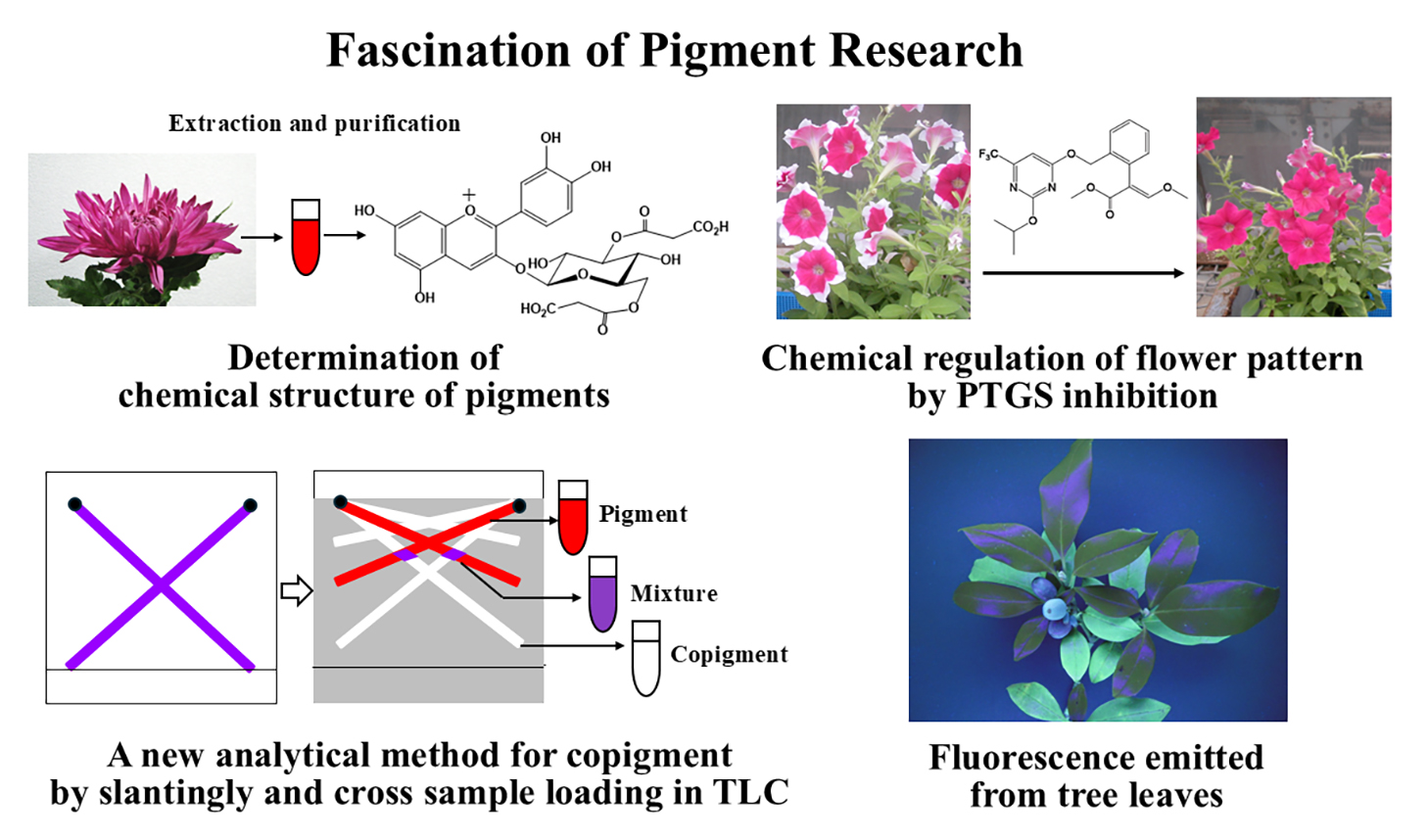
Flower coloration, including patterning, is one of the most important factors that determine the quality of floral products. Because pigments are visibly detectable compounds, we can easily evaluate their production timing, position, amounts, and sometimes chemical structures. This makes pigments excellent research objects to understand regulation mechanisms of bioorganic compound biosynthesis. Targeting mainly anthocyanin pigments responsible for the coloration of major flowers, I have studied the mechanisms of flower pattern formation, as well as flower color expression through interactions with metallic ions or copigments. In these studies, I developed a chromatographic technique that enables simultaneous separation and mixing, facilitating analyses of copigments. I also found that some trees have leaves emitting strong blue-green fluorescence from their adaxial side and I discussed the ecological role of this fluorescence.