HORT NEW FOCUS: EPIGENETICS UNVEILED: REVIEWS
Somatic Transposition of Transposable Elements and Its Significance in Horticultural Breeding

2026 Volume 95 Issue 4 Pages 533-544

Details
2026 Volume 95 Issue 4 Pages 533-544
Breeding has significantly expanded the phenotypic diversity of horticultural plants. Unlike cereal crops, where autogamy predominates, horticultural plants exhibit diverse reproductive modes, including allogamy, asexual reproduction via vegetative propagation, and apomixis. Consequently, naturally occurring somatic mutants, identified as “bud sports”, have played a significant role in breeding. Notably, many agronomically important bud sports are caused by the somatic transposition of transposable elements (TEs). Furthermore, somatic TE transposition often causes variegated phenotypes, which are highly valued in ornamental plants. These points highlight the importance of somatic TE mobilization in horticultural breeding. In this review, we discuss the mechanisms of TE transposition and suppression in plant somatic cells, their impact on phenotype, and their significance in the evolution of horticultural plants.
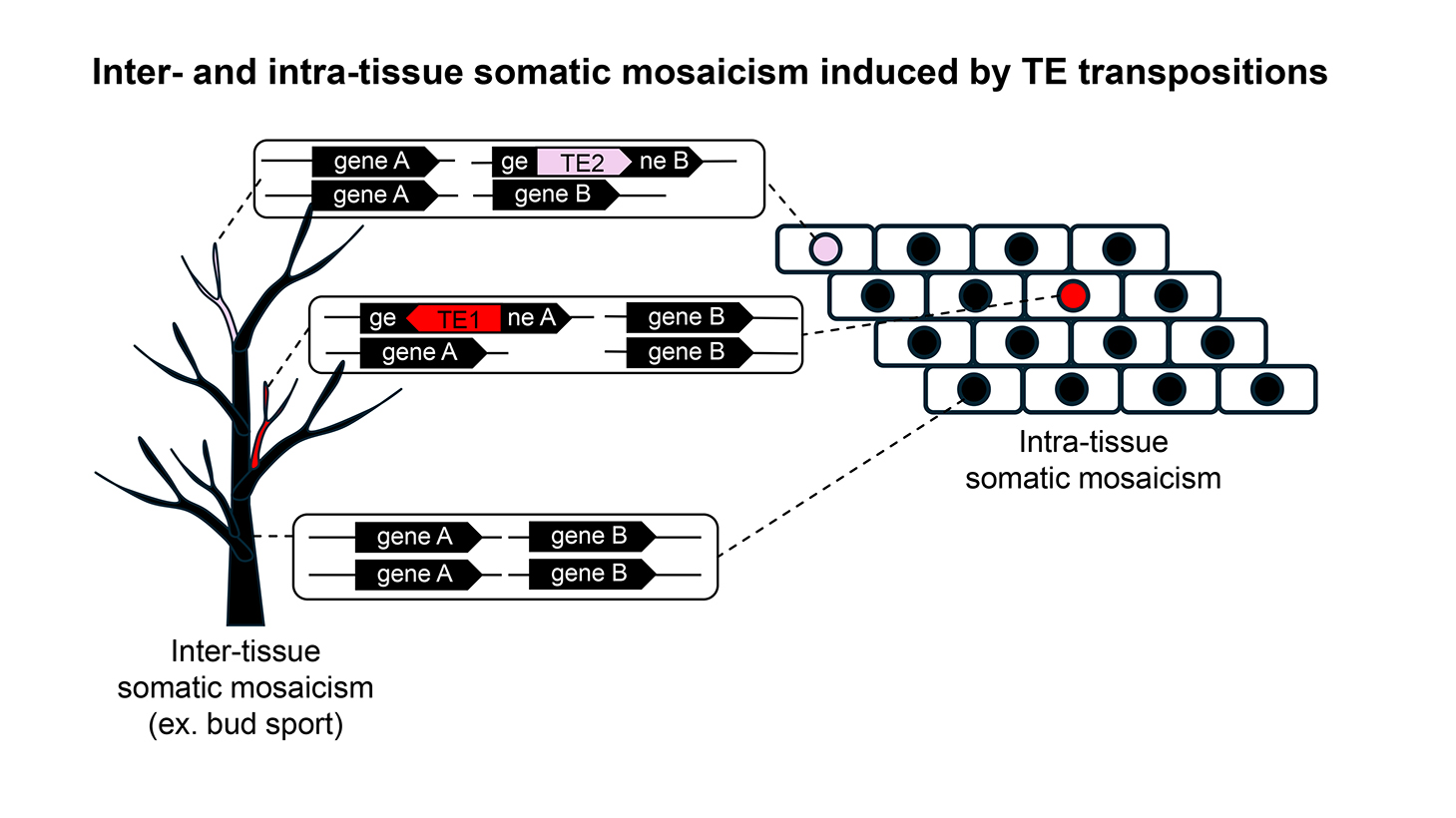
The study of transposable elements (TEs) originated with Barbara McClintock’s cytogenetic analysis of maize (Zea mays), in which she discovered these elements based on observations of mottled phenotypes in the endosperm (McClintock, 1950). Subsequently, the relationship between variegated phenotypes and TE transposition was further investigated through detailed studies of snapdragon (Antirrhinum majus) and morning glory (Ipomoea nil and I. purpurea) (Habu et al., 1998; Inagaki et al., 1994; Sommer et al., 1985). During the 1980s and 1990s, retrotransposons exhibiting high transposition frequency were identified in tobacco (Nicotiana tabacum) and rice (Oryza sativa) callus cultures (Grandbastien et al., 1989; Hirochika, 1993; Hirochika et al., 1996). This led to the widely held view that somaclonal variations arising from plant tissue culture are caused, at least in part, by endogenous TEs (Miyao et al., 2012). Since the 2000s, it has been revealed that endogenous TEs are epigenetically repressed in plant genomes and that removal of this epigenetic silencing can induce their transposition (Hirochika et al., 2000; Miura et al., 2001; Singer et al., 2001). Subsequently, the development of next-generation sequencing technologies enabled comprehensive identification and analysis of TEs, propelling research into a new phase. These insights into plant TEs have primarily been derived from research on annual, sexual reproductive plants. Furthermore, apart from maize, self-pollinating autogamous plants have been mainly used for these studies. However, in horticultural plants, modes of reproduction are more diverse than those typically employed in conventional TE research, including species that reproduce asexually via vegetative propagation or apomixis, woody plants with extended growth periods, and species exhibiting high levels of genetic heterozygosity and inbreeding depression. Therefore, breeding strategies relying on pure line selection, which is primarily employed for cereal crops, are not always useful for horticultural plants. Instead, somatic mutations and the resulting bud sports have been actively utilized, with numerous mutations caused by TE transpositions. In addition, in ornamental plants, variegation phenotypes associated with TE excisions are highly valued traits. This review therefore discusses how TE transposition occurs and is regulated in plant somatic cells, as well as the significance of somatic TE transposition in horticultural plants.
TEs are divided into class I (RNA transposons) and class II (DNA transposons) (Wicker et al., 2007). Class I TEs transpose via an RNA intermediate transcribed from a genomic copy. The RNA intermediate is reverse-transcribed into DNA, then inserted into a new locus in the genome. Their mode of transposition is termed “copy-and-paste”. Class II TEs are excised from their original sites upon their transposition, and the DNA fragments are inserted into the new sites. Their mode of transposition is called “cut-and-paste”. Based on the mechanism of transposition, insertions of class I TEs are stably maintained, while class II TE insertions may be lost through the excision during transposition.
The following examples are well known as TEs that have contributed to the diversification of horticultural plant traits. As class I TEs, there are Gret1 responsible for skin color variation in grape (Vitis vinifera) (Kobayashi et al., 2004), Rider involved in fruit size enlargement of tomato (Solanum lycopersicum) (Xiao et al., 2008), Tcs1 responsible for the red color in sweet oranges (Citrus × sinensis) (Butelli et al., 2012), and Karma causing the “mantled” symptom in oil palms (Elaeis guineensis) (Ong-Abdullah et al., 2015). Among them, Gret1, Rider, and Tcs1 belong to the Long Terminal Repeat (LTR) retrotransposon, while Karma belongs to the Long Interspersed Nuclear Element (LINE). As class II TEs, there is the Tpn1 family from Japanese morning glory (I. nil) belonging to the CACTA superfamily (Inagaki et al., 1994), Tip100 from common morning glory (I. purpurea) (Habu et al., 1998) and dTdic1 from carnation (Dianthus caryophyllus) (Itoh et al., 2002; Larsen, 1996) belonging to the Ac/Ds superfamily, and Tam3 from snapdragon (A. majus) belonging to the hAT superfamily (Sommer et al., 1985). These class II TEs were identified because their excisions induce visible variegated phenotypes (see later sections).
Each TE encodes proteins essential for the transposition. For example, class I TEs encode proteins with functional domains such as reverse transcriptase and integrase, whereas class II TEs possess transposase. Copies that encode the proteins necessary for the transposition and can transpose autonomously are termed autonomous copies. Conversely, copies that do not encode the essential proteins and rely on the proteins from autonomous copies for their transposition are called non-autonomous copies. Typically, non-autonomous copies can only be transposed with the presence of autonomous partner copies, often belonging to the same TE family. For instance, there is the Ac (autonomous) and Ds (non-autonomous) pair in maize (Fedoroff et al., 1983) and the aDart (autonomous) and nDart (non-autonomous) pair in rice (Tsugane et al., 2006), both belonging to hAT elements of class II. Another example in rice, the pair of Ping/Pong (autonomous) and mPing (non-autonomous) (Jiang et al., 2003), belonging to the PIF–Harbinger superfamily of class II, is known for the super amplification of mPing in some rice varieties (Naito et al., 2006). mPing is a short non-autonomous TE composed of 5′ and 3′ terminal sequences homologous to those of the autonomous copies, and such short non-autonomous TEs are termed miniature inverted repeat transposable elements (MITEs).
The survival strategy of TEs is thought to involve increasing their progeny (copy number) within the host genome, thereby ensuring their preservation. On the other hand, when TEs are inserted into or near host genes, they can potentially disrupt the gene structures or alter their expression and function. Since these insertions can have detrimental effects on the hosts, eukaryotes have evolved epigenetic silencing mechanisms such as DNA methylation and histone modifications to suppress the transcription and subsequent transposition of TEs. TEs are major target sequences for DNA methylation, and their distribution determines DNA methylation patterns across the genome. Conversely, when TEs insert near genes, epigenetic control targeting the TEs can influence the transcriptional regulation of the genes. For details on these points, please refer to the reviews by Kim (2025) and Nishimura et al. (2025) in this special issue. Each TE exhibits a bias in insertion sites, but the magnitude of this bias varies between TEs (e.g., Miyao et al., 2003; Tsukahara et al., 2025). However, given that the probability of the same TE inserting independently at exactly the same site in the genome is extremely low, TE insertion polymorphisms are highly useful as DNA markers (e.g., Monden et al., 2015). Although TEs occupy a large fraction of eukaryote genomes, the vast majority of them are old and have accumulated mutations and truncations (Wicker et al., 2007). Consequently, only a small number of endogenous TEs retain transpositional activity.
To consider somatic mutation via TE transposition, we outline the relationship between the SAM structure and mutation. The SAM of dicotyledons comprises three cell layers: L1, L2, and L3, each containing stem cells at the center (Fig. 1a). Cell division in the L1 and L2 layers occurs predominantly anticlinally, while cell division orientation in the L3 layer is non-directional. When a mutation occurs in a cell in the SAM, cell divisions give rise to a clonal sector of the mutant cell lineage. The state where all cells of one or two specific layer(s) become composed of mutant cells is termed a periclinal chimera (Fig. 2a). This state can be stably maintained through vegetative propagation of the tissue containing the SAM (e.g., a branch). On the other hand, when only a portion of a single layer is composed of the mutant cells, this state is termed a mericlinal chimera (Fig. 2b). In addition, the state where the mutant cell sector presents across the three layers is called a sectorial chimera (Fig. 2c). Both mericlinal and sectorial chimeras are unstable and difficult to maintain via vegetative propagation. However, if an axillary bud originates from the mutant cells, it can establish a periclinal chimera within the SAM. Once this structure is formed, the mutation becomes fixed and can be maintained via vegetative propagation. Therefore, for a periclinal chimera to arise, the initial mutation does not necessarily need to originate in the stem cells. The number of cell divisions in the SAM stem cells throughout a plant’s lifetime is extremely low (Burian et al., 2016; Watson et al., 2016). This is thought to be a mechanism to avoid the accumulation of mutations associated with DNA replication and to maintain the quality of the genomic information in the stem cells.
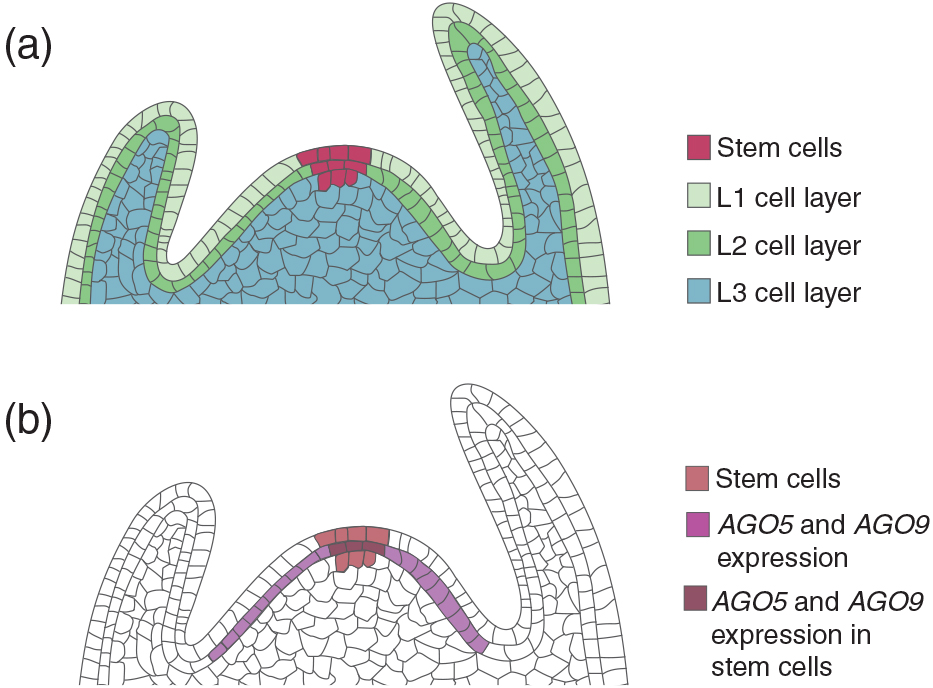
Cell layers and stem cells in SAM. (a) Schematic representation of L1, L2, and L3 layers and stem cells. (b) Schematic diagram showing the distribution of AGO5 and AGO9-expressing cells in the shoot apical meristem (SAM) during the seedling stage of Arabidopsis thaliana (based on Bradamante et al., 2024).
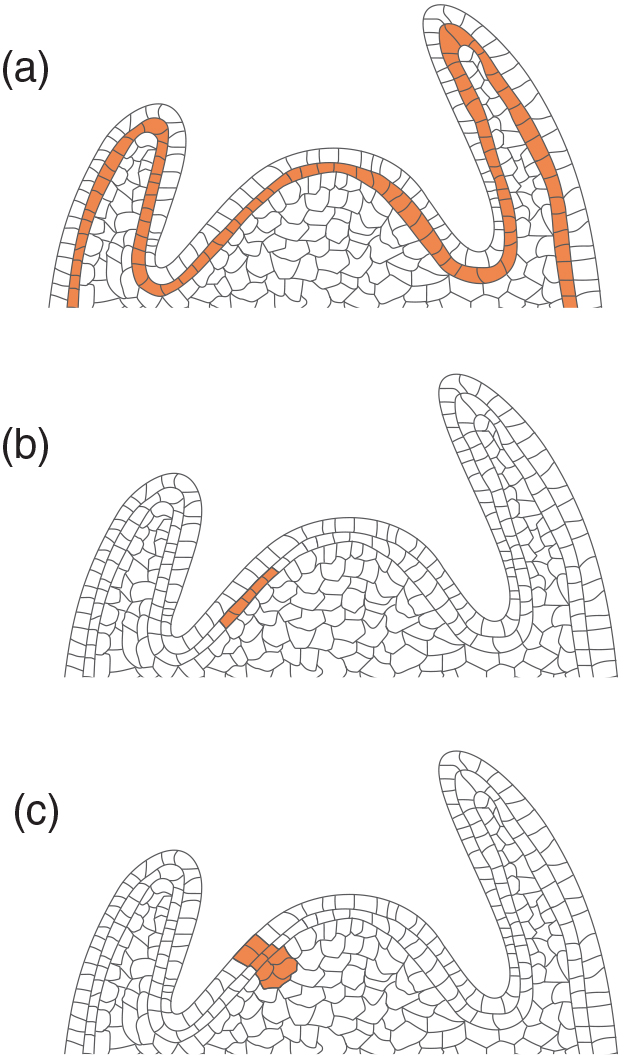
Schematics of different types of chimeras in SAM. (a) periclinal chimera, (b) mericlinal chimera, (c) sectrial chimera. The colored region represents a sector composed of mutant cells.
Layers L1, L2, and L3 each differentiate into distinct tissue and cells within the plant body. The germ cell lineage originates from the L2 layer. Consequently, for a somatic mutation to be inherited by the next generation through the seeds, the mutation must be present within the L2 layer. To maintain and propagate a bud sport possessing a desirable trait via vegetative propagation, attention must be given to which cell layer the trait originates from and which tissue is used for the vegetative propagation. For example, a trait for epidermal color changes in a periclinal chimera of the L1 layer cannot be utilized in hybrid breeding because it is not inherited by the gametes. Similarly, a trait caused by periclinal chimeras in the L1 or L2 layers observed in a tuberous root (e.g., sweetpotato, I. batatas L.), will not be inherited through vegetative propagation from the seed tuber. This is because the adventitious buds arising from the seed tuber originate solely from the L3 layer, and the L1 layer, which is composed of the mutant cells, does not contribute to the new tuber formation.
To investigate whether somatic mutations accumulate in plants, Plomion et al. (2018) compared genome sequences between different branches of an approximately 100-year-old oak tree, identifying 46 high-confidence mutations. They confirmed that some of the mutations are transmitted to subsequent generations via seeds. Hanlon et al. (2019) compared genome sequences between the base and top of 20 Picea sitchensis individuals aged from 220 to 500 years, and identified five substitutions. In Japan, the flowering cherry (Cerasus × yedoensis) variety ‘Somei-Yoshino’, an interspecies hybrid generated approximately 200 years ago, is maintained through vegetative propagation and grown nationwide. Shirasawa et al. (2024) compared the genome sequences of 46 individuals of Somei-Yoshino distributed across Japan, identifying 684 single nucleotide variants (SNVs) and five copy number variations (CNVs). These clearly demonstrate that mutations arising in SAM are transmitted through vegetative tissues and accumulate in newly generated individuals through vegetative propagation. Furthermore, it was revealed that it is usual for a single plant individual to be composed of multiple parts that have accumulated different mutations.
As previously mentioned, the L2 layer differentiates the germ cell lineage, leading to the hypothesis that the mutation frequency in the L2 layer is likely suppressed to a lower level compared to other layers. Goel et al. (2024) sampled fruit from seven branches of a single apricot tree, separating the fruit into the epidermis (derived from the L1 layer) and the flesh (derived from the L2 layer). They then sequenced genomic DNA extracted from each of them and analyzed the polymorphisms between them. They identified a total of 205 small-scale variations (point mutations and small in-dels), of which 123 were specific to the L1 layer and 70 were specific to the L2 layer. They therefore concluded that the mutation frequency is higher in the L1 layer than in the L2 layer. Furthermore, Amundson et al. (2025a) compared genomic DNA sequences extracted from leaves (L1, L2, and L3 derived), leaf trichomes (L1 derived), and adventitious roots (L3 derived) of potato (S. tuberosum). They revealed that the L1 layer possesses a mutation frequency up to 4.5 times higher than that of the L2 and L3 layers. Thus, the frequency of somatic mutations varies between layers, with the potential germline layer L2 exhibiting a lower rate. Incidentally, as these analyses primarily focused on small mutations, limited information was reported regarding TEs. Goel et al. (2024) reported that no evidence of TE transpositions was detected in their analysis of apricot (Prunus armeniaca). Instead, within these analyses, TEs were identified as sequences with a high mutation frequency (Goel et al., 2024; Meyer et al., 2025).
As described above, mutations in the SAM inevitably occur, but as evidenced by the suppression of mutations in the L2 layer, plants appear to possess mechanisms that prevent the occurrence of heritable mutations. Although the transposition of TEs is a type of mutation, its mechanism of occurrence is fundamentally different from those of other mutations. This raises the question of whether SAM has mechanisms to suppress TEs and preserve genome integrity.
The risk of TE mobilization is considered high in gametophytes and embryonic tissues. However, in these tissues, a phenomenon known as ‘Developmental Relaxation of Transposable element Silencing’ (DRTS) is observed. In pollen grains, transcriptional activation of TEs occurs in the vegetative cell (VC) nucleus. Consequently, TE-targeted small RNAs (sRNAs) produced in the VC nucleus are transferred to the sperm cell (SC) nucleus. Then, they contribute to re-enforce TE silencing in the SC genome (Slotkin et al., 2009). The de-repression of TEs in the VC is induced by the absence of Decreased in DNA Methylation 1 (DDM1), a chromatin remodeling factor that regulates heterochromatin suppression. In the embryo sac of Arabidopsis thaliana, on the other hand, epigenetic de-repression of TEs occurs in the polar nuclei of the central cell. Consequently, TE-derived sRNAs produced from the TE transcripts are thought to be transferred to the embryo, contributing to the reinforcement of transposon silencing (Hsieh et al., 2009; Kinoshita et al., 2004). The de-repression of TEs in the polar nuclei is mediated by the DNA demethylase DEMETER. It is known that demethylation of the maternal genome is required in rice to control maternally expressed imprinted genes, which are involved in hybridization barriers in interspecies and interploidy crosses (Sekine et al., 2013; Tonosaki et al., 2018). Although these phenomena may appear to increase the risk of TE transposition, the de-repression of TEs occurs not in the gametes or embryos themselves, but in their neighboring cells. Furthermore, the TE-targeted sRNAs generated in these neighboring cells are supplied to the gametes and embryos in a non-cell-autonomous manner. Consequently, the genomes of the gametes and embryos are thought to remain protected.
DRTS has also been observed in the SAM. Ohtsu et al. (2007) analyzed the transcriptome in maize SAM and found that 62 retrotransposon-related transcripts were upregulated. Simultaneously, multiple silencing-related genes, including regulatory genes of the RNA-dependent DNA methylation (RdDM) pathway, showed increased transcription in SAM. This led them to propose that SAM produces transposon-specific sRNAs, contributing to the suppression of transposons in the stem cells. Vicient (2010) also observed transcriptional activation of TEs in maize SAM. While the author also observed transcriptional upregulation of TEs in sperm cells and maize cell cultures, different TE families were upregulated in these different tissues. This led them to conclude that these phenomena do not represent simple genome-wide reactivation of TEs. Tamaki et al. (2015) also observed transcriptional activation of TEs in rice SAM. In addition, they found that the transition from the vegetative to reproductive growth phase in the SAM induced transcriptional repression of certain TE family members. Subsequently, Higo et al. (2020) observed that CHH methylation of TEs is highly maintained in the rice SAM and further increases during reproductive growth. Furthermore, these TEs are also highly methylated in the gametes, suggesting that the TE suppression in the germline begins in the SAM.
It was revealed that DRTS occurs in the stem cells in the SAM. Gutzat et al. (2020) generated Arabidopsis transgenic plants harboring mCherry-tagged histone H2B driven by the promoter of CLAVATA3 (CLV3) to label the SAM stem cells. Using fluorescence-activated nuclear sorting (FANS), they isolated the nuclei from the mCherry-positive cells and analyzed their transcriptomes. The data revealed that transcription of TEs is transiently activated in the SAM stem cells during the early vegetative growth stage. Furthermore, they demonstrated that transcription levels of two Argonaute genes, AGO5 and AGO9, involved in sRNA-mediated silencing, are elevated in SAM stem cells. Subsequently, Bradamante et al. (2024) analyzed the spatiotemporal expression patterns of AGO5 and AGO9 in the SAM. They found that these genes are specifically expressed in the L2 layer of the SAM in the early vegetative growth phase, including stem cells (Fig. 1b). Furthermore, an elevated TE transcription level was observed in the stem cells of the L2 layer. Since AGO5 and AGO9 carry sRNAs that could be derived from the activated TE transcripts, it was assumed that these sRNAs may be synthesized in a cell-autonomous manner.
The above findings suggest that DRTS in the SAM may occur in the stem cells. Since the stem cell genome serves as the template for the genomes of all cells in an individual plant, the DRTS in the stem cells, including those in the L2 layer, appears to increase the risk of generating both somatic and germinal TE transpositions. However, since transcriptional activation of TEs in SAM stem cells occurs only transiently during development, cells undergoing DRTS and those benefiting from it could be separated temporally rather than spatially. In addition, TEs are generally thought to utilize host cell division for transposition (Greenblatt, 1984; Lisch et al., 1995; Menees and Sandmeyer, 1994; Mita et al., 2018; Ros and Kunze, 2001). As mentioned earlier, the limited number of cell divisions in the SAM stem cells may contribute to suppressing transpositions of TEs within these cells. Kawakatsu et al. (2016) demonstrated that the RdDM pathway is activated in columella cells of the root apical meristem (RAM). This was evidenced by increased levels of predominantly 24-nt sRNAs and hypermethylation of CHH sequences in TEs in the columella cells. They suggested that columella cells may function as nurse cells, enhancing TE suppression in neighboring stem cells and the quiescent center (QC). At present, it remains unclear whether DRTS occurs in RAM. However, the existence of distinct TE suppression mechanisms in different tissues suggests that TE suppression is fundamentally important to maintain genome integrity. Clarifying the detailed mechanisms and effects of the DRTS in SAM could potentially enable us to manipulate somatic TE activity. However, Bradamante et al. (2024) could not detect transpositions of TEs in Arabidopsis ago5, ago9, and ago5 ago9 mutants.
Variegated phenotypes are highly valued in ornamental horticultural plants. When TEs are implicated in variegated phenotypes, two primary mechanisms exist. One involves excision of class II TEs. When a class II TE inserts into a gene, a loss-of-function allele is generated. In somatic cells homozygous for this loss-of-function allele, excision of the TE from one allele will generate cells with a restored gene function. When these cells undergo cell division and form sectors surrounded by normal cells, a variegated phenotype appears. In another mechanism, the variegated phenotype is indirectly induced via epigenetic silencing of TEs inserted near or within a gene (e.g., within an intron). Fluctuations in the levels of this silencing state resulting in the variation of the transcription level of the gene between cells or lineages (Morita and Hoshino, 2018; Ong-Abdullah et al., 2015). The former mechanism necessarily involves excision of the TE and thus requires class II TEs. The latter mechanism can occur with either class I or class II TEs. Furthermore, the frequency of excision of a class II TE insertion within the same mutant allele may differ between different plant lineages (Banks et al., 1988; Fedoroff and Banks, 1988; Habu et al., 1998). In a maize Spm transposon, the variation in the frequency and timing of the excision arises because of the DNA methylation level difference between the plant lines (Banks et al., 1988).
The variegated phenotype associated with excision of class II TEs has also been utilized to monitor their transposition frequency in somatic cells. However, the variegated phenotypes associated with the excision are often only visible in specific tissues, and the frequencies of excision and reinsertion could differ. For example, Mutator (Mu) in maize, discussed next, has a higher frequency of reinsertion than excision (Scherer et al., 2025). Furthermore, excision events occurring at extremely late stages of tissue differentiation cannot be visually recognized as sectors and thus remain undetectable. For these reasons, accurate estimation of TE transposition frequency in somatic cells has been challenging. Scherer et al. (2025) established a method to detect novel Mu insertions in maize somatic cells using next-generation sequencing technology enabling highly sensitive (a detection limit of 1 part in 16,000) and quantitative analysis. Using this, they analyzed DNA samples from the endosperm of F1 seeds obtained between Mu-active (individuals with transpositionally active Mu) male parents and Mu-inactive (individuals without transpositionally active Mu) maternal parents, and the primary root, first leaf, and pollen grains developed from the remaining embryo after sowing. The analysis revealed that Mu continuously transposes throughout the entire plant’s development, and the estimated number of new insertions per cell in the first leaf was 32.8. This suggests that the excision events we observe as variegation may represent only a fraction of transpositional TE activity in the somatic tissues. That is, TE transposition in somatic cells is likely extremely frequent and may contribute to generating genetic diversity among plant somatic cells. It should be noted, however, that not all TEs necessarily transpose continuously throughout the entire plant body. It is known that some TEs are transcriptionally and/or transpositionally activated only under specific stimuli or in specific tissues. For instance, transcription of ONSEN is induced at high temperature (Ito et al., 2011; Pecinka et al., 2010), transposition of Tam3 is activated at low temperature (Carpenter et al., 1987; Fujino et al., 2011), LORE1 transposes in the germline (Fukai et al., 2010), and Ping actively promotes the transpositions of mPing in trans during early embryogenesis (Teramoto et al., 2014).
Next, we present recent research examples in three horticultural crops where a significant impact of TE transposition on agronomic traits and genetic diversity has been demonstrated.
AppleApple (Malus domestica) is one of the world’s most widely cultivated fruit trees. Possessing self-incompatibility and a high level of genomic heterozygosity, hybrid breeding is primarily conducted by selecting individuals with desirable traits from the F1 hybrids obtained between different varieties. In addition, the selection of bud sports is pivotal to apple breeding. Notably, ‘Gala’ and ‘Fuji’ are known as varieties that have produced numerous bud sport-derived cultivars. This is likely due to their extensive cultivation, which increases the probability of discovering bud sports.
‘Gala’ is a cultivar mainly grown in Europe and the US. Due to its importance, a phased diploid genome assembly of ‘Gala’ has been constructed (Sun et al., 2020), enabling the identification of causative mutations in the bud sport-derived varieties. Ban et al. (2022) investigated the responsible gene for the bud sport-derived variety, ‘Autumn Gala’ (‘AGala’), which requires four weeks longer than ‘Gala’ for fruit development after flowering. They found that in ‘Agala’, a deletion of a 2.8-Mbp region on chromosome 6 resulted in this region becoming hemizygous. This region harbors MdACT7, a gene encoding an ACTIN7-like protein primarily expressed in the fruit. Further analysis revealed that ‘Gala’ is a heterozygote at this locus, carrying both the wild type (MdACT7) allele and the mutant (Mdact7) allele. The mutant Mdact7 allele is functionally impaired due to the insertion of a hAT-like transposon within the gene. In ‘AGala’, a 2.8-Mbp deletion resulted in a loss-of-heterozygosity (LOH) event at this region, leading to Mdact7 hemizygosity, which was identified as the likely cause of the prolonged ripening period. Interestingly, it was found that a 10.7 kb-long Gypsy-like LTR retrotransposon, designated as Gy-36, was inserted at the junction of this 2.8 Mbp deletion. This Gy-36 was characterized by identical LTR sequences at both ends, and the insertion was flanked by a 6-base target site duplication (TSD), confirming it as a bona fide transposition event. Consequently, it was inferred that the 2.8-Mbp deletion was directly induced by the transposition of Gy-36. Since ‘AGala’ originated as a bud sport of ‘Gala’, this transposition occurred in somatic cells. However, the timing of the hAT-like TE insertion into MdACT7 remains unknown.
‘Fuji’ is the most widely cultivated apple cultivar globally. Cai et al. (2024) established a phased diploid genome assembly for ‘Fuji’ and utilized it to identify sequence polymorphisms present in 74 bud sport-derived cultivars. Analysis of the phylogenetic relationships among the 74 cultivars based on the polymorphism data identified a clade composed solely of 10 spur-type varieties. These ten varieties possessed a 167-base pair deletion in the promoter region of MdTCP11, a gene encoding the TCP transcription factor protein. This deleted region overlapped with a 205-bp MITE inserted in the promoter, resulting in the loss of 115 bp of the MITE sequence. In the spur-type varieties, transcription levels of MdTCP11 in shoot tips were higher than in standard-type ones. The promoter activity of MdTCP11 harboring the 167-bp deletion was found to be higher than that of the wild-type allele (without deletion) in a reporter assay using apple calli. Therefore, it was revealed that the MITE sequence in the promoter region downregulates the transcription of MdTCP11. In addition, comparison of DNA methylation levels on the MITE between the spur-type and standard-type revealed higher methylation in the standard-type. Subsequently, treatment of standard-type with the DNA methylation inhibitor 5-Azacitidine resulted in a substantial increase in MdTCP11 transcription levels. Furthermore, inhibition of internode elongation by the overexpression of MdTCP11 was observed in both tobacco and apple transgenic plants. Taken together, these data suggest that MITE in the promoter region negatively regulates the transcription of MdTCP11 through both genetic and epigenetic mechanisms, and that the 167-bp deletion, which partly overlapped with the MITE, de-repressed the gene, resulting in the spur-type phenotype. This MITE was present in all 13 apple lines examined by Cai et al. (2024), suggesting this is an ancient insertion. It is important to note that the deletion observed in this case was not due to MITE excision and thus was not caused by somatic TE transposition. There are several precedent studies about bud sport in which partial deletion of a TE sequence inserted into the promoter region of a gene led to phenotypic alteration. For instance, in grape, the light-red-skinned ‘Ruby Okuyama’ and rosy-skinned ‘Benitaka’ varieties derived from the white grape “Italia” are known to be generated by the deletion of genome regions overlapping with an LTR retrotransposon inserted in the promoter region of VvMYB1A (Azuma et al., 2009; Kobayashi et al., 2004).
PotatoPotato, widely cultivated throughout the world, is part of the Solanum section Petota, a group that also includes various other species. While the principal cultivated varieties are tetraploid, Petota encompasses species with diverse ploidy levels ranging from diploid to hexaploid. The cultivated species and landraces originated in a region extending from western Venezuela to southern Chile. According to phylogenetic analyses by Spooner et al. (2005), Petota landraces represent a monophyletic origin, suggesting domestication occurred only once. Potato is capable of seed propagation via sexual reproduction, and the diploids exhibit gametophytic self-incompatibility. This gametophytic self-incompatibility is, however, lost in tetraploids because of the ‘competitive interaction’ between two S alleles present in a pollen grain, rendering them self-compatible (Sijacic et al., 2004). However, as selfing causes severe inbreeding depression, it is difficult to apply the breeding strategies practiced in autogamous crops such as cereals to potato. Conversely, once individuals with desirable traits are obtained, they can be propagated vegetatively using seed tubers. There are numerous landraces and wild species capable of hybridizing with cultivated strains, and introgression via distant crosses has been extensively employed to introduce disease resistance genes, such as those conferring resistance to late blight (Vleeshouwers et al., 2011). Consequently, the potato genome is thought to maintain a high level of polymorphism between lineages, coupled with a state of high genetic heterozygosity. The contribution of TEs to potato genetic diversity is substantial, as demonstrated by comparisons among phased tetraploid genome assemblies (Hoopes et al., 2022) and pangenome analysis (Bozan et al., 2023). Furthermore, Cheng et al. (2025) conducted pangenome analyses on 60 diploid cultivated and wild potato accessions, revealing that 28.2% of structural variants (SVs) in the genome resulted from transpositions of TEs, while 33.8% were attributed to ectopic recombination events from TE-mediated rearrangement (TEMR).
At least two observations demonstrated TE transpositions in potato via tissue culture. One of these was obtained in the pan-genome analysis conducted by Bozan et al. (2023), where they confirmed an increase in TE content in the lineages with a history of in vitro propagation. The other one was acquired from the molecular genetic analysis of the responsible mutation for a purple-skinned mutant clone regenerated from protoplasts of a red-skinned potato line (Momose et al., 2010). The authors revealed that a MITE, designated as dTstu1 that is inserted in a flavonoid 3′, 5′-hydroxylase gene of the red-skinned line, was excised and the gene function was restored in the mutant clone.
Another example of TE mobilization in potato under normal growth conditions is known as ‘Bolters’. Potato tuberization is normally induced under short-day conditions, and this photoperiod sensitivity is controlled by a potato homologue of the Arabidopsis gene CYCLING DOF FACTOR 1 (CDF1) (Kloosterman et al., 2013). Potato StCDF1 is involved in the regulation of multiple agricultural traits beyond its known role in the photoperiodic control of tuberization, including tuber quality and field resistance to late blight and Verticillium dahliae. The multi-allelic nature of this gene has been established, including the wild-type StCDF1.1, StCDF1.3 (which harbors a class II TIR transposon in its second exon), and StCDF1.2 (which carries a 7-bp footprint resulting from the excision of the transposon from StCDF1.3). The C-terminal region of StCDF1.1 contains a conserved domain essential for ubiquitin-mediated proteasomal degradation. The loss of this domain in truncated alleles, such as StCDF1.2 and StCDF1.3, results in increased protein stability. Consequently, StCDF1.3 strongly accelerates tuber formation under long-day conditions, whereas StCDF1.2 exhibits a milder effect. These mutant alleles are thought to enable potato cultivation under long-day conditions. As they exhibit incomplete dominance over the StCDF1.1, they control photoperiod sensitivity in a dosage-dependent manner in tetraploid potato (Hoopes et al., 2022; Kloosterman et al., 2013). In potato, a recurring sport type, called ‘Bolters’, exhibits late-maturing characteristics compared to the parent variety, such as delayed tuberization and increased above-ground growth. Clot et al. (2025) analyzed bolters derived from multiple varieties, revealing that while all parental varieties possessed the StCDF1.3 allele, their bolters contained the revertant wild-type StCDF1.1 allele arising from the excision of the class II TE from StCDF1.3. Meanwhile, Amundson et al. (2025b) analyzed bolters originating from the Russet Norkotah variety and reached a similar conclusion. Some bolters exhibited a non-zero frequency of the StCDF1.3 allele in genomic sequence data, suggesting they were peripheral chimeras (Amundson et al., 2025b; Clot et al., 2025).
Sweet orangeThere are various cultivated species within the genus Citrus, but these have arisen through interspecific hybridization between the three basic species C. maxima, C. reticulata, and C. medica. The sweet orange, the most widely cultivated citrus fruit, has been considered to have a single origin due to its extremely low genetic diversity between varieties and high degree of heterozygosity. In recent years, phased reference genome data obtained by long-read sequencing has revealed that sweet orange is highly likely to have been created by backcrossing mandarin (C. reticulata) with sour orange (Citrus × aurantium) (Liu et al., 2025). Since polyembryony derived from mandarin is dominant over monozygosity, sweet orange also displays apomixis. In other words, as sweet orange has been propagated without sexual reproduction, most of the intraspecific diversity currently observed is attributable to somatic mutations (Wang et al., 2021).
Polyembryony in citrus itself has arisen through a TE insertion. Wang et al. (2017) conducted a combined analysis of bulked segregant analysis (BSA) on an F1 segregant population of HB pummelo (monoembryonic, pp) × Fairchild mandarin (polyembryonic, Pp) and genomic data from 108 citrus accessions (45 polyembryonic and 63 monoembryonic) to identify the causative gene for polyembryony. They identified a gene encoding an RWP-RK domain–containing protein as a candidate gene, that is expressed at dramatically higher levels in the embryo in polyembryonic lines than in monoembryonic lines. The Arabidopsis homologue of this gene, AtRKD4 (GROUNDED), is known to induce somatic embryos when overexpressed (Jeong et al., 2011; Waki et al., 2011). Shimada et al. (2018) also discovered this gene through comparative transcriptomic analysis between monoembryonic and polyembryonic varieties using a custom oligo-DNA microarray containing probes designed from the genes in the candidate locus (Nakano et al., 2012), based on the higher transcription level of the gene in reproductive tissues of polyembryonic varieties than monoembryonic ones. This gene, CitRWP/CitRKD1, has two alleles, and the one containing a MITE insertion in the promoter region was specific to the polyembryonic lines. This suggested that the upregulation of CitRWP/CitRKD1 induced by the MITE insertion is the cause of the polyembryony in citrus. It remains unclear, however, whether this MITE insertion arose as a somatic mutation in the ancestor.
As mentioned, sweet orange has a single origin and has been propagated vegetatively; therefore, all TE insertion polymorphisms between lineages necessarily reflect somatic transpositional activity of TEs in the past. One of the most well-known examples of TE insertion contributing to the phenotypic diversity in sweet orange is the Ruby locus, which governs fruit coloration by regulating anthocyanin accumulation (Butelli et al., 2012). The insertion of the LTR retrotransposon, Tcs1, upstream of the anthocyanin synthesis-related MYB gene (Ruby) enabled its transcription to be cold-inducible. While many blood oranges harbor this allele or its derivatives, a Chinese-originating old blood orange variety, Jingxian, has a separate copy of Tcs2, belonging to the same family as Tcs1, inserted into the Ruby promoter, indicating at least two independent insertion events occurred during sweet orange evolution (Butelli et al., 2012). Another two insertions of LTR retrotransposons closely related to Tcs1 were found in the coding region of CitAN1/NOEMI, a gene controlling fruit acidity, generating a loss-of-function allele in sweet orange (Butelli et al., 2019; Strazzer et al., 2019). The frequent observation of the Tcs1 family that contributes to phenotypic diversity suggests that this retrotransposon family may have played a significant role in the diversification within sweet orange populations after establishment.
To elucidate the role that TEs played in sweet orange, Wu et al. (2025) conducted a comprehensive TE-insertion profiling of the plant species. First, they compared 11 sweet orange genome assemblies constructed using long reads and detected insertion polymorphisms of TEs, thereby identifying 34 TE families that are thought to have been actively transposing after the origin of sweet orange. Of these, 29 families were class II TEs. Next, the historical transpositional activity of the 34 TE families was analyzed using whole-genome NGS data for 127 sweet orange accessions, confirming novel transpositions of 30 TE families. Among these, six families (five class II transposable element families: CiMULE1, CiMULE2, CiMULE3, CiMULE5, CihAT1, and one LTR retrotransposon family: CiGYPSY1) accounted for 97.3% of the novel integrals in sweet orange. This finding demonstrated that class II TEs contribute more significantly to genomic diversity in modern sweet orange than class I TEs. Given that 88% of TEs in the sweet orange genome belong to class I (Xu et al., 2013), this finding that class II contributes more to genomic structural variations than class I is surprising. In addition, this finding contrasted with the aforementioned assumption that the Tcs1 family (class I copia LTR retrotransposon) substantially contributes to sweet orange genomic diversity.
In this review, we discussed the transpositional activity of TEs in somatic cells, which is thought to contribute significantly to the diversification of horticultural plants. As mentioned earlier, studies on TEs have tended to focus on annual autogamous plants, but they are now expanding beyond these boundaries, as shown by the examples of the three horticultural crops introduced here. One of the driving forces behind this is clearly the availability of phased genome assemblies enabled by long-read sequencing technologies, which has made it possible to detect structural variations in genomes with high heterozygosity between accessions. In the study of somatic transposition frequency of Mu, NGS technology was effectively utilized under a well-designed sampling strategy. The scope for DNA sequence analysis is expected to expand further in the future, and research into TEs in horticultural plant species, which has been considered difficult to perform, could become more active. Furthermore, as the regulatory mechanisms of TEs in SAM and somatic cells are elucidated, utilizing these findings could enable the artificial manipulation of TE transposition frequency. This could have significant potential as a practical technology. For example, it may become possible to increase the frequency of bud sport generation through transposition induction, alter variegation patterns, and establish gene knockout populations. Conversely, strategies to suppress TE transposition and the resulting mutations could be established, which would be useful for germplasm conservation.
The authors would like to thank the editors of this special issue for inviting us to write this review.


