HORT NEW FOCUS: EPIGENETICS UNVEILED: REVIEWS
Somatic Transposition of Transposable Elements and Its Significance in Horticultural Breeding

2026 Volume 95 Issue 4 Pages 533-544

Details
2026 Volume 95 Issue 4 Pages 533-544
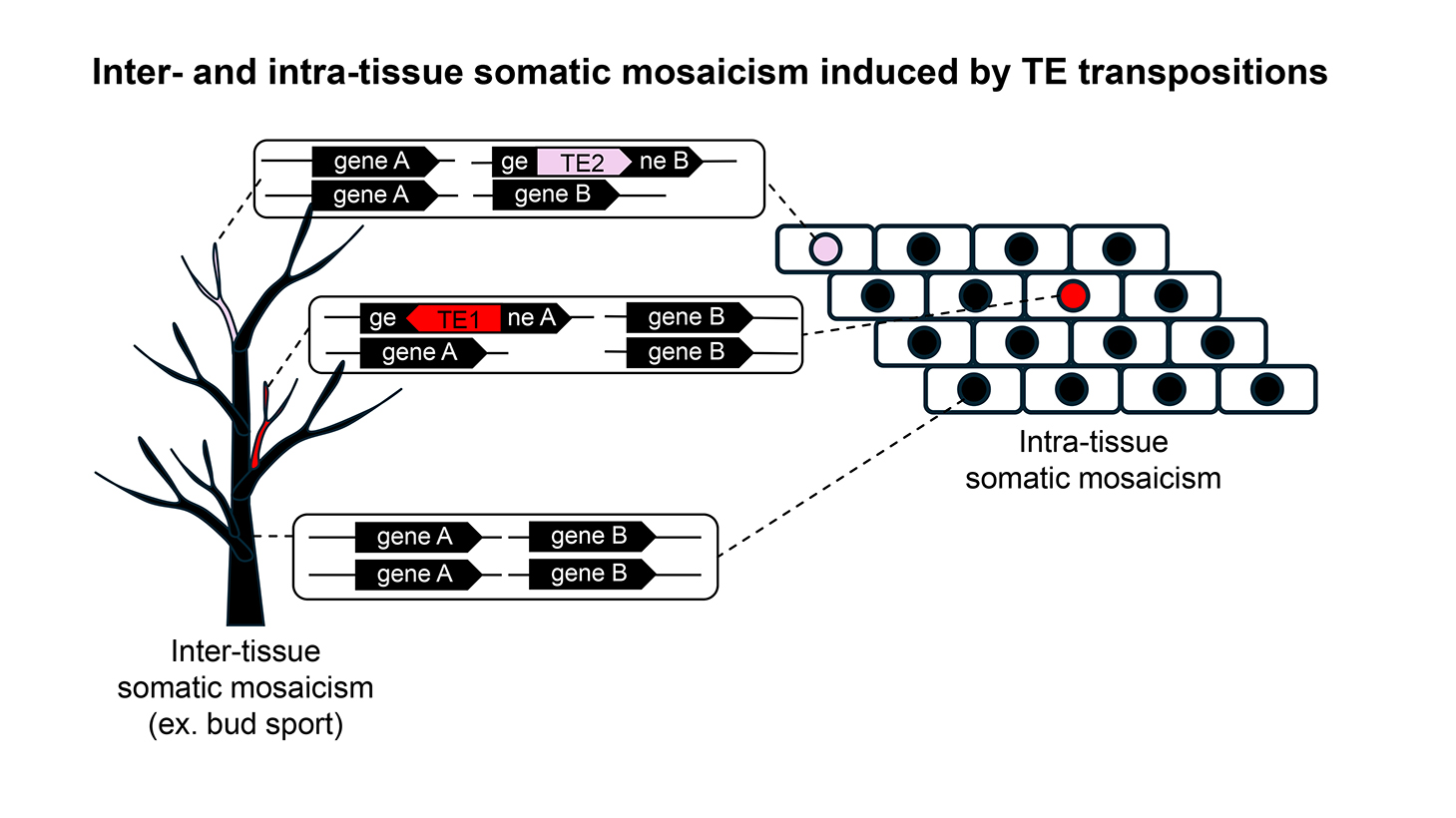
Breeding has significantly expanded the phenotypic diversity of horticultural plants. Unlike cereal crops, where autogamy predominates, horticultural plants exhibit diverse reproductive modes, including allogamy, asexual reproduction via vegetative propagation, and apomixis. Consequently, naturally occurring somatic mutants, identified as “bud sports”, have played a significant role in breeding. Notably, many agronomically important bud sports are caused by the somatic transposition of transposable elements (TEs). Furthermore, somatic TE transposition often causes variegated phenotypes, which are highly valued in ornamental plants. These points highlight the importance of somatic TE mobilization in horticultural breeding. In this review, we discuss the mechanisms of TE transposition and suppression in plant somatic cells, their impact on phenotype, and their significance in the evolution of horticultural plants.