Recent Advances in the Epigenetics of Ornamental Flowers

Article ID: SZD-R126

Details
Article ID: SZD-R126
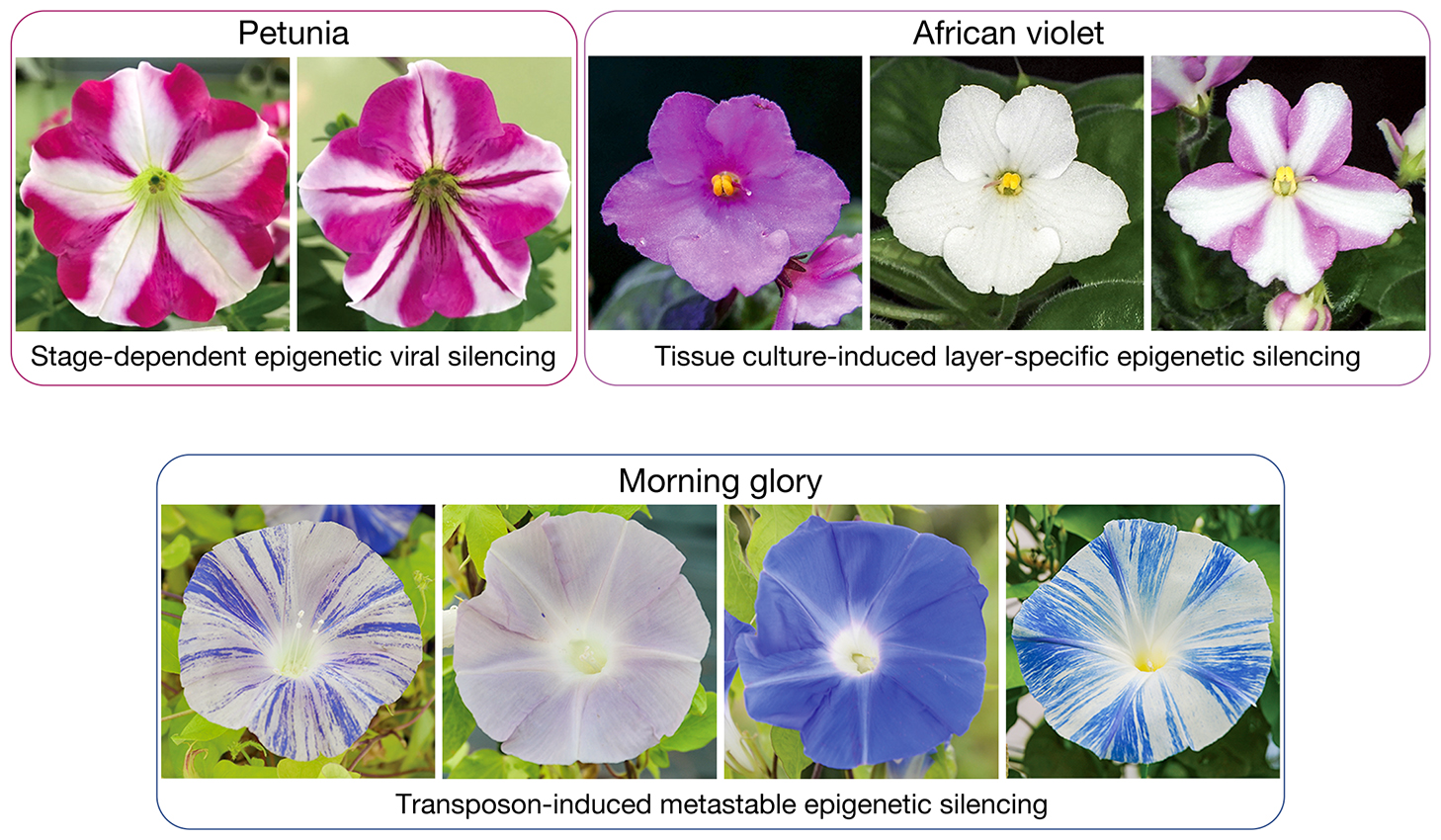
Epigenetics is becoming increasingly pivotal not only in model plant species, but also in agricultural crop species. The foundational study in ornamental plant epigenetics was the discovery of co-suppression in petunia, where overexpression of the chalcone synthase A gene in pigmented petals resulted in white petals and/or patterned flowers with white or non-clonal sectors. Recent studies have revealed that epigenetic mechanisms are involved in important agricultural characteristics, including those of ornamental flowers. This review provides an overview of epigenetic studies on flower color, floral morphogenesis, flowering, vernalization, and somaclonal variation in representative ornamental species, including petunia, morning glory, chrysanthemum, rose and African violet. We also discuss techniques for artificially inducing epigenetic modifications as well as methodological considerations. Recently, whole genome sequencing or chromosome-level sequencing has been conducted in ornamental flowers. Utilizing these genomic sequences will further facilitate epigenetic analyses, and epigenetic research in ornamental flowers is expected to expand substantially in the future. Translating advancements from model plants to ornamental flowers will be crucial for generating novel variations and ensuring uniform production, thereby enhancing commercial value.