Abstract
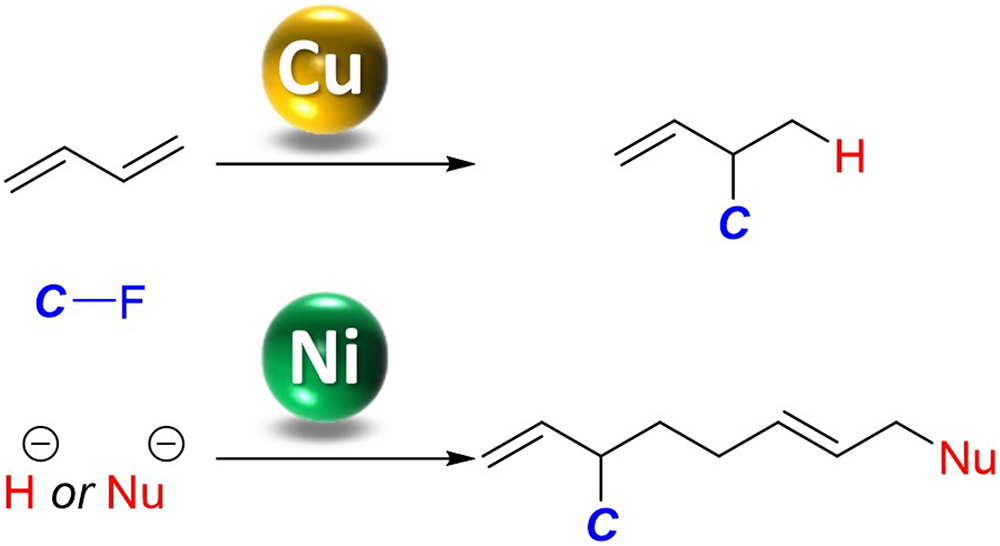
1,3-Butadiene is a useful C4 carbon source for the production of basic chemicals; but use as carbon feedstock often presents regioselectivity problems arising from its conjugated diene structure. This review summarizes the functionalization of 1,3-butadiene with carbon electrophiles by using homogeneous transition metal catalysts. A copper catalyst generated by treatment of Cu salt with alkyl Grignard reagent catalyzed internal carbon selective reductive alkylation of 1,3-butadiene with alkyl fluoride as a carbon electrophile and the alkyl Grignard reagent as a hydride source. In contrast, nickel promoted dimerization and alkylarylation of 1,3-butadiene with a similar combination of substrates. Using polyfluoroarenes as the carbon electrophiles, similar transformations proceeded to achieve the functionalization of 1,3-butadiene. The substrate scope as well as details of the reaction mechanism of these transformations are discussed.