Abstract
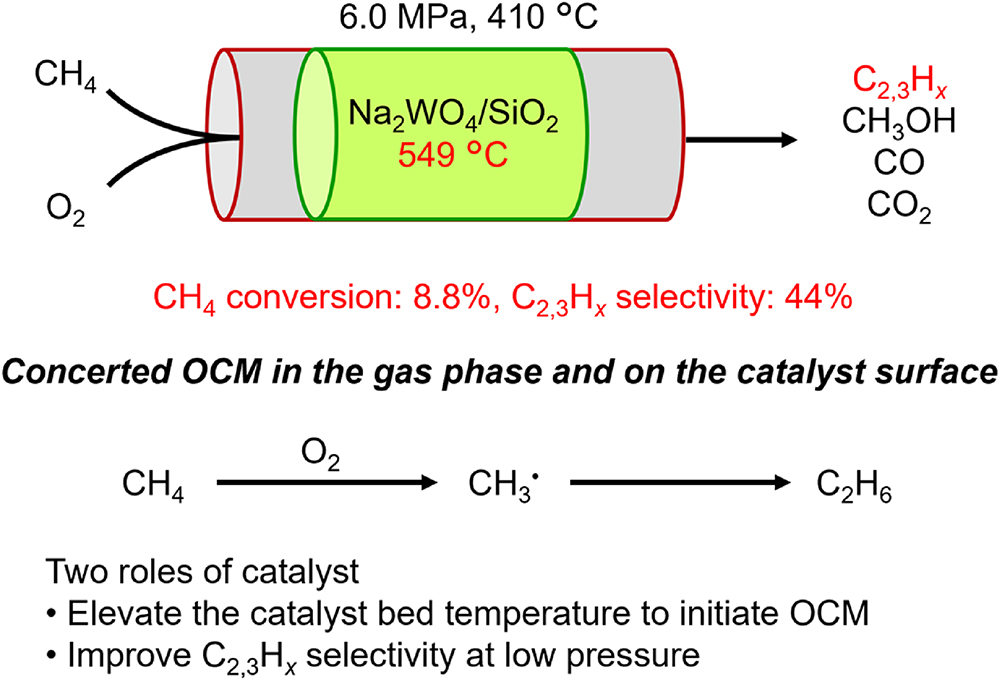
Direct conversion of methane into useful chemicals has attracted great attention as an alternative to the current syngas process. Methane oxidation achieves high methane conversion under high-pressure conditions through homogeneous radical reactions; however, control of product selectivity using catalysts remains a challenge. This study found that the oxidative coupling of methane occurred efficiently at 410 °C and 6.0 MPa using Na2WO4/SiO2 as both initiator and catalyst. In this catalytic system, C2 and C3 hydrocarbons were mainly obtained from methane and oxygen through concerted reactions both in the gas phase and on the catalyst surface. Furthermore, methane oxidation experiments under various reaction conditions revealed that the selectivity of homogeneous methane oxidation in the gas phase shifted from methanol to C2 and C3 hydrocarbons, due to the exothermic catalytic reaction and the temperature increase in the catalyst bed. Furthermore, the catalytic reaction also improved the selectivity for C2 and C3 hydrocarbons at lower pressures. These different roles of the catalyst offer valuable insights for developing high-pressure partial oxidation of methane to form methanol.