Abstract
The effects of exercise–induced hypoalgesia (EIH) and the barriers to its effectiveness in elderly individuals aged over 70 years remain unexplored. This study aimed to investigate whether reduced EIH effects are associated with a decline in endogenous pain inhibitory system function and skeletal muscle mass, a key indicator of sarcopenia, in the elderly. Thirty–four individuals aged over 70 years participated in the study. Demographic data, pain intensity (numerical rating scale: NRS), pressure pain threshold (PPT) at the affected hip joint and forearm, conditioned pain modulation (CPM), skeletal muscle mass index (SMI), and sarcopenia status, as defined by the Asian Working Group for Sarcopenia, were assessed. Participants performed 15 minutes of aerobic exercise using a stationary cycle ergometer. EIH effects were defined as the change in NRS and PPT before and immediately after exercise. PPT significantly increased at all measured sites following exercise, but the changes, ranging from 5.7% to 9.8%, were not clinically meaningful. Additionally, NRS showed no significant change. EIH effects, reflected by changes in PPT, were positively correlated with CPM and SMI. These findings suggest that EIH effects are impaired in individuals over 70 years, with a dysfunctional endogenous pain inhibitory system and reduced skeletal muscle mass identified as barrier factors. Exercise interventions targeting sarcopenia and pain modulation may improve pain management strategies for this population.
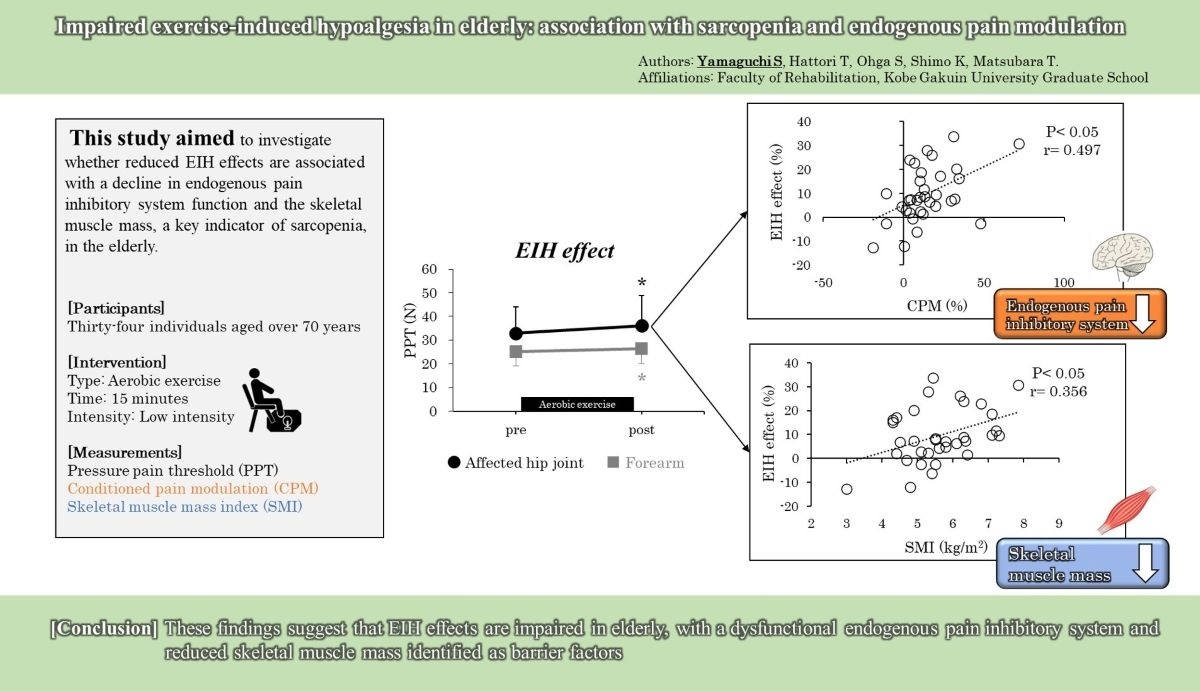
Impaired exercise-induced hypoalgesia in elderlys association with sarcopenia and endogenous pain modulation
Fullsize Image
[Conclusion] These findings suggest that EIH effects are impaired in elderly, with a dysfunctional endogenous pain inhibitory system and reduced skeletal muscle mass identified as barrier factors




