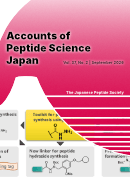
Chemical protein synthesis provides a robust platform for elucidating the protein function and engineering proteins with tailored properties. Despite their broad utility, significant challenges persist in the efficient synthesis and handling of complex peptides and proteins. In this article, we summarize the synthetic strategies designed to harness the unique reactivities of peptide hydrazides. Initially, we establish a method for the direct thioesterification of peptide hydrazides containing an N-terminal thiazolidine group, while suppressing undesired ring opening. Next, we introduce a late-stage solubilization strategy using reductive N-alkylation of hydrazides with hydrophilic tags. Furthermore, we develop a solid-phase linker that yielded alkyl hydrazides, improving the high-performance liquid chromatography peak symmetry and purification yields. We also design aspartic acid hydrazide derivatives to suppress aspartimide formation during solid-phase peptide synthesis, even under microwave-assisted conditions. Finally, we establish a late-stage diversification strategy to convert peptide hydrazides to various C-terminal acids and amides, facilitating structure–activity relationship studies. These methodologies constitute a practical toolkit for overcoming the persistent bottlenecks in chemical protein synthesis.

抄録全体を表示