Abstract
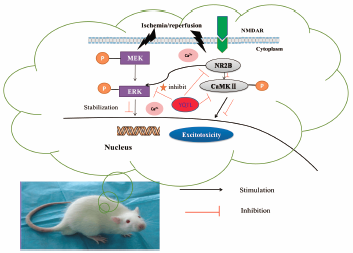
Yiqi Tongluo Granule (YQTL) is a kind of proprietary Chinese medicine, manufactured by China Shineway Pharmaceutical Group Ltd., under the authority of China Food and Drug Administration (CFDA) treating cardiovascular and cerebrovascular diseases such as ischemic stroke in China, however the underlying mechanism of YQTL on treating ischemic stroke has not been revealed. This study is aimed to evaluate the protective effect of YQTL on cerebral ischemia/reperfusion (I/R) injury and inquire into its underlying mechanisms. Cerebral I/R injury was induced by occluding the middle cerebral artery for 2 h followed by 24 h reperfusion. And regional cerebral flow was monitored by Laser Doppler flow during ischemia phase. The infarct volume was evaluated by Triphenyte-trazolium chloride staining. The protective effects of YQTL were assessed by a number of parameters, including neurological scores, regional cerebral blood flow, pathological changes of neuron in hippocampuses and hippocampus calcium level. The proteins of extracellular signal-regulated kinase (ERK), N-methyl D-aspartate receptor subtype 2B (GluN2B) and p-calcium-dependent protein kinaseII (CaMKII) response were assayed by Western blotting. I/R caused significant change in neurological deficit scores, regional cerebral flow and infarct volume. However results in YQTL groups and Nimodipine Tablets (NMDP) group were reversed. Subsequently YQTL reduced I/R-induced calcium influx. Results of hematoxylin–eosin staining manifested that YQTL significantly improved neuronal injury after I/R in rats. Meanwhile, microdialysis data demonstrated that extracellular glutamate was increased in the striatum during ischemia reperfusion, which was reduced by YQTL. YQTL and mitogen-activated protein extracellular kinase (MEK) inhibitor suppressed the I/R-mediated over-expression of GluN2B, p-ERK, ERK and p-CaMKII proteins expression. Putting these together, our results suggest that YQTL played a neuroprotective role in cerebral I/R injury, which might be exerted by inhibiting the excitotoxicity and expression of GluN2B, p-CaMKII and MEK/ERK signal pathway.