Abstract
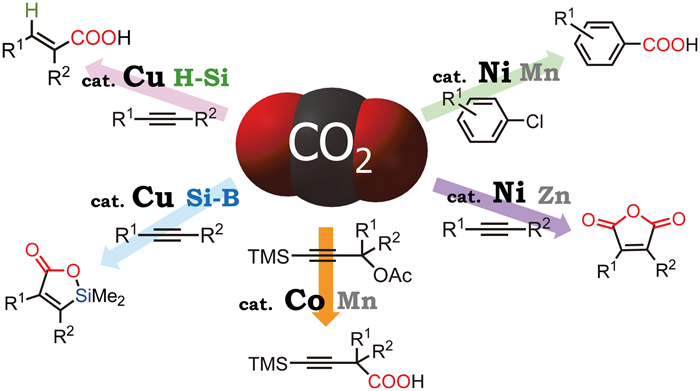
Carbon dioxide (CO2) is a readily available carbon source, but the thermodynamic characteristics of CO2 limit its widespread use in chemical reactions. This review summarizes the transformation of CO2 via carbon–carbon bond-forming reactions. Ni complexes catalyzed the carboxylation of less reactive aryl chlorides and double carboxylation of internal alkynes in the presence of suitable reducing agents such as Mn or Zn powders under 1 atm of CO2. Using Cu complexes as catalysts under CO2 atmosphere, hydrocarboxylation and silacarboxylation of alkynes proceeded efficiently using hydrosilanes and silylboranes, respectively, as the reagents.