-
 Volume 44 (2021) Issue 9 Pages 1337-1343Atg12-Interacting Motif Is Crucial for E2–E3 Interaction in Plant Atg8 System Read moreEditor's pick
Matoba & Noda have determined the crystal structure of plant ATG12-ATG3, a complex that mediates Atg8 lipidation during autophagy, and elucidated their interaction manner. By comparison with human ATG12-ATG3 complex, the authors have identified the consensus sequence for ATG12-binding and defined it as Atg12-interacting motif (AIM12), the first identified binding motif for Atg12-family proteins.
-
 Volume 44 (2021) Issue 8 Pages 1029-1036Development of Advanced Cell-Based Therapy by Regulating Cell–Cell Interactions Read moreEditor's pick
This review article summarizes the methods of regulating cell-cell interactions that significantly increase the therapeutic effects of cell-based therapy. Since transplanted cells, which are generally cultured as a monolayer, are unable to recapitulate similar interactions in vivo, the regulation of cell-cell interactions can immensely increase the function and therapeutic effect of transplanted cells. The discussed methods in this article include the generation of multicellular spheroids, use of adhesamine derivatives that accelerate cell adhesion, and cell surface modification using the avidin-biotin complex method, all of which can be useful tools for advanced cell-based therapy, promising future clinical applications.
-
 Volume 44 (2021) Issue 8 Pages 1037-1043Onset Mechanism and Pharmaceutical Management of Dry Skin Read moreEditor's pick
Dry skin is a common symptom, which is known to cause itching and careless inflammation. Authors hypothesized that dry skin might be affected not only by aging and environmental factors, but also by organ inflammation and changes in trace elements inside the body. Therefore, for treating dry skin, authors considered that special attention should be paid to both internal and external factors; these should include internal supplementation as well as skin care with external preparations such as moisturizers.
-
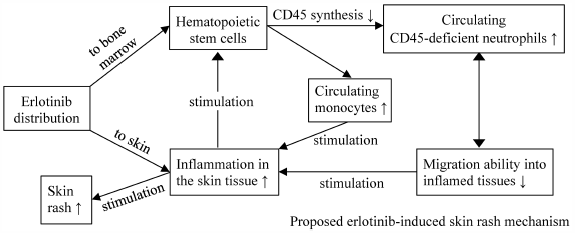 Volume 44 (2021) Issue 8 Pages 1050-1059Investigation of Biomarkers and Handling Strategy of Erlotinib-Induced Skin Rash in Rats Read moreEditor's pick
Skin rash is a common adverse event associated with EGFR-inhibitors, which often accompany drug discontinuation and dose reduction. This study examined immunological blood biomarkers for the prediction of erlotinib-induced skin rash. In consideration of clinical care, the occurrence of skin rash was evaluated by erlotinib dose, treatment discontinuation, and restart dose. The authors revealed that erlotinib reduced neutrophils’ CD45 expression and its reduction levels were strongly correlated with the rash occurrence and dynamics. The study has a novelty in that it proposes new insight for evaluating skin rash associated with EGFR-inhibitors.
-
 Volume 44 (2021) Issue 8 Pages 1120-1128Androgen-Dependent Differences in the Amounts of CYP mRNAs in the Pig Kidney Read moreEditor's pick
Androgen-dependent expression of cytochrome P450 (CYP) subfamily genes, such as CYP2A19, CYP2B22, CYP2C33, CYP2C49, CYP3A29, CYP3A46 and CYP4A24/25, in the kidney was found using both sexes of Landrace, Meishan, and their crossbred pigs. The amounts of those CYP mRNAs were confirmed to be, at least in part, dependent on the levels of serum testosterone by additional experiments using pigs treated with castration and/or testosterone propionate. Furthermore, the androgen-dependency on the expression of some of CYP mRNAs was different between the kidney and the liver, indicating that there is a tissue-selective factor(s) responsible for the androgen-related expression of CYP genes.
-
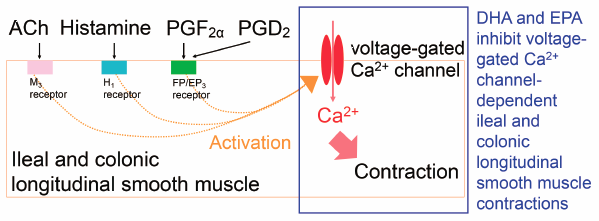 Volume 44 (2021) Issue 8 Pages 1129-1139Docosahexaenoic Acid and Eicosapentaenoic Acid Inhibit the Contractile Responses of the Guinea Pig Lower Gastrointestinal Tract Read moreEditor's pick
DHA and EPA have been reported to improve lower gastrointestinal (LGI) disorders through their anti-inflammatory effects. However, few studies examine the effects of DHA and EPA on LGI tract motility. To elucidate this, authors evaluated their effects on guinea pig ileal/colonic longitudinal smooth muscle (LSM) contractions. DHA and EPA significantly inhibited ileal/colonic LSM contractions induced by acetylcholine/histamine/PGF2α/PGD2/CaCl2. All ileal/colonic LSM contractions were completely suppressed by verapamil. These findings suggest that DHA and EPA could improve the abnormal contractile functions of the LGI tract associated with inflammatory diseases, partly through inhibition of voltage-gated Ca2+ channel-dependent ileal/colonic LSM contractions.
-
 Volume 44 (2021) Issue 7 Pages 910-919PC3-Secreted Microprotein Is Expressed in Glioblastoma Stem-Like Cells and Human Glioma Tissues Read moreEditor's pick
The authors established single cell-derived tumorsphere clone, named P4E8, from human glioblastoma U87MG cells and indicated that P4E8 cells had the CSC-like phenotype such as self-renewal capacity, expression of CSC markers, resistance to several anti-cancer agents and high tumorigenicity in vivo. Furthermore, DNA microarray analysis identified that PC3-secreted microprotein (MSMP) was the highest expressed gene in P4E8 cells compared to U87MG cells. In addition, authors first indicated the expression of MSMP protein in patient-derived glioma stem cells (GSCs) and human glioma tissues. These findings raised the possibility that MSMP may contribute to glioma development and/or progression.
-
 Volume 44 (2021) Issue 7 Pages 947-957Protective Effect of TRPM8 against Indomethacin-Induced Small Intestinal Injury via the Release of Calcitonin Gene-Related Peptide in Mice Read moreEditor's pick
Transient receptor potential melastatin 8 (TRPM8) is a non-selective cation channel activated by mild cooling temperature and chemical cooling agents, including menthol. The authors demonstrate the mucosal protective and anti-inflammatory effects of TRPM8 expressed in sensory afferent neurons via in-vivo studies using TRPM8-deficient mice and specific TRPM8 agonist, and also immunohistochemical studies using TRPM8-enhanced green fluorescent protein (EGFP) transgenic mice. The TRPM8-mediated protective and anti-inflammatory effects are accounted for by a protective neuropeptide calcitonin gene-related peptide released from sensory afferent neurons. These findings propose that TRPM8 is a potential target for the treatment of NSAID-induced enteropathy and inflammatory bowel diseases.
-
 Volume 44 (2021) Issue 7 Pages 976-983Pyoluteorin Induces Apoptosis and Autophagy in NSCLC Cells Read moreEditor's pick
Authors demonstrate that pyoluteorin can inhibit cell proliferation by inducing autophagy and apoptosis in NSCLC cell lines through the JNK/Bcl2 pathway. Inhibition of autophagy via 3-MA or Beclin1 knockout enhance pyoluteorin-induced apoptosis. Authors believe that pyoluteorin combined with autophagy inhibitor may be a potential anticancer drug for human NSCLC.
-
 Editor's pick
Kitamura et al. have developed a new human immortalized cell-based multicellular spheroidal blood-brain barrier (BBB) model, in which astrocytes and pericytes form a spheroid core that is covered with an outer monolayer of brain microvascular endothelial cells. This layered structure is likely to play a critical role in bringing out high levels of BBB characteristics in the model and allows researchers to examine various BBB functions, including drug permeability assays. Therefore, the work opens up new avenues for accelerating in vitro BBB modeling, which in turn significantly contributes to CNS drug development as well as elucidation of molecular bases of CNS diseases.
-
 Volume 44 (2021) Issue 7 Pages 1007-1013Nicotine Enhances Object Recognition Memory via Stimulating α4β2 and α7 Nicotinic Acetylcholine Receptors in the Medial Prefrontal Cortex of Mice Read moreEditor's pick
Nicotine is known to enhance recognition memory in various species. However, the brain region where nicotine acts and exerts its effect remains unclear. In this study, using the novel object recognition test in mice, authors provide evidence that nicotine acts on α4β2 and α7 nicotinic acetylcholine receptors expressed in the medial prefrontal cortex, a brain region associated with memory, and enhances object recognition memory.
-
 Volume 44 (2021) Issue 6 Pages 747-761Chrono-Drug Discovery and Development Based on Circadian Rhythm of Molecular, Cellular and Organ Level Read moreEditor's pick
This review describes the chronotherapeutic strategies based on molecular clock system of chronopharmacokinetic, chronopharmacodynamic and cancer chronopathological factors in the xenobiotic detoxification, transporter, receptor and molecular target. Chronotherapeutic strategies focus on the monitoring of rhythm, overcoming rhythm disruption, manipulation of rhythm, chrono-therapeutic drug monitoring, chrono-drug delivery system and chrono-drug discovery. The screening for small molecules targeting the clock genes is now in progress to stabilize circadian phase and enhance circadian amplitude, thereby consolidating and coordinating circadian organization,. The academic research along with a combination of chemical and biological information is essential to promote the research and development of new modality drug discovery such as clock genes.
-
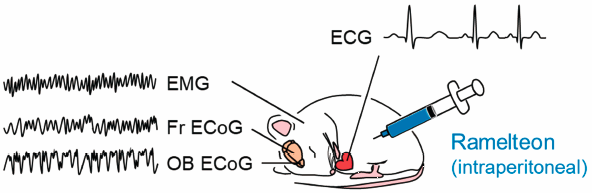 Volume 44 (2021) Issue 6 Pages 789-797Acute Ramelteon Treatment Maintains the Cardiac Rhythms of Rats during Non-REM Sleep Read moreEditor's pick
Ramelteon, a melatonin receptor agonist, has a sleep-promoting effect by modulating sleep-wake rhythms. To examine the effect of ramelteon on cardiac function, authors simultaneously recorded electrocardiograms, electromyograms, and electrocorticograms in the frontal cortex and the olfactory bulb of unrestrained rats treated with ramelteon. Authors demonstrated that during non-REM sleep, heartrate variability was maintained by ramelteon treatment. Analysis of the electromyograms confirmed that neither microarousal during non-REM sleep nor the occupancy of phasic periods during REM sleep was altered by ramelteon. Thus, authors propose a remedial effect of ramelteon on cardiac activity by keeping the heartrate variability.
-
 Volume 44 (2021) Issue 6 Pages 804-815Identification and Validation of Combination Plasma Biomarker of Afamin, Fibronectin and Sex Hormone-Binding Globulin to Predict Pre-eclampsia Read moreEditor's pick
Numerous studies have confirmed that the sFlt1/PlGF ratio is a good predictor of the signs and symptoms of Pre-Eclampsia. However, its usefulness is limited to diagnosis after 20 weeks of gestation. To address this issue, in the present study the authors used plasma samples collected at gestational weeks 14-24 weeks from subjects who were subsequently diagnosed as Pre-Eclampsia. By employing SWATH-based proteomics for comprehensive discovery and SRM-based target quantification using in silico peptide selection criteria for validation, the authors were able to identify a 3-protein combination biomarker (AFAM, FINC and SHBG) that can predict effectively during gestational weeks 14-24 whether pregnant women would subsequently develop Pre-Eclampsia.
-
 Volume 44 (2021) Issue 6 Pages 830-837Protective Effect of Panduratin A on Cisplatin-Induced Apoptosis of Human Renal Proximal Tubular Cells and Acute Kidney Injury in Mice Read moreEditor's pick
Cisplatin is an effective anti-cancer drug. A serious major side effect of cisplatin is an acute kidney injury. The authors demonstrated that panduratin A, a bioactive flavonoid, ameliorates cisplatin-induced nephrotoxicity by inhibition of cell apoptosis. The renoprotective effect of panduratin A is mediated by reducing oxidative stress and inhibiting ERK1/2 and caspase 3 activations. The protective effect of panduratin A did not impair the anti-cancer activity of cisplatin in cancer cells. Panduratin A might be a good candidate agent to alleviate cisplatin’s nephrotoxicity.
-
 Volume 44 (2021) Issue 6 Pages 869-874Assessment of Adherence to Post-exposure Prophylaxis with Oseltamivir in Healthcare Workers: A Retrospective Questionnaire-Based Study Read moreEditor's pick
Influenza causes nosocomial outbreaks in healthcare settings. Post-exposure prophylaxis (PEP) for healthcare workers is one of the effective strategies for preventing outbreaks of influenza. However, PEP adherence in healthcare workers is rarely analysed. This retrospective questionnaire-based study showed that the adherence to PEP among healthcare workers was low, especially among physicians, and that the primary factor for preventing PEP adherence was misguided self-decision that continuation of PEP was unnecessary. This study emphasized that medication education should be provided to ensure treatment compliance and maximize the therapeutic benefits of PEP when PEP is administered.
-
 Volume 44 (2021) Issue 5 Pages 642-652Involvement of TRPM8 Channel in Radiation-Induced DNA Damage Repair Mechanism Contributing to Radioresistance of B16 Melanoma Read moreEditor's pick
The article by Nomura et al. suggested a novel mechanism of radiation-induced DNA damage repair contributing to radioresistance in melanoma. Authors have shown that the transient receptor potential melastatin 8 (TRPM8) channel is involved in radiation-induced DNA damage response, cell death, and cell cycle regulation. Furthermore, TRPM8 channel inhibitor enhanced tumor growth-inhibitory effect by gamma-ray in vivo. These findings proposed that the TRPM8 channel contributes to the resistance of the growth-inhibitory effect of radiation in melanoma and could be a novel molecular target to improve the efficiency of radiation therapy for melanoma.
-
 Volume 44 (2021) Issue 5 Pages 659-668Effects of KY-903, a Novel Tetrazole-Based Peroxisome Proliferator-Activated Receptor γ Modulator, in Male Diabetic Mice and Female Ovariectomized Rats Read moreEditor's pick
Peroxisome proliferator-activated receptor ɤ (PPARɤ) agonists, such as pioglitazone, are anti-diabetic drugs, but they cause PPARɤ-related adverse effects such as body weight gain, cardiac hypertrophy, and bone loss. The authors found that a novel PPARɤ modulator, KY-903, has similar anti-diabetic effects without PPARɤ-related adverse effects in diabetic mice, possibly due to increases in adiponectin without adipogenesis. KY-903 also has anti-obesity effects with slight bone loss in obese rats, possibly by PPARɤ antagonism against endogenous or diet-derived PPARɤ ligands. These findings are useful for research on PPARɤ, and KY-903 is a potential candidate of anti-diabetic and/or anti-obesity drugs.
-
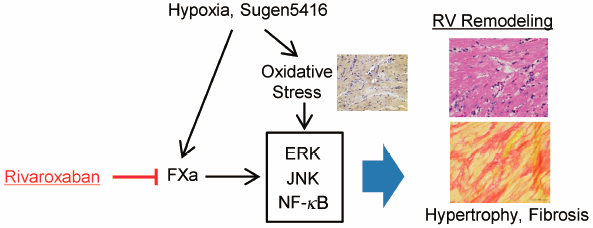 Volume 44 (2021) Issue 5 Pages 669-677Rivaroxaban Attenuates Right Ventricular Remodeling in Rats with Pulmonary Arterial Hypertension Read moreEditor's pick
The authors investigated the effects of rivaroxaban on right ventricular (RV) remodeling in a rat model of pulmonary arterial hypertension (PAH), created with Sugen5416 and chronic hypoxia (SuHx). The Fulton index, RV systolic pressure, and RV Tei index increased by SuHx were significantly decreased when treated with rivaroxaban. Rivaroxaban has the potential of improving RV remodeling in PAH model rats through the suppression of multiple signaling pathways, including ERK, JNK, and NF-kB, associated with protease-activated receptor-2. These findings suggest the additive effects that rivaroxaban may have on the RV remodeling in PAH.
-
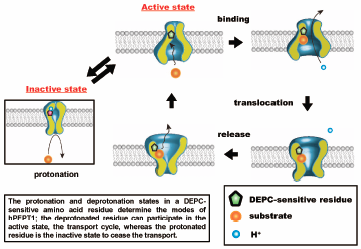 Volume 44 (2021) Issue 5 Pages 678-685Protonation State of a Histidine Residue in Human Oligopeptide Transporter 1 (hPEPT1) Regulates hPEPT1-Mediated Efflux Activity Read moreEditor's pick
The authors indicated that the protonation of the histidine residue at the extracellular site in human oligopeptide transporter (hPEPT1) results in a decrease in the efflux activity, which is distinct from the sites of proton coupling for transport operation and substrate binding. Furthermore, they found that the decrease in extracellular pH reduced the turnover rate of transporters; in other words, the number of available transporters in the cycle was reduced. The protonation/deprotonation state of histidine determines the transport activity; the deprotonated histidine residue can participate in the transport cycle, whereas the protonated histidine residue can cease the transport.