Neurologia medico-chirurgica
Online ISSN : 1349-8029
Print ISSN : 0470-8105
ISSN-L : 0470-8105
Special Topics
Surgical Management of Chiari Malformation Type I and Instability of the Craniocervical Junction Based on Its Pathogenesis and Classification
Misao NISHIKAWAPaolo A. BOLOGNESEToru YAMAGATAKentarou NAITOHiroaki SAKAMOTOMistuhiro HARAKenji OHATATakeo GOTO
著者情報
ジャーナル オープンアクセス

2022 年 62 巻 9 号 p. 400-415

詳細
抄録

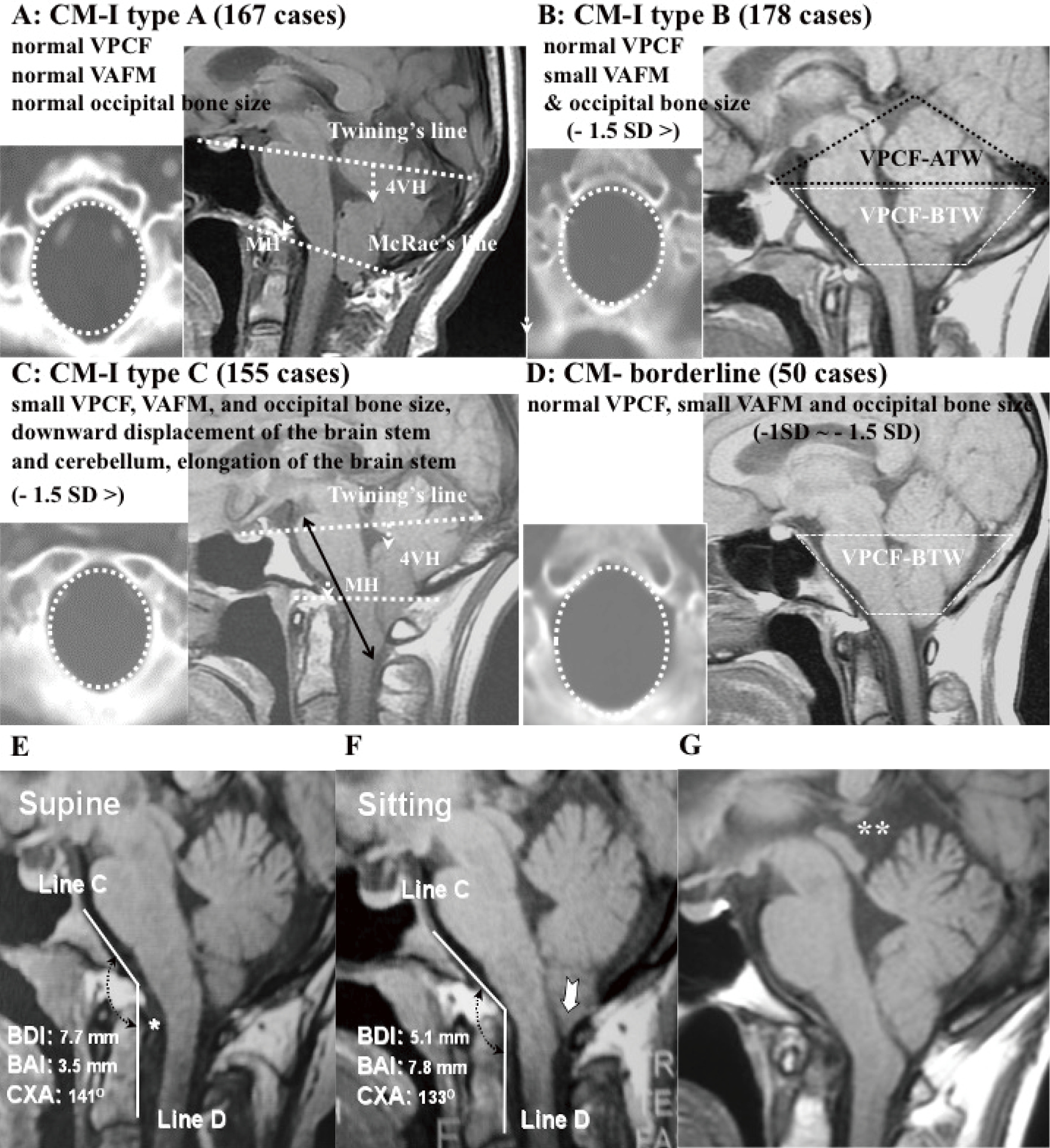
We investigated the mechanism underlying Chiari malformation type I (CM-I) and classified it according to the morphometric analyses of posterior cranial fossa (PCF) and craniocervical junction (CCJ). Three independent subtypes of CM-I were confirmed (CM-I types A, B, and C) for 484 cases and 150 normal volunteers by multiple analyses. CM-I type A had normal volume of PCF (VPCF) and occipital bone size. Type B had normal VPCF and small volume of the area surrounding the foramen magnum (VAFM) and occipital bone size. Type C had small VPCF, VAFM, and occipital bone size. Morphometric analyses during craniocervical traction test demonstrated instability of CCJ. Foramen magnum decompression (FMD) was performed in 302 cases. Expansive suboccipital cranioplasty (ESCP) was performed in 102 cases. Craniocervical posterolateral fixation (CCF) was performed for CCJ instability in 70 cases. Both ESCP and FMD showed a high improvement rate of neurological symptoms and signs (84.4%) and a high recovery rate of the Japanese Orthopaedic Association (JOA) score (58.5%). CCF also showed a high recovery rate of the JOA score (69.7%), with successful joint stabilization (84.3%). CM-I type A was associated with other mechanisms that caused ptosis of the brainstem and cerebellum (CCJ instability and traction and pressure dissociation between the intracranial cavity and spinal canal cavity), whereas CM-I types B and C demonstrated underdevelopment of the occipital bone. For CM-I types B and C, PCF decompression should be performed, whereas for small VPCF, ESCP should be performed. CCF for CCJ instability (including CM-I type A) was safe and effective.

Fullsize Image
著者関連情報
© 2022 The Japan Neurosurgical Society

This article is licensed under a Creative Commons [Attribution-NonCommercial-NoDerivatives 4.0 International] license.
https://creativecommons.org/licenses/by-nc-nd/4.0/
前の記事 次の記事
feedback
Top