Abstract
Pontederia crassipes, commonly known as water hyacinth, is among the world’s most damaging invasive aquatic plants, posing severe threats to freshwater ecosystems, biodiversity, and local economies. While a wide range of control strategies, including mechanical, chemical, biological, and integrated, have been implemented, their outcomes remain inconsistent and highly dependent on local contexts. This review synthesizes recent advances in managing Pontederia crassipes, with a focus on adaptive and ecosystem-based approaches. From over 900 peer-reviewed publications, 50 high-quality studies were systematically selected and analyzed to identify key trends, success factors, limitations, and future research directions. Biological control using Neochetina spp. and Megamelus scutellaris has demonstrated consistent effectiveness in tropical and subtropical environments. Meanwhile, integrated strategies combining multiple control methods have proven the most resilient and sustainable. New directions, such as using biomass for bioremediation, pollution control, and energy recovery, align well with global sustainability goals. However, significant challenges persist, including fragmented policy coordination, limited stakeholder participation, and the impacts of climate change. This review underscores the need for localized, evidence-based, and participatory frameworks to ensure the long-term success of Pontederia crassipes management. Future research should emphasize optimizing integrated methods, assessing socio-economic trade-offs, and scaling up sustainable biomass utilization.
1. Introduction
Pontederia crassipes (water hyacinth) ranks among the world’s most aggressive and widespread invasive aquatic plants. Its uncontrolled spread has caused severe ecological, economic, and social impacts in many freshwater systems. A broad array of control methods has been developed over the decades, spanning mechanical, chemical, biological, and, more recently, integrated approaches. Yet, the success of these interventions has often been inconsistent, heavily influenced by site-specific ecological dynamics, policy contexts, and socio-political factors.
Recent studies emphasize the need for adaptive, context-specific, and ecosystem-based frameworks in managing Pontederia crassipes. These approaches aim to suppress the species and address broader ecological processes, including nutrient cycling, habitat disruption, and interactions with governance systems [1, 2, 3, 4, 5]. Among the available strategies, biological control - particularly involving insect agents like Neochetina spp. and Megamelus scutellaris - has achieved measurable success across various regions. However, its performance depends on environmental conditions and requires consistent, long-term monitoring to ensure effectiveness [2, 4, 6, 7, 8, 9, 10, 11, 12].
Chemical herbicides remain widely used due to their immediate efficacy. Nonetheless, rising environmental concerns and increasing stakeholder opposition have driven a shift toward more sustainable, integrated approaches [13, 14, 15, 16]. Although mechanical removal can provide rapid results, it has drawbacks, including high labor requirements and short-term disruption to aquatic biodiversity [17].
In response to these limitations, innovative strategies have recently gained momentum. Notably, the valorization of Pontederia crassipes biomass through applications such as bioremediation, bioenergy production, and pollution mitigation has opened up new pathways that align invasive species management with broader sustainability objectives and circular economy models [1, 5, 18, 19, 20, 21, 22].
Despite these advancements, several persistent challenges remain. These include the accelerating impacts of climate change, nutrient overloading, fragmented policy implementation, and insufficient community engagement [1, 2, 23, 24, 25]. Addressing such multifaceted issues calls for interdisciplinary collaboration and consolidating empirical knowledge and field-level practices.
This review comprehensively synthesizes contemporary strategies for managing Pontederia crassipes, emphasizing key findings, operational challenges, and emerging opportunities. In doing so, it also identifies critical research gaps and proposes directions for future inquiry aimed at fostering adaptive, effective, and sustainable management.
2. Methodology
This review adopts a systematic methodology aligned with the PRISMA (Preferred Reporting Items for Systematic Reviews and Meta-Analyses) framework to identify, screen, and synthesize peer-reviewed research on the management of Pontederia crassipes. The overarching goal is to comprehensively assess current strategies, spanning ecological effectiveness, methodological rigor, and policy relevance
2.1 Search strategy
We designed and executed a comprehensive literature search adhering to PRISMA 2020. Searches covered four core bibliographic databases: Web of Science Core Collection, Scopus, PubMed, and Semantic Scholar, with Google Scholar used for backward/forward citation chasing (“Cited by” and “Related articles”). The strategy combined taxonomic synonyms for the target species (“Pontederia crassipes”, “Eichhornia crassipes”, and “water hyacinth”) with management-related keywords spanning mechanical, chemical, biological, and integrated control, as well as implementation and governance terms.
For reproducibility, the authors provide the exact field restrictions and Boolean strings inline: Web of Science (TS): TS = (“Pontederia crassipes” OR “Eichhornia crassipes” OR “water hyacinth”) AND TS = (management OR control OR “biological control” OR herbicide OR mechanical OR “integrated management” OR governance OR policy OR regulation OR stakeholder OR cost OR “remote sensing” OR “machine learning”); Scopus (TITLE-ABS-KEY): TITLE-ABS-KEY(“Pontederia crassipes” OR “Eichhornia crassipes” OR “water hyacinth”) AND (management OR control OR “biological control” OR herbicide* OR mechanical OR “integrated management” OR governance OR policy OR regulation OR stakeholder OR cost OR “remote sensing” OR “machine learning”); PubMed (Title/Abstract): (“Pontederia crassipes” OR “Eichhornia crassipes” OR “water hyacinth”) AND (management OR control OR herbicide OR “biological control” OR mechanical OR integrated OR governance OR policy OR regulation OR cost OR “remote sensing” OR “machine learning”); Semantic Scholar (Title/Abstract/Keywords where available): (“Pontederia crassipes” OR “Eichhornia crassipes” OR “water hyacinth”) AND (management OR control OR “biological control” OR herbicide OR mechanical OR “integrated management” OR governance OR policy OR regulation OR stakeholder* OR cost OR “remote sensing” OR “machine learning”); Google Scholar (citation chasing): seed search “Pontederia crassipes” AND management OR “water hyacinth” control biological chemical mechanical integrated, with Cited by and Related articles used to identify additional records (logged under “other sources”). Filters applied across databases: document types = articles and reviews; language = English; years = 2000–2025 (database-specific field limits as above). All retrieved records were exported (RIS/BibTeX), merged, and de-duplicated in a reference manager using DOI/Title/Year matching. Title/abstract screening was conducted in duplicate, followed by full-text eligibility assessment; consensus resolved disagreements.
2.2 Inclusion and exclusion criteria
To ensure methodological consistency and academic relevance, studies were included in the review if they met the following criteria:
- Published in peer-reviewed journals between 2000 and 2025
- Explicitly focused on the management, control, or ecological effects of Pontederia crassipes
- Provided empirical findings, simulation or modeling results, or well-structured conceptual frameworks
Conversely, studies were excluded if they:
- Focused solely on other species or unrelated aquatic systems
- Were inaccessible in full text or lacked methodological transparency
- Consisted of non-peer-reviewed formats, such as editorials, conference abstracts, or opinion pieces.
2.3 Screening and selection process
From an initial pool of 944 records, titles and abstracts were screened for relevance. This process yielded 402 articles eligible for full-text review. By applying the predefined inclusion and exclusion criteria, 354 studies met the minimum quality and relevance standards. From this subset, 50 studies were selected for detailed synthesis. Selection was based on their methodological rigor, long-term monitoring data, incorporation of multi-method approaches, and insights into policy integration.
The whole screening process is illustrated in Figure 1, which follows the standard PRISMA flow diagram.
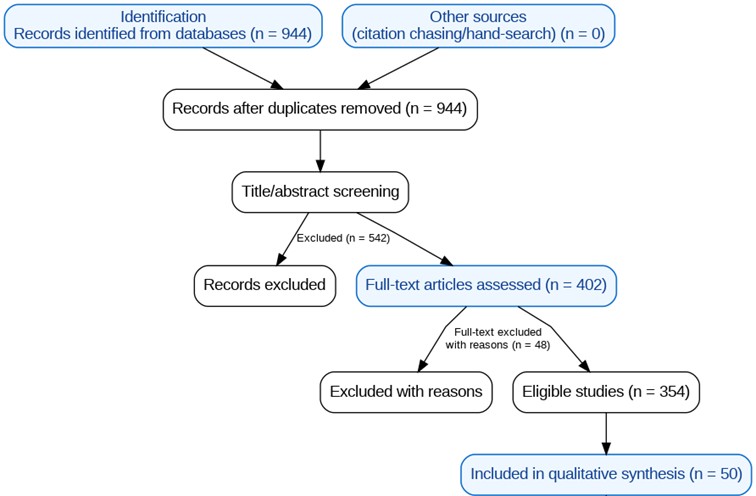
Figure 1: PRISMA flow diagram illustrating the literature search and selection process
A structured data extraction protocol was used for the 50 selected studies. Key variables included:
- Author(s), year of publication, and study location;
- Type of management strategy and methodological design;
- Primary ecological or operational outcomes and associated metrics;
- Duration, scale, and scope of the intervention;
- Reported challenges, limitations, or recommendations.
Due to the diversity of methods and outcomes across studies, no formal risk-of-bias assessment was conducted. However, each study was critically evaluated based on transparency, relevance, and alignment with the review’s objectives.
2.5 Quality appraisal and Risk-of-Bias considerations
Given the heterogeneity of study designs (field observations, case studies, modelling, mixed-methods), a single pooled Risk-of-Bias (RoB) tool was not uniformly applicable. Instead, we applied a fit-for-purpose appraisal: (i) Joanna Briggs Institute (JBI) checklists for observational/field studies; (ii) transparent-modelling criteria (data availability, parameter justification, sensitivity/validation) for modelling studies.
These judgements informed inclusion decisions and weighting in the narrative synthesis.
3. Results
3.1 Overview of management approaches
The reviewed literature reveals that Pontederia crassipes has been addressed using four main management strategies: mechanical removal, chemical herbicides, biological control, and integrated approaches. Each method presents distinct advantages and limitations, varying in effectiveness according to ecological conditions, resource availability, and institutional capacity.
Mechanical removal is commonly adopted as a rapid intervention to clear infested water bodies. However, several studies indicate that this approach often results in only temporary biomass reduction and may cause short-term disturbances to aquatic biodiversity if not accompanied by longer-term control measures [17].
Chemical herbicides such as glyphosate, diquat, and 2,4-D have consistently suppressed Pontederia crassipes growth. Nevertheless, growing environmental concerns, risks to non-target organisms, and evolving regulatory restrictions have prompted increasing resistance from policymakers and local communities [13, 14, 15, 16]. These limitations have accelerated the search for more sustainable, nature-based solutions.
Biological control, particularly by releasing agents such as Neochetina spp., has emerged as one of the most effective long-term strategies, especially in tropical and subtropical climates. Documented successes in South Africa, Argentina, and the United States highlight its potential. However, performance remains highly context-dependent, influenced by nutrient availability, temperature, and interspecific interactions [2, 4, 6, 7, 8, 9, 10, 11, 12].
3.2 Integrated and adaptive management
Recent studies increasingly emphasize the effectiveness of integrated frameworks that combine mechanical, chemical, and biological approaches. These systems are designed to be adaptive and capable of adjusting based on real-time monitoring data, ecological feedback, and stakeholder input [1, 2, 4, 5].
In particular, adaptive management models feature iterative learning cycles, community participation, and dynamic response mechanisms to enhance long-term outcomes [1, 15, 25]. Integrating emerging technologies such as remote sensing and machine learning has improved monitoring accuracy and decision-making in complex, multisite interventions [23, 26, 27].
3.3 Biological control: successes and limitations
Biological control agents, especially Megamelus scutellaris and Neochetina spp., have been introduced in numerous countries with varying degrees of success. The effectiveness of these agents depends mainly on their ability to establish stable populations, adapt to local climate conditions, and persist in the absence of significant ecological disturbances.
While significant long-term reductions in Pontederia crassipes coverage have been reported, particularly in tropical regions, challenges remain. These include lower efficacy in temperate zones, the need for seasonal reintroduction, and possible interspecies interactions [2, 4, 6, 7, 8, 9, 10, 11, 12, 28, 29]. Nonetheless, no consistent evidence of antagonism between control agents has been observed, supporting the potential for combined or sequential deployment strategies.
3.4 Emerging and sustainable strategies
Beyond traditional control methods, recent research explores the valorization of Pontederia crassipes biomass in ways that align with sustainability and circular economy principles. Documented applications include phytoremediation of eutrophic waters, suppressing harmful cyanobacterial blooms through allelopathy, and conversion into bioenergy, compost, or animal feed [1, 5, 18, 19, 20, 21, 22].
Field experiments and pilot projects have demonstrated the dual potential of these strategies, simultaneously reduced invasive biomass while delivering ecosystem and economic benefits. However, technical, regulatory, and scalability challenges limit widespread adoption.
3.5 Comparative insights from key studies
Table 1 summarizes five exemplary studies, selected for their methodological rigor, geographic diversity, and relevance to the review’s core themes. These cases showcase a variety of strategy combinations and underscore the critical importance of tailoring management approaches to local conditions.
Table 1: Comparison of key papers on management strategies for
Pontederia crassipes
| Title |
Author (Year) |
Methodology |
Region |
Key Findings |
Duration |
| Management of Pontederia crassipes: A general framework
|
Duran (2025) |
Narrative review |
Global |
Advocates for integrated, adaptive strategies |
Review only |
| Inundative biological control using M. scutellaris |
Coetzee et al. (2022)
|
Field trial, remote sensing |
South Africa |
Reduced cover from 37% to <6% |
2 years |
| Long-term monitoring post-biological release |
Faltlhauser et al. (2023)
|
Monitoring and survey |
Argentina |
Successful biocontrol but low public awareness |
1965-2023 |
| Post-release evaluation of biocontrol programs |
Coetzee et al. (2011)
|
Review |
South Africa |
Limited success in eutrophic and cold waters |
12 years |
| Meta-analysis of ecological impacts |
Jha and Li (2024) |
Meta-analysis |
Global |
Significant reductions in DO and nitrogen |
25 studies |
4. Discussion
The current body of literature offers a strong foundation for understanding the complex and evolving nature of Pontederia crassipes management. Across diverse geographic regions and ecological settings, there is a growing consensus that no single strategy is universally effective. Instead, successful management must be adaptive, integrated, and contextually responsive to environmental and socio-political dynamics [1, 2, 4, 5].
Biological control has been widely studied and successfully implemented, particularly in tropical and subtropical environments. Using insect agents such as Neochetina spp. and Megamelus scutellaris has significantly reduced biomass and supported long-term ecosystem recovery in numerous cases [6, 12]. However, these outcomes are less consistent in temperate and nutrient-rich systems, where abiotic stressors often hinder agent establishment. Seasonal die-offs and the need for periodic reintroductions underscore the importance of continuous post-release monitoring and localized adaptation strategies [10, 11, 12].
Chemical control remains a commonly used tool for rapid biomass suppression. Nevertheless, its utility is increasingly constrained by environmental regulations, public opposition, and concerns about off-target effects. While studies confirm its short-term efficacy, they also emphasize its incompatibility with broader sustainability objectives [13, 14, 15, 16]. Moreover, improper coordination with biological control programs can undermine agent effectiveness due to chemical toxicity [13, 16].
Mechanical removal is frequently deployed to provide immediate navigational or aesthetic relief in heavily infested areas. However, empirical evidence shows that this method may inadvertently promote regrowth without follow-up treatment and temporarily reduce aquatic biodiversity [17]. High operational costs and labor demands also limit its feasibility in many low-resource settings.
Integrated and adaptive management frameworks that combine mechanical, chemical, and biological techniques are increasingly endorsed as best practice. These approaches emphasize iterative learning, inclusive stakeholder participation, and real-time monitoring to guide interventions [1, 2, 4, 5, 15, 25]. Technological innovations, including satellite remote sensing and machine learning, have significantly improved precision and decision-making capacity in multi-scale control programs [23, 26, 27].
A growing research strand advocates for Pontederia crassipes biomass’s dual-use potential in bioremediation, nutrient recovery, and renewable energy production [1, 5, 18, 19, 20, 21, 22]. These innovations align with circular economy principles and offer a paradigm shift, transforming an invasive burden into a valuable resource. However, barriers to scaling remain. These include biomass variability, limited market incentives, technical inefficiencies, and the absence of coherent policy frameworks.
Several studies highlight the critical importance of policy integration, public awareness, and community-based engagement for long-term success [1, 24, 25]. Despite advances in biological and technical strategies, many management programs still face fragmented governance, underfunding, and low stakeholder participation. Achieving sustainable control will require coordinated efforts across sectors, bridging ecological science, environmental policy, and grassroots mobilization. To guide such coordination, Table 2 distills the key management claims and the supporting evidence base linking intervention types to outcomes, direction of effect, and strength of support so readers can see what is known with confidence and where uncertainties remain.
This synthesis is limited by substantial heterogeneity in interventions, outcome metrics, and follow-up duration, which constrained quantitative pooling. Reporting of variance and cost data was inconsistent, and few studies assessed long-term ecosystem responses or governance outcomes. Seasonal/climatic sensitivity likely moderates effects, and publication bias cannot be excluded. Priorities include standardized outcome sets (biomass/cover with variance), multi-season designs, factorial tests of chemical-biocontrol interactions, and transparent cost-effectiveness reporting across policy settings.
Table 2: Key claims and supporting evidence identified in these papers
| Claim
|
Evidence Strength
|
Reasoning
|
Papers
|
| Integrated management (biological, chemical, mechanical) is most effective for long-term control of Pontederia crassipes
|
Strong |
Supported by multiple long-term studies and reviews across regions and contexts |
[1, 5, 16, 23, 30, 45, 48] |
| Biological control with insect agents can achieve substantial reduction in water hyacinth cover |
Strong |
Field trials and long-term monitoring show significant declines in biomass |
[4, 5, 6, 9, 10, 16, 23, 35, 48] |
| Chemical herbicides are effective but pose environmental and stakeholder concerns |
Moderate |
Efficacy is well-documented, but environmental impacts and costs limit broad acceptance |
[7, 8, 13, 33, 45] |
| Mechanical removal provides rapid biomass reduction but can negatively impact biodiversity |
Moderate |
BACI studies and multi-site analyses show short-term biodiversity loss post-removal |
[26, 45, 47] |
| Utilization of water hyacinth biomass for bioremediation and resource recovery is promising but underdeveloped |
Moderate |
Emerging research supports dual benefits, but large-scale implementation is limited |
[1, 12, 27, 30, 38, 39, 50] |
| Public awareness and policy integration are critical but often lacking in management programs |
Moderate |
Surveys and policy reviews highlight gaps in outreach and governance |
[1, 4, 31, 49] |
5. Conclusion
Managing Pontederia crassipes remains one of the most persistent and multifaceted challenges in restoring aquatic ecosystems. Although considerable progress has been achieved through mechanical, chemical, biological, and integrated control strategies, no single method has demonstrated universal efficacy across all ecological, geographical, and socio-political contexts. Biological control is notable for its sustainability in suitable environments. At the same time, integrated and adaptive frameworks represent the most robust path forward, particularly when they incorporate real-time monitoring, inclusive stakeholder engagement, and ecosystem-based planning.
Emerging strategies that valorize Pontederia crassipes biomass for bioremediation, pollution mitigation, and energy generation present promising opportunities to align invasive species control with circular economy and sustainability objectives. Nevertheless, technological, institutional, and economic constraints still hinder the implementation of these innovations.
Ultimately, the long-term success of Pontederia crassipes management depends not only on technical advancements but also on the strength of governance systems, public awareness, and interdisciplinary collaboration. Addressing the remaining barriers requires context-sensitive research and flexible policy innovations capable of adapting to dynamic environmental and community needs.
5.1 Empirical methods
Despite increasing scholarly attention and notable on-the-ground successes, several critical research gaps persist:
- Optimization of integrated strategies: There is a lack of comparative studies evaluating how combinations of mechanical, chemical, and biological methods perform under varied ecological and socio-economic contexts.
- Scalability of biomass valorization: While using Pontederia crassipes biomass shows potential, comprehensive assessments of scalability, logistics, and economic viability remain limited.
- Socio-economic dimensions: Few studies have explored how cultural values, economic incentives, or institutional structures affect the adoption, adaptation, and longevity of control programs.
- Climate resilience: Existing literature rarely examines how climate variables such as drought, flooding, and rising temperatures may influence infestation dynamics or strategy effectiveness.
- Governance and stakeholder engagement: There is an urgent need for empirical research into multi-level governance systems and participatory models that can support long-term compliance and local ownership of management efforts.
To make these priorities operational, Table 3 presents a matrix that cross-tabulates key research topics with study attributes relevant to Pontederia crassipes management, allowing readers to identify well-studied areas and evidence gaps.
Table 3: Matrix of research topics and study attributes for
Pontederia crassipes
| Management Topic
|
Tropical Regions
|
Temperate Regions
|
Socio-economic Impacts
|
Policy/Collective Action
|
Biomass Utilization
|
| Biological Control |
14 |
6 |
2 |
2 |
1 |
| Chemical Control |
7 |
4 |
1 |
1 |
GAP |
| Mechanical Removal |
5 |
3 |
1 |
GAP |
GAP |
| Integrated Management |
6 |
2 |
1 |
2 |
1 |
| Biomass Utilization/Phytoremed. |
4 |
1 |
2 |
GAP |
6 |
To guide future research and support the development of more resilient and evidence-based management strategies for Pontederia crassipes, the following open questions warrant critical attention:
- How can integrated control strategies be effectively tailored to diverse ecological, institutional, and socio-economic contexts?
- What are the most scalable and cost-effective models for biomass valorization technologies, and how can they be integrated into existing policy frameworks?
- How will climatic shifts such as temperature extremes, altered hydrology, and nutrient loading affect biological control performance and invasion dynamics?
- Which governance structures and institutional arrangements most effectively support cross-sectoral cooperation, stakeholder engagement, and enforcement capacity?
- How can emerging technologies (e.g., artificial intelligence, remote sensing, autonomous monitoring systems) be institutionalized to enhance real-time surveillance, predictive modeling, and response efficiency?
References
- [1] Duran O (2025) Management of Pontederia crassipes (Liliopsida): a general framework. Hidrobiológica, 35 (1): 67–96. https://doi.org/10.24275/mrgj1723
- [2] EPPO (2021) PM 9/8 (2) Pontederia crassipes. EPPO Bull., 51 (3): 460–481. https://doi.org/10.1111/epp.12784
- [3] Abit MJ, Pilar RF and Ramirez AH (2025) Influence of nitrogen and phosphorus rates on the growth of water hyacinth (Pontederia crassipes Mart.). Philipp. Agric. Sci., 108 (1): 7–12. https://doi.org/10.62550/ck21018024
- [4] Faltlhauser AC, Jiménez N, Righetti T, Visintin A, Torréns J, Salinas NA et al. (2023) The importance of long-term post-release studies in classical biological control: insect–plant monitoring and public awareness of water hyacinth management (Pontederia crassipes) in Dique Los Sauces, Argentina. Entomol. Exp. Appl., 171 (12): 965–977. https://doi.org/10.1111/eea.13355.
- [5] Coetzee J, Miller B, Kinsler D, Sebola K and Hill M (2022) It’s a numbers game: inundative biological control of water hyacinth (Pontederia crassipes) using Megamelus scutellaris (Hemiptera: Delphacidae) yields success at a high-elevation, hypertrophic reservoir in South Africa. Biocontrol Sci. Technol., 32 (13): 1443–1459. https://doi.org/10.1080/09583157.2022.2109594
- [6] Miller B, Coetzee J and Hill M (2023) Evaluating the establishment of a new water hyacinth biological control agent in South Africa. Afr. Entomol., 31 (2): 253–260. https://doi.org/10.17159/2254-8854/2023/a15613
- [7] Goode AB, Tipping P, Gettys L, Knowles BK, Valmonte RJ and Pokorny E (2020) Persistence of biological control agents in water hyacinth following herbicide application. Fla. Entomol., 103 (1): 132–135. https://doi.org/10.1653/024.103.0423
- [8] Gettys L, Thayer KL and Sigmon JW (2021) Evaluating the effects of acetic acid and d-limonene on four aquatic plants. HortTechnology, 31 (2): 225–233. https://doi.org/10.21273/HORTTECH04769-20
- [9] Chikodza T, Hill MP, Kinsler D and Coetzee JA (2025) Biological control alters competition between Pontederia crassipes Mart. (Pontederiaceae) and Salvinia minima Baker (Salviniales: Salviniaceae) in a eutrophic waterbody. Aquat. Bot., 197: 103823. https://doi.org/10.1016/j.aquabot.2024.103823
- [10] Hopper J, Pratt P, Reddy AM, McCue K, Rivas S and Grosholz E (2021) Abiotic and biotic influences on the performance of two biological control agents, Neochetina bruchi and N. eichhorniae, in the Sacramento–San Joaquin River Delta, California (USA). Biol. Control, 153: 104495. https://doi.org/10.1016/j.biocontrol.2020.104495
- [11] Paper M, Righetti T, Raubenheimer SL, Coetzee J, Sosa A, Ripley B and Hill M (2023) Effects of elevated CO2 on feeding responses of biological control agents of Pontederia crassipes. Entomol. Exp. Appl., 171 (12): 998–1008. https://doi.org/10.1111/eea.13289
- [12] de Lima DVN, Lima Filho CM, Pacheco AB and de Oliveira e Azevedo SMF (2022) Seasonal variation in the phytoremediation by Pontederia crassipes (Mart) Solms (water hyacinth) and its associated microbiota. Ecol. Eng., 183: 106744. https://doi.org/10.1016/j.ecoleng.2022.106744
- [13] Marineau E, Perryman MJ, Lawler S, Hartman R and Pratt P (2019) Management of invasive water hyacinth as both a nuisance weed and invertebrate habitat. San Franc. Estuary Watershed Sci., 17 (2): Article 5. https://doi.org/10.15447/SFEWS.2019V17ISS2ART5
- [14] Xu L and DeAngelis DL (2024) Spatial patterns as long transients in submersed–floating plant competition with biocontrol. Theor. Ecol., 17 (3): 185–202. https://doi.org/10.1007/s12080-024-00584-6.
- [15] Pitcairn M, Pratt P, Villegas B, Popescu V, Borkent C and Reddy AM (2021) Biological control of water hyacinth, Pontederia crassipes (C. Mart.) Solms (Pontederiaceae), in California: release and re-distribution of biological control agents 1987–2006. Pan-Pac. Entomol., 97 (2): 55–70. https://doi.org/10.3956/2021-97.2.55
- [16] Coetzee J, Bownes A, Martin G, Miller BE, Smith R, Weyl P and Hill M (2021) A review of the biocontrol programmes against aquatic weeds in South Africa. Afr. Entomol., 29 (3): 935–964. https://doi.org/10.4001/003.029.0935
- [17] Musinguzi L, Kamya A, Nsega M and Okello W (2022) Common water hyacinth (Pontederia crassipes) invades Lakes Edward, George, and Kazinga Channel: A call for immediate action. J. Great Lakes Res., 48 (6): 1723–1727. https://doi.org/10.1016/j.jglr.2022.09.008
- [18] Hill M and Coetzee J (2017) The biological control of aquatic weeds in South Africa: Current status and future challenges. Bothalia, 47 (2): a2152 (12 pp.). https://doi.org/10.4102/abc.v47i2.2152
- [19] Goode AB, Tipping P, Pokorny E, Knowles BK, Salinas L and Gettys L (2021) Proximity to host plant of a congener determines parasitism of a water hyacinth biological control agent by a native parasitoid. Biol. Control, 155: 104477. https://doi.org/10.1016/j.biocontrol.2020.104477
- [20] Cilliers C (1991) Biological control of water hyacinth, Eichhornia crassipes (Pontederiaceae), in South Africa. Agric. Ecosyst. Environ., 37 (1–3): 207–217. https://doi.org/10.1016/0167-8809(91)90149-R
- [21] Datta A, Maharaj S, Prabhu GN, Bhowmik D, Marino A, Akbari V et al. (2021) Monitoring the spread of water hyacinth (Pontederia crassipes): Challenges and future developments. Front. Ecol. Evol., 9: 631338. https://doi.org/10.3389/fevo.2021.631338
- [22] Yu Y, Fang X, Li L and Xu Y (2023) Performance and mechanism of Carrousel oxidation ditch and water spinach wetland combined process in treating water hyacinth (Pontederia crassipes) biogas slurry. Arch. Environ. Prot., 49 (1): 39–46. https://doi.org/10.24425/aep.2023.144735
- [23] Coetzee J, Hill M, Byrne M and Bownes A (2011) A review of the biological control programmes on Eichhornia crassipes (C. Mart.) Solms (Pontederiaceae), Salvinia molesta D.S. Mitch. (Salviniaceae), Pistia stratiotes L. (Araceae), Myriophyllum aquaticum (Vell.) Verdc. (Haloragaceae) and Azolla filiculoides Lam. (Azollaceae) in South Africa. Afr. Entomol., 19 (2): 451–468. https://doi.org/10.4001/003.019.0202
- [24] Goode AB, Knowles BK, Tipping P, Foley J and Gettys L (2020) Interactions among biological control agents on water hyacinth: impacts of herbivory on the oviposition and development of Megamelus scutellaris. Biocontrol Sci. Technol., 30 (2): 187–193. https://doi.org/10.1080/09583157.2020.1804838
- [25] Allín-Cañas MA, Suárez-Gómez JA, Toro-Restrepo LJ and Rueda-Trujillo MA (2022) Vegetation indices for Pontederia crassipes Pellegrini and Horn and multitemporal distribution in the Hydroituango reservoir. Dyna, 89 (223): 36–45. https://doi.org/10.15446/dyna.v89n223.99137
- [26] Ayana B and Nwankwo C (2021) Economic importance, impacts and possible mitigation measures of aquatic water hyacinth (Eichhornia crassipes Martius) in Ethiopia. J. Environ. Earth Sci., 11 (3): 1–9. https://doi.org/10.7176/jees/11-3-01.
- [27] Lima Filho CM, Santos A, de Lima DVN, de Oliveira Silva L, Pacheco ABF and de Oliveira e Azevedo SMF (2024) Who wins? Comparison between emergent macrophytes and Pontederia crassipes (water hyacinth) as nature-based solutions for nutrient phytoremediation and cyanobacteria mitigation. bioRxiv, 2024.07.16.603719. https://doi.org/10.1101/2024.07.16.603719
- [28] Jha RR and Li D (2024) Quantifying the effects of water hyacinth (Pontederia crassipes) on freshwater ecosystems: A meta-analysis. Biol. Invasions, 26 (10): 3283–3304. https://doi.org/10.1007/s10530-024-03499-9.
- [29] Rodrigues BJS, de Moura Silva IA, Dos Santos Silva M, Posso DA, Hüther CM, do Amarante L et al. (2024) Clomazone exposure-driven photosynthetic responses plasticity of Pontederia crassipes. Environ. Sci. Pollut. Res., 31 (29): 45989–46002. https://doi.org/10.1007/s11356-024-35319-x
- [30] Madhumidha M, Benish Rose PB, Nagabalaji V, Das I and Srinivasan SV (2024) Critical assessment of biorefinery approaches for efficient management and resource recovery from water hyacinths for sustainable utilization. Rev. Environ. Sci. Biotechnol., 23 (4): 585–616. https://doi.org/10.1007/s11157-024-09693-4
- [31] Lesieur V, Sforza RF, Sheppard AW and Shaw RH (2023) Prioritising environmental invasive weeds of European concern for classical biological control: A reanalysis. Weed Res., 63 (4): 218–231. https://doi.org/10.1111/wre.12582
- [32] Volkova P (2024) Invasive water hyacinth (Pontederia crassipes) extends its range to Eastern Europe and the Caucasus. J. Great Lakes Res., 50 (5): 102318. https://doi.org/10.1016/j.jglr.2024.102318
- [33] Moran P, Miskella JJ, Morgan C and Madsen J (2023) Toxicity of herbicides used for control of water hyacinth in the California Delta towards the planthopper Megamelus scutellaris released for biological control. Biocontrol Sci. Technol., 33 (9): 1047–1062. https://doi.org/10.1080/09583157.2023.2196707
- [34] Ratnani R, Arianti FD and Sasongko N (2024) Exploring the potential of water hyacinth weed (Pontederia crassipes) as an environmentally friendly antifungal to realize sustainable development in lakes: A review. Case Stud. Chem. Environ. Eng., 10: 100702. https://doi.org/10.1016/j.cscee.2024.100702
- [35] Maseko Z, Coetzee J and Hill M (2021) Population dynamics of the biological control agent, Eccritotarsus catarinensis Carvalho (Miridae) on Pontederia crassipes Pellegrini and Horn (Pontederiaceae) at a cool temperate site in South Africa. Afr. Entomol., 29 (3): 307–318. https://doi.org/10.4001/003.029.0307
- [36] Xu L and DeAngelis DL (2024) Modeling the effects of temperature and limiting nutrients on the competition of an invasive floating plant, Pontederia crassipes, with submersed vegetation in a shallow lake. Plants, 13 (18): 2621. https://doi.org/10.3390/plants13182621
- [37] Tipping P, Foley J, Gettys L and Minteer C (2018) Assessing the risk of Eccritotarsus eichhorniae to pickerelweed, Pontederia cordata in North America. Biocontrol Sci. Technol., 28 (6): 541–553. https://doi.org/10.1080/09583157.2018.1447085.
- [38] de Lima DVN, Condori Peñaloza EM, Pacheco ABF and de Oliveira e Azevedo SMF (2023) Use of decomposition products of Pontederia crassipes Mart., Solms (water hyacinth) for inhibition of cyanobacteria growth: A full-scale study. Ecol. Eng., 193: 107098. https://doi.org/10.1016/j.ecoleng.2023.107098
- [39] Azabo M, Abdelhaleem A, Fujii M and Nasr M (2024) Pontederia crassipes utilization for dual phytoremediation and adsorption in greywater treatment: A techno-economic and sustainable approach. Int. J. Phytoremediation, 26 (13): 2113–2126. https://doi.org/10.1080/15226514.2024.2374887
- [40] Ghoussein Y, Abou Hamdan H, Fadel A, Coudreuse J, Nicolas H, Faour G and Haury J (2023) Biology and ecology of Pontederia crassipes in a Mediterranean river in Lebanon. Aquat. Bot., 188: 103681. https://doi.org/10.1016/j.aquabot.2023.103681
- [41] Zhou J, Jiang Z, Qin X and Zhang L (2024) Effect and mechanism of bicarbonate ion on lead absorption in Pontederia crassipes from karst water. Water, 16 (4): 529. https://doi.org/10.3390/w16040529
- [42] Gao C, Zhang C, Liu S, Yu C, Jiang L and Dong Z (2024) Pontederia crassipes-inspired bottom overflow for fast and stable drainage. Soft Matter, 20 (10): 2232–2242. https://doi.org/10.1039/D3SM01013A
- [43] Semu TC, Williams J, Cheng J, Mutingwende I and Chifamba J (2024) Pontederia crassipes biosynthesised silver nanoparticles (AgNPs): Characterisation and activity against multidrug-resistant microbes. J. Adv. Med. Pharm. Sci., 26 (6): 90–103. https://doi.org/10.9734/jamps/2024/v26i6690
- [44] Ghiani L, Lozano V, Brundu G, Mazzette A, Sassu A and Gambella F (2023) Monitoring Pontederia crassipes Mart. and Hydrocotyle ranunculoides L.f. invasion on a Mediterranean island using multi-temporal satellite images. Manag. Biol. Invasions, 14 (2): 221–238. https://doi.org/10.3391/mbi.2023.14.2.03
- [45] Misteli B, Pannard A, Aasland E, Harpenslager S, Motitsoe S, Thiemer K et al. (2022) Short-term effects of macrophyte removal on aquatic biodiversity in rivers and lakes. J. Environ. Manage., 317: 116442. https://doi.org/10.1016/j.jenvman.2022.116442
- [46] Righetti T, de la Fuente D, Paper MK, Brentassi ME, Hill MP, Coetzee JA et al. (2024) Effects of elevated CO2 on the water hyacinth-biocontrol agent Megamelus scutellaris (Hemiptera: Delphacidae) and its yeast-like symbiotes. Biol. Control, 191: 105433. https://doi.org/10.1016/j.biocontrol.2023.105433
- [47] Lubembe S, Okoth S, Turyasingura B, Oyugi T, Ibarasa H, Moenga KO et al. (2023) Water hyacinth, an invasive species in Africa: A literature review. East Afr. J. Environ. Nat. Resour., 6 (1): 31–48. https://doi.org/10.37284/eajenr.6.1.1293
- [48] Miller B, Coetzee J and Hill M (2021) Mind the gap: The delayed recovery of a population of the biological control agent Megamelus scutellaris Berg. (Hemiptera: Delphacidae) on water hyacinth after winter. Bull. Entomol. Res., 111 (1): 120–128. https://doi.org/10.1017/S0007485320000516
- [49] Graham S, Metcalf AL, Gill N, Niemiec R, Moreno CR, Bach T et al. (2019) Opportunities for better use of collective action theory in research and governance for invasive species management. Conserv. Biol., 33 (6): 1218–1231. https://doi.org/10.1111/cobi.13266
- [50] Kılıç E and Yücel N (2024) Proposal of invader Pontederia crassipes as a savior of micro and macro size plastic pollution. Mar. Sci. Technol. Bull., 13 (2): 135–144. https://doi.org/10.33714/masteb.1479122


