抄録
Introduction: This study aimed to identify demographic, clinical, and operative factors associated with increased postoperative compliance of patient-reported outcome (PRO) assessments following lumbar spine surgery.
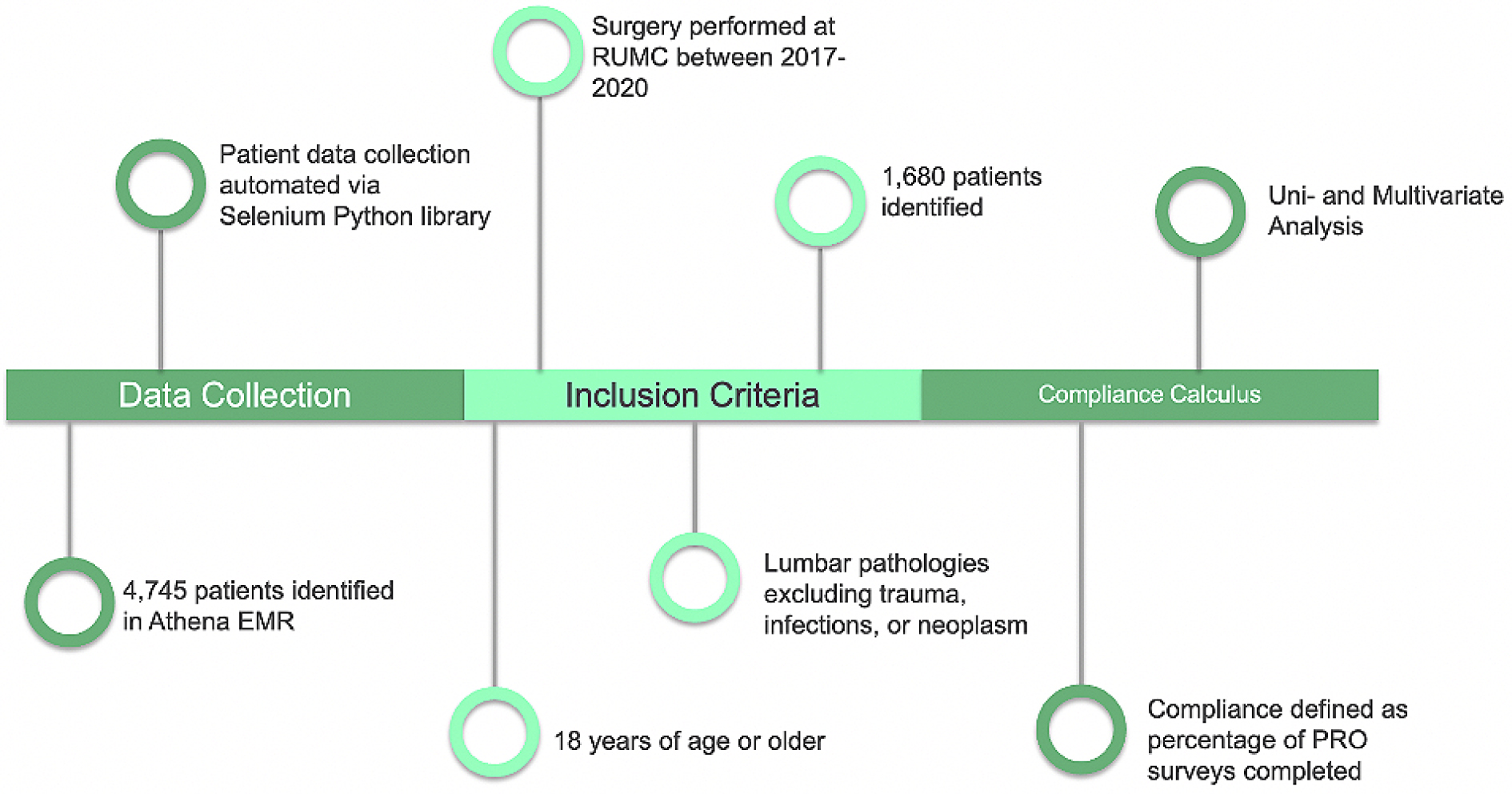
Methods: A retrospective study of prospectively collected data of 1,680 consecutive adult patients who underwent elective lumbar surgery at a single institution from 2017-2020. Digital assessment questionnaires were used to assess PROs (i.e., VAS-back, VAS-leg, Oswestry Disability Index, Short Form (SF-12) mental & physical health, VR-12 mental and physical, and VR6D scores) and patient compliance, defined as the percentage of questionnaires completed preoperatively, at 3 months and 1 year after surgery. Multivariate logistic regression was used to assess the association between PRO compliance and patient characteristics.
Results: A total of 1,680 patients (53.1% male, mean age: 57.7 years) had a mean PRO compliance of 64.7%. Compliance decreased continuously from initial preoperative rates (84.5%) to lower rates at 3 months (54.4%) and 12 months (45.6%), respectively, with 33.2% of patients completing zero assessment questionnaires at 12 months, postoperatively. Factors associated with significantly increased PRO compliance included being employed (preop: odds ratio [OR]=2.58, p=0.002; 3-month postop: OR=1.25, p=0.095; 12-month postop: OR=1.34, p=0.028). Factors associated with decreased compliance included preoperative smoking status (3-month postop: OR=0.63, p=0.029; 12-month postop: OR=0.60, p=0.016).
Conclusions: Patients who completed greater than 50% of their PROs demonstrated significantly different rates of being employed compared with those who completed less than 50% throughout 1 year of follow-up. Preoperative smoking status was associated with decreased compliance, whereas a history of employment was associated with increased compliance throughout follow-up. To validate our findings and explore additional parameters that affect postoperative compliance of PROs, further investigation is required.