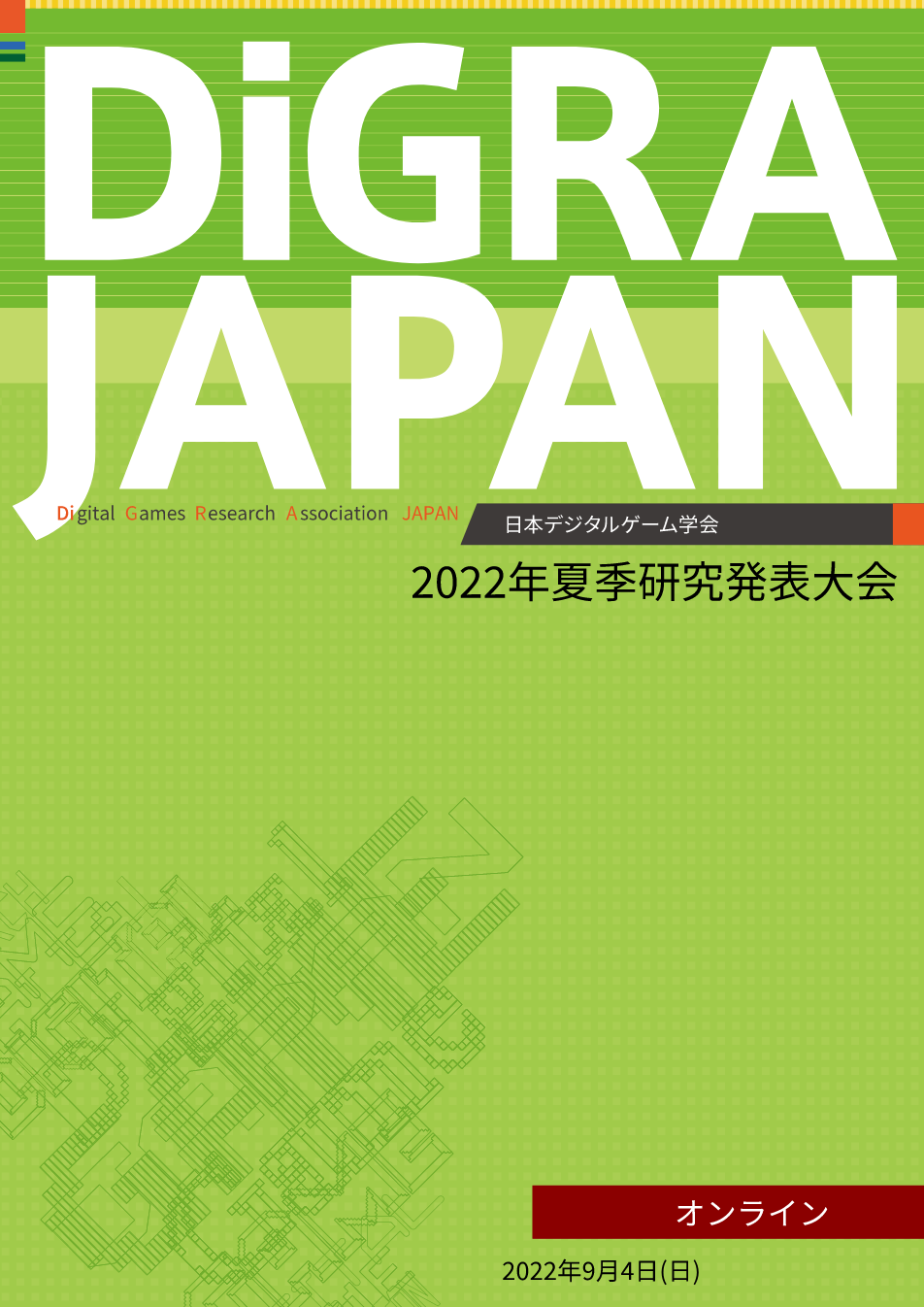
最新号
選択された号の論文の87件中1~50を表示しています
前付け
-
p. 1-
発行日: 2026年
公開日: 2026/10/21
PDF形式でダウンロード (391K) -
p. 2-6
発行日: 2026年
公開日: 2026/10/21
PDF形式でダウンロード (303K)
特別企画
-
p. 8-9
発行日: 2026年
公開日: 2026/10/21
PDF形式でダウンロード (143K)
ゲームデザイン(セッション1)
-
p. 11-14
発行日: 2026年
公開日: 2026/10/21
PDF形式でダウンロード (1358K) -
p. 15-20
発行日: 2026年
公開日: 2026/10/21
PDF形式でダウンロード (566K) -
p. 21-24
発行日: 2026年
公開日: 2026/10/21
PDF形式でダウンロード (347K) -
p. 25-30
発行日: 2026年
公開日: 2026/10/21
PDF形式でダウンロード (558K)
eスポーツ
-
p. 31-36
発行日: 2026年
公開日: 2026/10/21
PDF形式でダウンロード (767K) -
p. 37-41
発行日: 2026年
公開日: 2026/10/21
PDF形式でダウンロード (582K) -
p. 42-45
発行日: 2026年
公開日: 2026/10/21
PDF形式でダウンロード (445K)
シリアスゲーム1
-
p. 46-48
発行日: 2026年
公開日: 2026/10/21
PDF形式でダウンロード (1498K) -
p. 49-52
発行日: 2026年
公開日: 2026/10/21
PDF形式でダウンロード (276K) -
p. 53-58
発行日: 2026年
公開日: 2026/10/21
PDF形式でダウンロード (1105K) -
p. 59-63
発行日: 2026年
公開日: 2026/10/21
PDF形式でダウンロード (410K)
工学1
-
p. 64-69
発行日: 2026年
公開日: 2026/10/21
PDF形式でダウンロード (506K) -
p. 70-72
発行日: 2026年
公開日: 2026/10/21
PDF形式でダウンロード (290K) -
p. 73-78
発行日: 2026年
公開日: 2026/10/21
PDF形式でダウンロード (720K) -
p. 79-81
発行日: 2026年
公開日: 2026/10/21
PDF形式でダウンロード (257K)
シリアスゲーム2
-
p. 82-84
発行日: 2026年
公開日: 2026/10/21
PDF形式でダウンロード (527K) -
p. 85-89
発行日: 2026年
公開日: 2026/10/21
PDF形式でダウンロード (657K) -
p. 90-93
発行日: 2026年
公開日: 2026/10/21
PDF形式でダウンロード (614K)
工学2
-
p. 94-99
発行日: 2026年
公開日: 2026/10/21
PDF形式でダウンロード (609K) -
p. 100-103
発行日: 2026年
公開日: 2026/10/21
PDF形式でダウンロード (599K) -
p. 104-109
発行日: 2026年
公開日: 2026/10/21
PDF形式でダウンロード (605K)
AI
-
p. 110-113
発行日: 2026年
公開日: 2026/10/21
PDF形式でダウンロード (1031K) -
p. 114-119
発行日: 2026年
公開日: 2026/10/21
PDF形式でダウンロード (906K) -
p. 120-125
発行日: 2026年
公開日: 2026/10/21
PDF形式でダウンロード (1450K)
ゲームと教育1
-
p. 126-130
発行日: 2026年
公開日: 2026/10/21
PDF形式でダウンロード (475K) -
p. 131-136
発行日: 2026年
公開日: 2026/10/21
PDF形式でダウンロード (1745K) -
p. 137-141
発行日: 2026年
公開日: 2026/10/21
PDF形式でダウンロード (799K)
産業
-
p. 142-147
発行日: 2026年
公開日: 2026/10/21
PDF形式でダウンロード (1842K) -
p. 148-152
発行日: 2026年
公開日: 2026/10/21
PDF形式でダウンロード (598K) -
p. 153-158
発行日: 2026年
公開日: 2026/10/21
PDF形式でダウンロード (387K)
ゲームと教育2
-
p. 159-162
発行日: 2026年
公開日: 2026/10/21
PDF形式でダウンロード (408K) -
p. 163-167
発行日: 2026年
公開日: 2026/10/21
PDF形式でダウンロード (346K) -
p. 168-173
発行日: 2026年
公開日: 2026/10/21
PDF形式でダウンロード (911K)
XR・メタバース
-
p. 174-179
発行日: 2026年
公開日: 2026/10/21
PDF形式でダウンロード (568K) -
p. 180-185
発行日: 2026年
公開日: 2026/10/21
PDF形式でダウンロード (2225K) -
p. 186-189
発行日: 2026年
公開日: 2026/10/21
PDF形式でダウンロード (364K)
中国・アジア
-
p. 190-195
発行日: 2026年
公開日: 2026/10/21
PDF形式でダウンロード (589K) -
p. 196-198
発行日: 2026年
公開日: 2026/10/21
PDF形式でダウンロード (473K) -
p. 199-204
発行日: 2026年
公開日: 2026/10/21
PDF形式でダウンロード (636K) -
p. 205-210
発行日: 2026年
公開日: 2026/10/21
PDF形式でダウンロード (438K)
ゲームアーカイブ
-
p. 211-213
発行日: 2026年
公開日: 2026/10/21
PDF形式でダウンロード (579K) -
p. 214-219
発行日: 2026年
公開日: 2026/10/21
PDF形式でダウンロード (1365K) -
p. 220-225
発行日: 2026年
公開日: 2026/10/21
PDF形式でダウンロード (505K)
ゲームスタディーズ
-
p. 226-230
発行日: 2026年
公開日: 2026/10/21
PDF形式でダウンロード (389K) -
p. 231-234
発行日: 2026年
公開日: 2026/10/21
PDF形式でダウンロード (338K) -
p. 235-238
発行日: 2026年
公開日: 2026/10/21
PDF形式でダウンロード (359K) -
p. 239-244
発行日: 2026年
公開日: 2026/10/21
PDF形式でダウンロード (562K)